Read story

Introduction to High-Altitude Underwater Environments

Executive Summary: Altitude diving involves underwater activities at elevations above 300 meters, where reduced atmospheric pressure significantly alters gas kinetics, nitrogen loading, and decompression stress. Divers must use altitude-adjusted planning, slower and more conservative ascent practices, and careful pre- and post-dive altitude management to reduce the risk of bubble formation and decompression sickness.
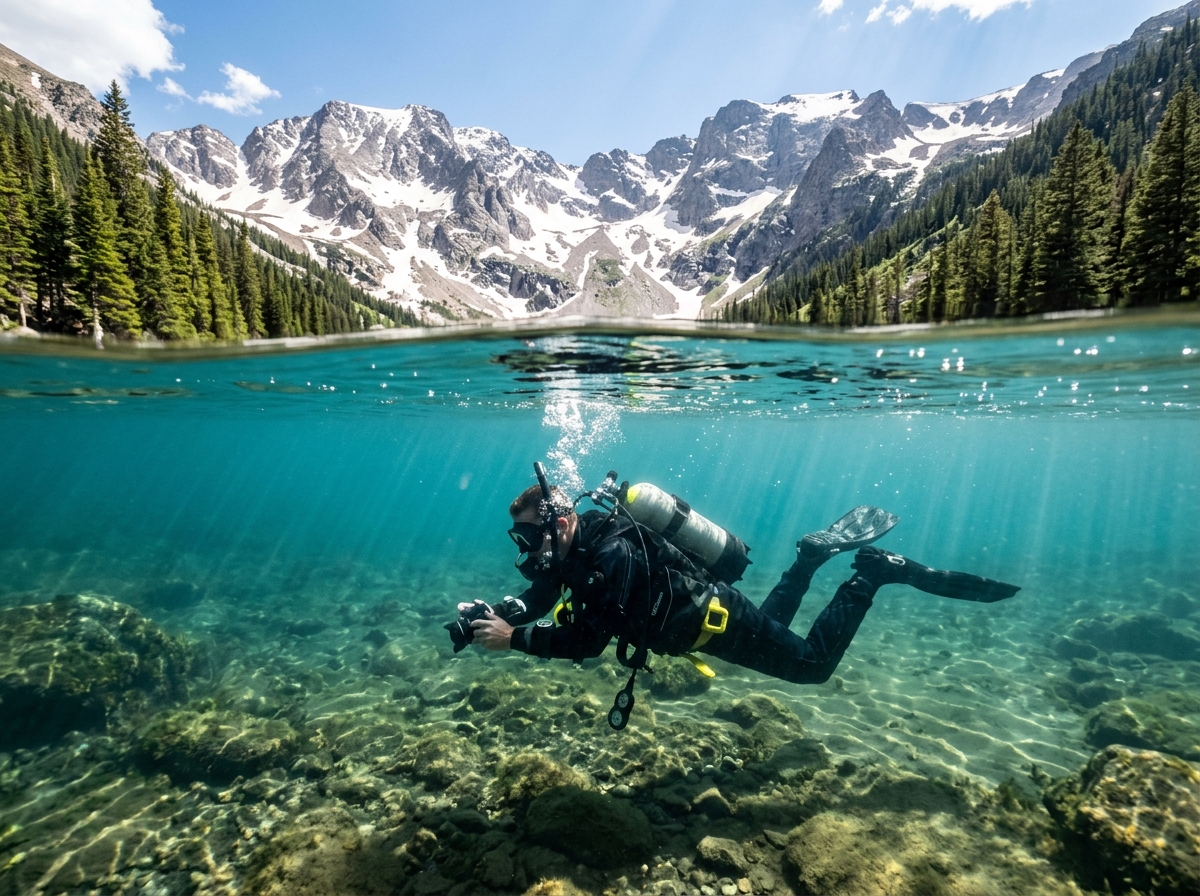
Scuba diver exploring a clear, high-altitude alpine lake - Altitude diving vs deep altitude medical precautions

When we discuss diving, we typically envision the ocean at sea level. However, altitude diving - defined by the U.S. Navy and most training agencies as any dive occurring at an elevation of 300 meters (approximately 1,000 feet) or higher - presents a distinct set of physical and physiological challenges. At these elevations, atmospheric pressure is lower than the standard 14.7 psi (1 atmosphere) found at the coast.

This reduction in surface pressure changes the diver's starting point before descent even begins. According to Boyle's Law, pressure and volume are inversely related, so a smaller change in absolute pressure at altitude produces a larger proportional change in gas volume than the same change at sea level. This principle became highly relevant during Jacques Cousteau's 1968 expedition to Lake Titicaca. Situated at 3,812 meters (12,507 feet), the team had to account for the fact that surfacing into thin air is physiologically more stressful than surfacing from the same measured depth at sea level. Their experience demonstrated that standard sea-level decompression tables required significant modification because the ratio of inert gas tension to ambient pressure reached critical limits sooner.

The primary medical concern in these environments is nitrogen loading and elimination. Because the diver surfaces into a lower-pressure environment, the pressure gradient between dissolved nitrogen in the tissues and the surrounding atmosphere is steeper. That steeper gradient promotes bubble formation and makes altitude diving vs deep altitude medical precautions an essential topic for any diver planning mountain or alpine dives.

What happens to gas volume as altitude increases?

To visualize the impact of altitude on gas physics, consider the following data comparing sea level to common high-altitude diving elevations:

Altitude (Feet)Atmospheric Pressure (ATA)Relative Gas Volume (Surface)
0 (Sea Level)1.0001.00
3,0000.8911.12
5,0000.8251.21
8,0000.7331.36
10,0000.6751.48
12,0000.6211.61

As the table illustrates, a bubble of gas at 10,000 feet is nearly 50% larger than the same bubble at sea level. This expansion can occur within the vascular system and tissues, increasing the risk of mechanical injury and decompression sickness (DCS).

Altitude diving vs deep altitude medical precautions: Understanding the Risks
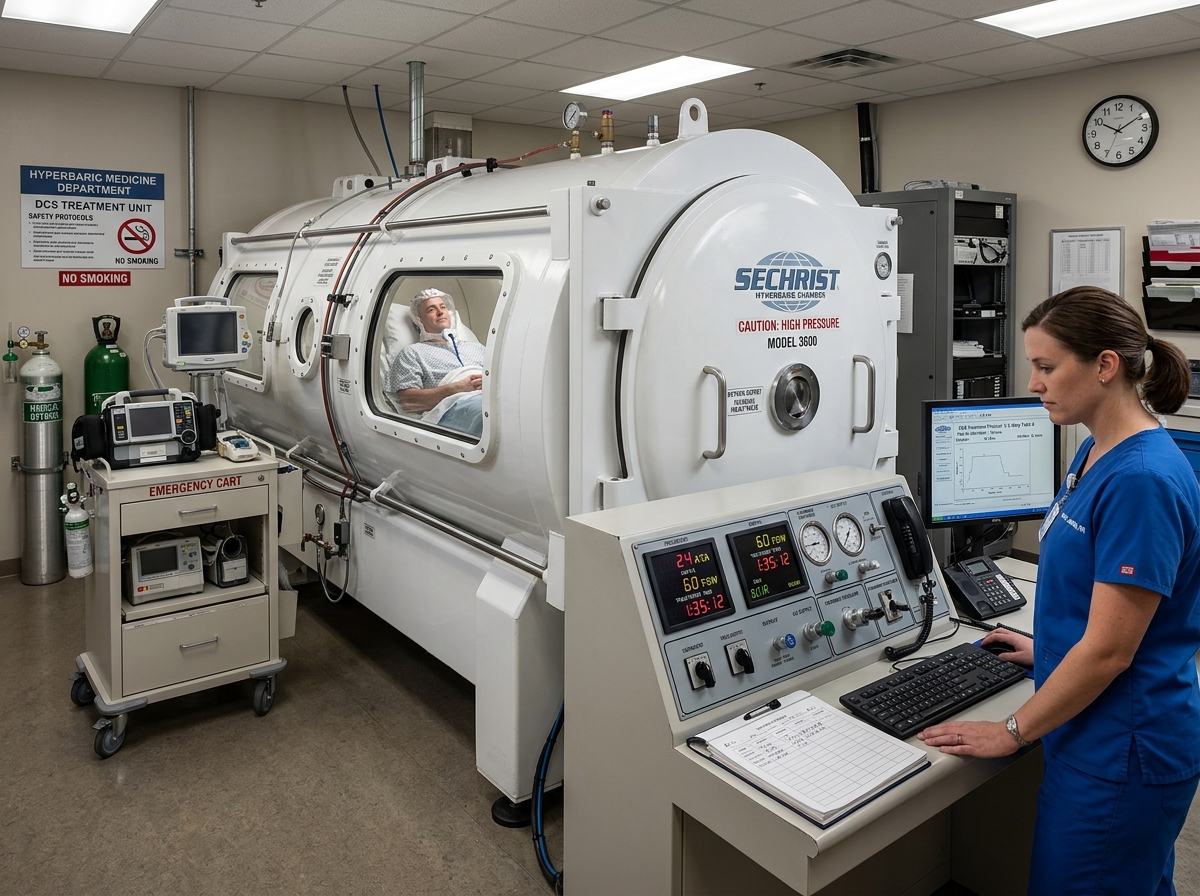
Professional hyperbaric decompression chamber used for treating altitude DCS - Altitude diving vs deep altitude medical

To understand why altitude diving requires special precautions, we look to Henry's Law, which states that the amount of dissolved gas in a liquid is proportional to the partial pressure of that gas. During a dive, the body absorbs nitrogen. At sea level, standard decompression models are designed around the return to 1 ATA at the surface. At altitude, however, the diver surfaces into a lower ambient pressure environment, creating hypobaric decompression.

In this hypobaric state, the blood and tissues have a reduced capacity to retain dissolved nitrogen. If ascent is too rapid or the dive profile is too aggressive, nitrogen can come out of solution as bubbles, leading to Decompression Sickness (DCS). You can find more scientific research on altitude diving physiology to see how these pressure changes are quantified.

Our approach at Michael B. Strauss is grounded in decompression science and Dr. Strauss's Stimulus-Response framework. Rather than viewing altitude as a single variable, this framework evaluates how multiple stressors - reduced ambient pressure, cold exposure, exertion, and hypoxia - interact with circulation, gas transport, and tissue perfusion. That combined response is where altitude diving becomes medically distinct from standard sea-level diving.

How does altitude diving vs deep altitude medical precautions affect decompression?

The central issue is the pressure gradient. When a diver surfaces at altitude, the ratio between nitrogen tension in the tissues and ambient atmospheric pressure is higher than it would be at sea level. This is why altitude dives are often converted using Theoretical Ocean Depth (TOD) or other cross-correction methods.

For example, a measured dive to 60 feet in a mountain lake may need to be planned as if it were deeper at sea level for decompression purposes. This is commonly managed using cross corrections, which convert altitude depths into equivalent sea-level depths for table-based planning.

Residual nitrogen is also a major concern. If a diver travels rapidly from sea level to altitude and enters the water soon afterward, tissue gas tensions may not yet be equilibrated to the lower atmospheric pressure. In practical terms, the diver may begin the first altitude dive with decompression stress similar to that of a repetitive dive. For more technical details, consult this scientific research on hypobaric decompression sickness.

What are the essential altitude diving vs deep altitude medical precautions for divers?

Diving at elevation is not only an underwater challenge; it is also a whole-body altitude exposure. Divers must account for reduced oxygen partial pressure, altered decompression dynamics, environmental cold, and the possibility that high-altitude illness can overlap with or obscure DCS symptoms.

FeatureSea-Level DivingAltitude Diving
Surface Pressure1.0 ATA (14.7 psi)< 0.9 ATA (for example, about 0.82 ATA at 5,000 ft)
Oxygen Availability21% oxygen at normal sea-level pressure21% oxygen but lower partial pressure
Decompression TableStandard sea-level tablesRequires altitude table or cross correction
Ascent RateTypically 30-60 feet per minute depending on protocol and agency guidanceMore conservative ascent planning is prudent
Water TypeOften saltwaterOften freshwater

Acclimatization protocols matter. After ascent to high elevation, the body begins responding to lower oxygen availability. Early changes can include increased ventilation and fluid shifts, while longer stays may involve elevated erythropoietin (EPO) and increased red cell production. These responses can also contribute to hemoconcentration and dehydration, both of which are recognized DCS risk factors because they may impair efficient microcirculatory gas elimination.

We must also consider Acute Mountain Sickness (AMS), High-Altitude Pulmonary Edema (HAPE), and High-Altitude Cerebral Edema (HACE). Symptoms such as headache, fatigue, dizziness, shortness of breath, or altered mental status can complicate diagnosis when a diver may also be experiencing DCS. In alpine environments, cold stress is another major variable. Peripheral vasoconstriction can reduce blood flow to extremities and may slow inert gas elimination from those tissues.

How should dive computers and tables be adjusted for high elevations?

Modern dive computers have made altitude diving easier, but not automatic in every case. Many advanced computers use variants of the Buhlmann ZHL-16 model and can adjust for altitude using an internal pressure sensor. These models track inert gas loading across multiple tissue compartments and modify tolerated supersaturation limits according to ambient pressure.

Manual review is still important:

  1. Verify altitude mode: Confirm that the computer has correctly recognized local elevation before the dive.
  2. Use the proper table or conversion: If planning manually, use your training agency's altitude tables or accepted cross-correction method.
  3. Account for freshwater depth differences where relevant: Gauge calibration and water density assumptions can affect displayed or interpreted depth.
  4. Extend conservatism near the surface: Because the relative pressure change is greatest close to the surface, additional caution with ascent rate and stop behavior is appropriate.
  5. Treat safety stops as standard practice: In altitude diving, a controlled pause near the end of ascent should be part of routine planning unless a specific emergency requires otherwise.

For a deeper review of these mechanics, we recommend exploring more diving science resources.

How to Safely Plan and Execute an Altitude Dive?

Safety at altitude begins long before entering the water. One of Dr. Strauss's most useful clinical concepts is the Stimulus-Response Framework. Instead of evaluating depth in isolation, this approach analyzes the environmental stimulus - cold, hypoxia, exertion, and reduced pressure - and the body's physiological response, such as vasoconstriction, altered heart rate, dehydration, and changes in tissue perfusion. In high-altitude environments, cold water and hypobaric exposure combine to create a more complex decompression profile than sea-level divers often expect.

Pre-dive wait times are essential. The U.S. Navy recommends waiting at least 12 hours after arriving at altitude before the first dive so tissues can better equilibrate to the lower atmospheric pressure. At very high elevations, a longer acclimatization period may be prudent. During this period, hydration, rest, and avoidance of alcohol are important because dehydration can worsen both altitude-related symptoms and decompression risk. You can read more in the scientific research on flying after diving, as altitude exposure and post-dive flight share important decompression principles.

What are the post-dive ascent and flying guidelines?

A major hazard of altitude diving occurs after the diver leaves the water. If a diver exits a lake and then drives over a higher mountain pass, that overland travel may function as an additional ascent and can increase decompression stress.

Conservative post-dive guidance commonly includes:

  • 12-hour rule: Minimum wait after a single no-decompression dive before ascending substantially higher or flying.
  • 18-hour rule: Minimum wait after repetitive diving or multiple diving days.
  • 24-hour rule: Minimum wait after dives requiring decompression stops.

A frequently cited example is Mauna Kea in Hawaii. A diver may complete a morning ocean dive and then consider driving to the summit later the same day. That large elevation gain can significantly reduce ambient pressure and increase the risk that otherwise asymptomatic bubbles expand and become clinically important. For more on these land-based risks, see the scientific research on altitude-induced DCS.

Not all divers carry the same risk profile. Several factors warrant more conservative planning and, in some cases, formal medical review:

  1. Patent Foramen Ovale (PFO): A right-to-left shunt can allow venous bubbles to bypass pulmonary filtration and enter the arterial circulation.
  2. Body composition: Nitrogen is relatively soluble in fat, so larger adipose stores may influence uptake and slower washout in some profiles.
  3. Age and circulation: Older divers may have reduced physiological reserve or circulation-related changes that affect gas transport efficiency.
  4. Dehydration and exertion: Common at altitude and especially relevant in cold, physically demanding environments.
  5. Underlying cardiopulmonary disease: Reduced oxygen reserve and impaired gas exchange can complicate both prevention and diagnosis.

A common misconception is that a history of altitude sickness automatically predicts DCS. These are different processes. While prior altitude illness does not by itself prove increased DCS susceptibility, any diver with previous severe altitude symptoms should still approach high-elevation dives conservatively and seek individualized guidance when needed.

What emergency medical procedures are required at high altitude?

If a diver develops symptoms consistent with DCS at altitude - including joint pain, unusual fatigue, numbness, weakness, dizziness, balance problems, breathing difficulty, or skin changes - immediate action is required.

1. 100% Oxygen Therapy: This is first-line field management. High-concentration oxygen supports inert gas elimination and may reduce symptom severity while evacuation is arranged.

2. Stop further ascent and consider descent to lower altitude when appropriate: If symptoms began after travel to a higher elevation, returning to a lower altitude may help reduce decompression stress. This should support, not replace, urgent medical evaluation.

3. Urgent consultation and evacuation: The definitive treatment for significant DCS is hyperbaric recompression. In remote mountain settings, rapid coordination with emergency services and a facility capable of recompression treatment is critical.

4. Portable hyperbaric systems for expeditions: In remote operations, portable chambers may have a logistical role as a temporizing measure, but they are not a substitute for definitive hyperbaric care.

Dr. Michael B. Strauss emphasizes a clinical priority sequence: recognize symptoms early, administer oxygen, minimize additional pressure reduction, and coordinate transport to a facility capable of appropriate recompression treatment, often following established U.S. Navy treatment protocols.

Emergency Contact Resources:

  • Divers Alert Network (DAN): 24-hour emergency assistance and consultation.
  • Undersea and Hyperbaric Medical Society (UHMS): Hyperbaric facility information.
  • Local Search and Rescue: Important for evacuation from remote high-altitude lakes.
  • Local EMS or emergency department: Essential when neurological, respiratory, or rapidly progressing symptoms are present.

Safe altitude diving is highly rewarding, but it demands stricter planning than similar dives at sea level. By respecting the physics of Altitude diving vs deep altitude medical precautions and applying Dr. Strauss's Stimulus-Response framework, divers can make safer decisions before, during, and after every high-elevation dive.

Next Steps for the Safety-Conscious Diver:If you are planning an alpine dive, your best safety tool is informed preparation. We encourage you to:

  1. Review the "Altitude Diver" specialty materials from your certification agency.
  2. Confirm that your dive computer is functioning correctly and appropriate for altitude use.
  3. Study Dr. Strauss's clinical approach to decompression and environmental stress through Diving Science... Revisited.
  4. Build a dive plan that includes altitude-adjusted tables or computer settings, hydration strategy, emergency oxygen access, and post-dive travel restrictions.

To get or buy the book from this link: https://www.bestpub.com/view-all-products/product/diving-science-revisited/category_pathway-48.html

DISCLAIMER: Articles are for "EDUCATIONAL PURPOSES ONLY", not to be considered advice or recommendations.

Download Full PDF
Tags:

Introduction to High-Altitude Underwater Environments

Executive Summary: Altitude diving involves underwater activities at elevations above 300 meters, where reduced atmospheric pressure significantly alters gas kinetics, nitrogen loading, and decompression stress. Divers must use altitude-adjusted planning, slower and more conservative ascent practices, and careful pre- and post-dive altitude management to reduce the risk of bubble formation and decompression sickness.

Scuba diver exploring a clear, high-altitude alpine lake - Altitude diving vs deep altitude medical precautions

When we discuss diving, we typically envision the ocean at sea level. However, altitude diving - defined by the U.S. Navy and most training agencies as any dive occurring at an elevation of 300 meters (approximately 1,000 feet) or higher - presents a distinct set of physical and physiological challenges. At these elevations, atmospheric pressure is lower than the standard 14.7 psi (1 atmosphere) found at the coast.

This reduction in surface pressure changes the diver's starting point before descent even begins. According to Boyle's Law, pressure and volume are inversely related, so a smaller change in absolute pressure at altitude produces a larger proportional change in gas volume than the same change at sea level. This principle became highly relevant during Jacques Cousteau's 1968 expedition to Lake Titicaca. Situated at 3,812 meters (12,507 feet), the team had to account for the fact that surfacing into thin air is physiologically more stressful than surfacing from the same measured depth at sea level. Their experience demonstrated that standard sea-level decompression tables required significant modification because the ratio of inert gas tension to ambient pressure reached critical limits sooner.

The primary medical concern in these environments is nitrogen loading and elimination. Because the diver surfaces into a lower-pressure environment, the pressure gradient between dissolved nitrogen in the tissues and the surrounding atmosphere is steeper. That steeper gradient promotes bubble formation and makes altitude diving vs deep altitude medical precautions an essential topic for any diver planning mountain or alpine dives.

What happens to gas volume as altitude increases?

To visualize the impact of altitude on gas physics, consider the following data comparing sea level to common high-altitude diving elevations:

Altitude (Feet)Atmospheric Pressure (ATA)Relative Gas Volume (Surface)
0 (Sea Level)1.0001.00
3,0000.8911.12
5,0000.8251.21
8,0000.7331.36
10,0000.6751.48
12,0000.6211.61

As the table illustrates, a bubble of gas at 10,000 feet is nearly 50% larger than the same bubble at sea level. This expansion can occur within the vascular system and tissues, increasing the risk of mechanical injury and decompression sickness (DCS).

Altitude diving vs deep altitude medical precautions: Understanding the Risks

Professional hyperbaric decompression chamber used for treating altitude DCS - Altitude diving vs deep altitude medical

To understand why altitude diving requires special precautions, we look to Henry's Law, which states that the amount of dissolved gas in a liquid is proportional to the partial pressure of that gas. During a dive, the body absorbs nitrogen. At sea level, standard decompression models are designed around the return to 1 ATA at the surface. At altitude, however, the diver surfaces into a lower ambient pressure environment, creating hypobaric decompression.

In this hypobaric state, the blood and tissues have a reduced capacity to retain dissolved nitrogen. If ascent is too rapid or the dive profile is too aggressive, nitrogen can come out of solution as bubbles, leading to Decompression Sickness (DCS). You can find more scientific research on altitude diving physiology to see how these pressure changes are quantified.

Our approach at Michael B. Strauss is grounded in decompression science and Dr. Strauss's Stimulus-Response framework. Rather than viewing altitude as a single variable, this framework evaluates how multiple stressors - reduced ambient pressure, cold exposure, exertion, and hypoxia - interact with circulation, gas transport, and tissue perfusion. That combined response is where altitude diving becomes medically distinct from standard sea-level diving.

How does altitude diving vs deep altitude medical precautions affect decompression?

The central issue is the pressure gradient. When a diver surfaces at altitude, the ratio between nitrogen tension in the tissues and ambient atmospheric pressure is higher than it would be at sea level. This is why altitude dives are often converted using Theoretical Ocean Depth (TOD) or other cross-correction methods.

For example, a measured dive to 60 feet in a mountain lake may need to be planned as if it were deeper at sea level for decompression purposes. This is commonly managed using cross corrections, which convert altitude depths into equivalent sea-level depths for table-based planning.

Residual nitrogen is also a major concern. If a diver travels rapidly from sea level to altitude and enters the water soon afterward, tissue gas tensions may not yet be equilibrated to the lower atmospheric pressure. In practical terms, the diver may begin the first altitude dive with decompression stress similar to that of a repetitive dive. For more technical details, consult this scientific research on hypobaric decompression sickness.

What are the essential altitude diving vs deep altitude medical precautions for divers?

Diving at elevation is not only an underwater challenge; it is also a whole-body altitude exposure. Divers must account for reduced oxygen partial pressure, altered decompression dynamics, environmental cold, and the possibility that high-altitude illness can overlap with or obscure DCS symptoms.

FeatureSea-Level DivingAltitude Diving
Surface Pressure1.0 ATA (14.7 psi)< 0.9 ATA (for example, about 0.82 ATA at 5,000 ft)
Oxygen Availability21% oxygen at normal sea-level pressure21% oxygen but lower partial pressure
Decompression TableStandard sea-level tablesRequires altitude table or cross correction
Ascent RateTypically 30-60 feet per minute depending on protocol and agency guidanceMore conservative ascent planning is prudent
Water TypeOften saltwaterOften freshwater

Acclimatization protocols matter. After ascent to high elevation, the body begins responding to lower oxygen availability. Early changes can include increased ventilation and fluid shifts, while longer stays may involve elevated erythropoietin (EPO) and increased red cell production. These responses can also contribute to hemoconcentration and dehydration, both of which are recognized DCS risk factors because they may impair efficient microcirculatory gas elimination.

We must also consider Acute Mountain Sickness (AMS), High-Altitude Pulmonary Edema (HAPE), and High-Altitude Cerebral Edema (HACE). Symptoms such as headache, fatigue, dizziness, shortness of breath, or altered mental status can complicate diagnosis when a diver may also be experiencing DCS. In alpine environments, cold stress is another major variable. Peripheral vasoconstriction can reduce blood flow to extremities and may slow inert gas elimination from those tissues.

How should dive computers and tables be adjusted for high elevations?

Modern dive computers have made altitude diving easier, but not automatic in every case. Many advanced computers use variants of the Buhlmann ZHL-16 model and can adjust for altitude using an internal pressure sensor. These models track inert gas loading across multiple tissue compartments and modify tolerated supersaturation limits according to ambient pressure.

Manual review is still important:

  1. Verify altitude mode: Confirm that the computer has correctly recognized local elevation before the dive.
  2. Use the proper table or conversion: If planning manually, use your training agency's altitude tables or accepted cross-correction method.
  3. Account for freshwater depth differences where relevant: Gauge calibration and water density assumptions can affect displayed or interpreted depth.
  4. Extend conservatism near the surface: Because the relative pressure change is greatest close to the surface, additional caution with ascent rate and stop behavior is appropriate.
  5. Treat safety stops as standard practice: In altitude diving, a controlled pause near the end of ascent should be part of routine planning unless a specific emergency requires otherwise.

For a deeper review of these mechanics, we recommend exploring more diving science resources.

How to Safely Plan and Execute an Altitude Dive?

Safety at altitude begins long before entering the water. One of Dr. Strauss's most useful clinical concepts is the Stimulus-Response Framework. Instead of evaluating depth in isolation, this approach analyzes the environmental stimulus - cold, hypoxia, exertion, and reduced pressure - and the body's physiological response, such as vasoconstriction, altered heart rate, dehydration, and changes in tissue perfusion. In high-altitude environments, cold water and hypobaric exposure combine to create a more complex decompression profile than sea-level divers often expect.

Pre-dive wait times are essential. The U.S. Navy recommends waiting at least 12 hours after arriving at altitude before the first dive so tissues can better equilibrate to the lower atmospheric pressure. At very high elevations, a longer acclimatization period may be prudent. During this period, hydration, rest, and avoidance of alcohol are important because dehydration can worsen both altitude-related symptoms and decompression risk. You can read more in the scientific research on flying after diving, as altitude exposure and post-dive flight share important decompression principles.

What are the post-dive ascent and flying guidelines?

A major hazard of altitude diving occurs after the diver leaves the water. If a diver exits a lake and then drives over a higher mountain pass, that overland travel may function as an additional ascent and can increase decompression stress.

Conservative post-dive guidance commonly includes:

  • 12-hour rule: Minimum wait after a single no-decompression dive before ascending substantially higher or flying.
  • 18-hour rule: Minimum wait after repetitive diving or multiple diving days.
  • 24-hour rule: Minimum wait after dives requiring decompression stops.

A frequently cited example is Mauna Kea in Hawaii. A diver may complete a morning ocean dive and then consider driving to the summit later the same day. That large elevation gain can significantly reduce ambient pressure and increase the risk that otherwise asymptomatic bubbles expand and become clinically important. For more on these land-based risks, see the scientific research on altitude-induced DCS.

Not all divers carry the same risk profile. Several factors warrant more conservative planning and, in some cases, formal medical review:

  1. Patent Foramen Ovale (PFO): A right-to-left shunt can allow venous bubbles to bypass pulmonary filtration and enter the arterial circulation.
  2. Body composition: Nitrogen is relatively soluble in fat, so larger adipose stores may influence uptake and slower washout in some profiles.
  3. Age and circulation: Older divers may have reduced physiological reserve or circulation-related changes that affect gas transport efficiency.
  4. Dehydration and exertion: Common at altitude and especially relevant in cold, physically demanding environments.
  5. Underlying cardiopulmonary disease: Reduced oxygen reserve and impaired gas exchange can complicate both prevention and diagnosis.

A common misconception is that a history of altitude sickness automatically predicts DCS. These are different processes. While prior altitude illness does not by itself prove increased DCS susceptibility, any diver with previous severe altitude symptoms should still approach high-elevation dives conservatively and seek individualized guidance when needed.

What emergency medical procedures are required at high altitude?

If a diver develops symptoms consistent with DCS at altitude - including joint pain, unusual fatigue, numbness, weakness, dizziness, balance problems, breathing difficulty, or skin changes - immediate action is required.

1. 100% Oxygen Therapy: This is first-line field management. High-concentration oxygen supports inert gas elimination and may reduce symptom severity while evacuation is arranged.

2. Stop further ascent and consider descent to lower altitude when appropriate: If symptoms began after travel to a higher elevation, returning to a lower altitude may help reduce decompression stress. This should support, not replace, urgent medical evaluation.

3. Urgent consultation and evacuation: The definitive treatment for significant DCS is hyperbaric recompression. In remote mountain settings, rapid coordination with emergency services and a facility capable of recompression treatment is critical.

4. Portable hyperbaric systems for expeditions: In remote operations, portable chambers may have a logistical role as a temporizing measure, but they are not a substitute for definitive hyperbaric care.

Dr. Michael B. Strauss emphasizes a clinical priority sequence: recognize symptoms early, administer oxygen, minimize additional pressure reduction, and coordinate transport to a facility capable of appropriate recompression treatment, often following established U.S. Navy treatment protocols.

Emergency Contact Resources:

  • Divers Alert Network (DAN): 24-hour emergency assistance and consultation.
  • Undersea and Hyperbaric Medical Society (UHMS): Hyperbaric facility information.
  • Local Search and Rescue: Important for evacuation from remote high-altitude lakes.
  • Local EMS or emergency department: Essential when neurological, respiratory, or rapidly progressing symptoms are present.

Safe altitude diving is highly rewarding, but it demands stricter planning than similar dives at sea level. By respecting the physics of Altitude diving vs deep altitude medical precautions and applying Dr. Strauss's Stimulus-Response framework, divers can make safer decisions before, during, and after every high-elevation dive.

Next Steps for the Safety-Conscious Diver:If you are planning an alpine dive, your best safety tool is informed preparation. We encourage you to:

  1. Review the "Altitude Diver" specialty materials from your certification agency.
  2. Confirm that your dive computer is functioning correctly and appropriate for altitude use.
  3. Study Dr. Strauss's clinical approach to decompression and environmental stress through Diving Science... Revisited.
  4. Build a dive plan that includes altitude-adjusted tables or computer settings, hydration strategy, emergency oxygen access, and post-dive travel restrictions.

To get or buy the book from this link: https://www.bestpub.com/view-all-products/product/diving-science-revisited/category_pathway-48.html

DISCLAIMER: Articles are for "EDUCATIONAL PURPOSES ONLY", not to be considered advice or recommendations.