Read story

Board-Certified Surgeons Specializing in Diving Medicine
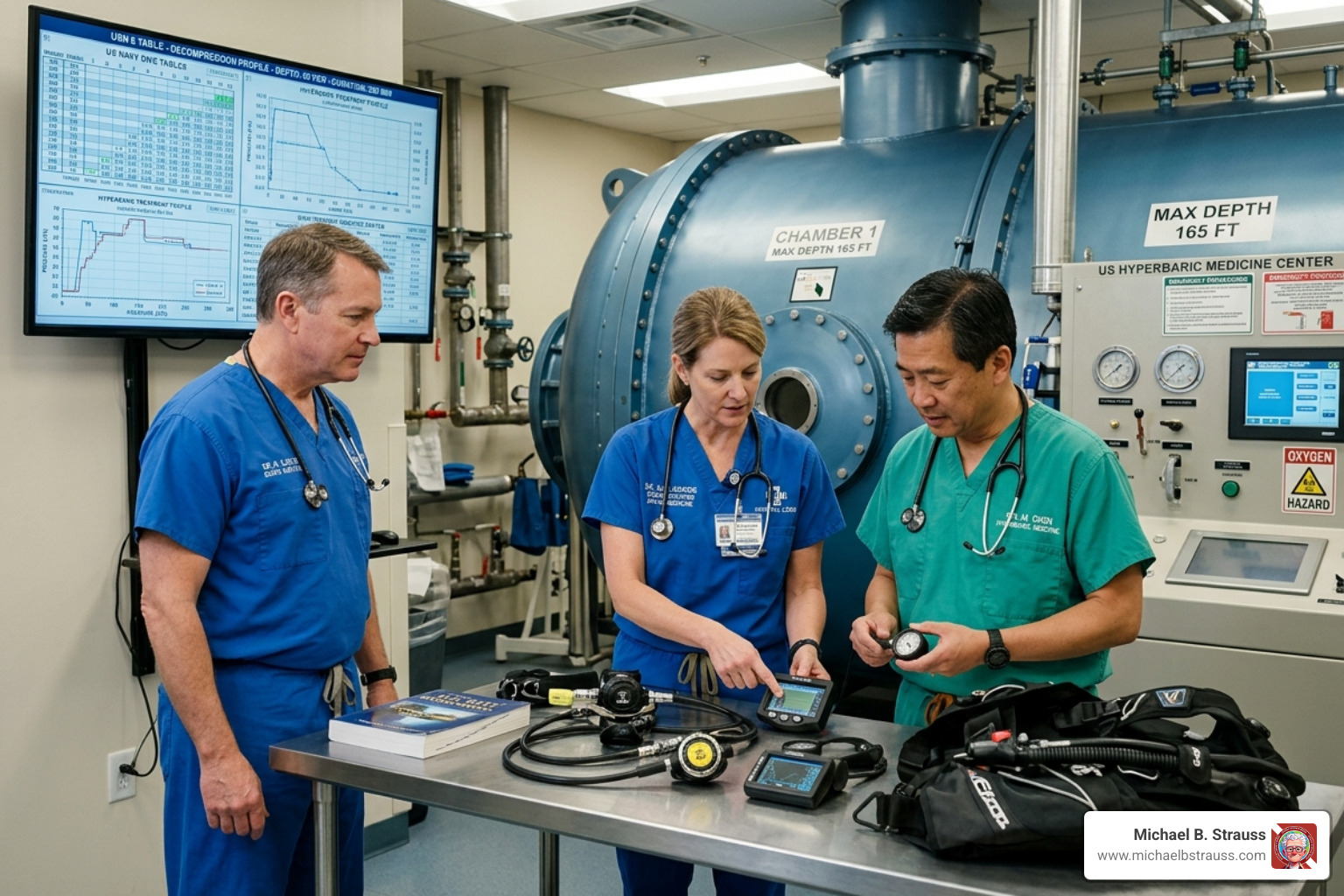
Board-certified surgeons specializing in diving medicine

Executive Summary: Board-certified surgeons specializing in diving medicine evaluate fitness to dive, diagnose dysbaric injury, and direct recompression treatment with a level of precision that general medical training rarely provides. The safest choice is a physician with verified Undersea and Hyperbaric Medicine subspecialty certification, relevant dive medicine credentials, and a clinical approach grounded in the Stimulus-Response framework for decompression illness.

Board-certified surgeons specializing in diving medicine

Board-certified surgeons specializing in diving medicine are physicians who have completed an ACGME-accredited fellowship of at least 12 months, hold primary specialty board certification, and have passed a subspecialty exam in Undersea and Hyperbaric Medicine (UHM) — offered only in even-numbered years. Here is a quick reference to help you identify the right specialist:

  • DMAC Level 1 (Diving Medical Examiner): Trained to assess fitness to dive for recreational, commercial, scientific, and public safety divers. Over 300 physicians hold this designation.
  • DMAC Level 2D (Diving Medical Physician): Trained to recognize and treat diving medical emergencies. Fewer than 100 physicians hold this advanced certification.
  • Board Certification pathway: Requires primary specialty certification (via ABPM or ABEM), a valid medical license, and completion of an ACGME-accredited UHM fellowship.
  • How to verify: Use the UHMS Physician Diver Assessment List or the American Board of Medical Specialties (ABMS) verification tool.

Diving medicine sits at a unique crossroads. It blends high-pressure physics, emergency care, surgical judgment, and occupational health — all in a specialty most physicians never encounter in standard training. For orthopedic surgeons, emergency physicians, and other specialists, this gap matters enormously. A diver who surfaces too fast faces decompression sickness that can damage joints, the spinal cord, or the brain. Getting that wrong is not a minor oversight — it can mean permanent disability.

The problem is that not all "diving doctors" are equal. Some have completed rigorous fellowship training and passed a demanding board exam. Others simply attended a weekend course. Knowing the difference is critical — whether you are a diver seeking clearance, a physician managing a complex dysbaric injury, or a surgeon looking to expand into this subspecialty.

I am Michael B. Strauss, M.D., an orthopedic surgeon with over three decades of clinical experience in hyperbaric and diving medicine, including a 33½-year affiliation with reserve Navy SEAL Teams — one of the most demanding environments where board-certified surgeons specializing in diving medicine must perform under pressure. That background shapes everything I will share in this guide.

Proprietary Insight: My clinical work emphasizes a Stimulus-Response model of decompression illness: the pressure exposure is the stimulus, while the injured tissue's bubble burden, vascular supply, and inflammatory reaction determine the response. This site-specific framework helps explain why two divers with similar profiles can present with very different neurologic, musculoskeletal, or cutaneous findings — a distinction that is often missed in generic discussions of "the bends."

Visual guidance: place a credential-comparison table immediately below this introduction and, where possible, pair it with a medical diagram illustrating inert gas uptake and bubble formation during ascent.
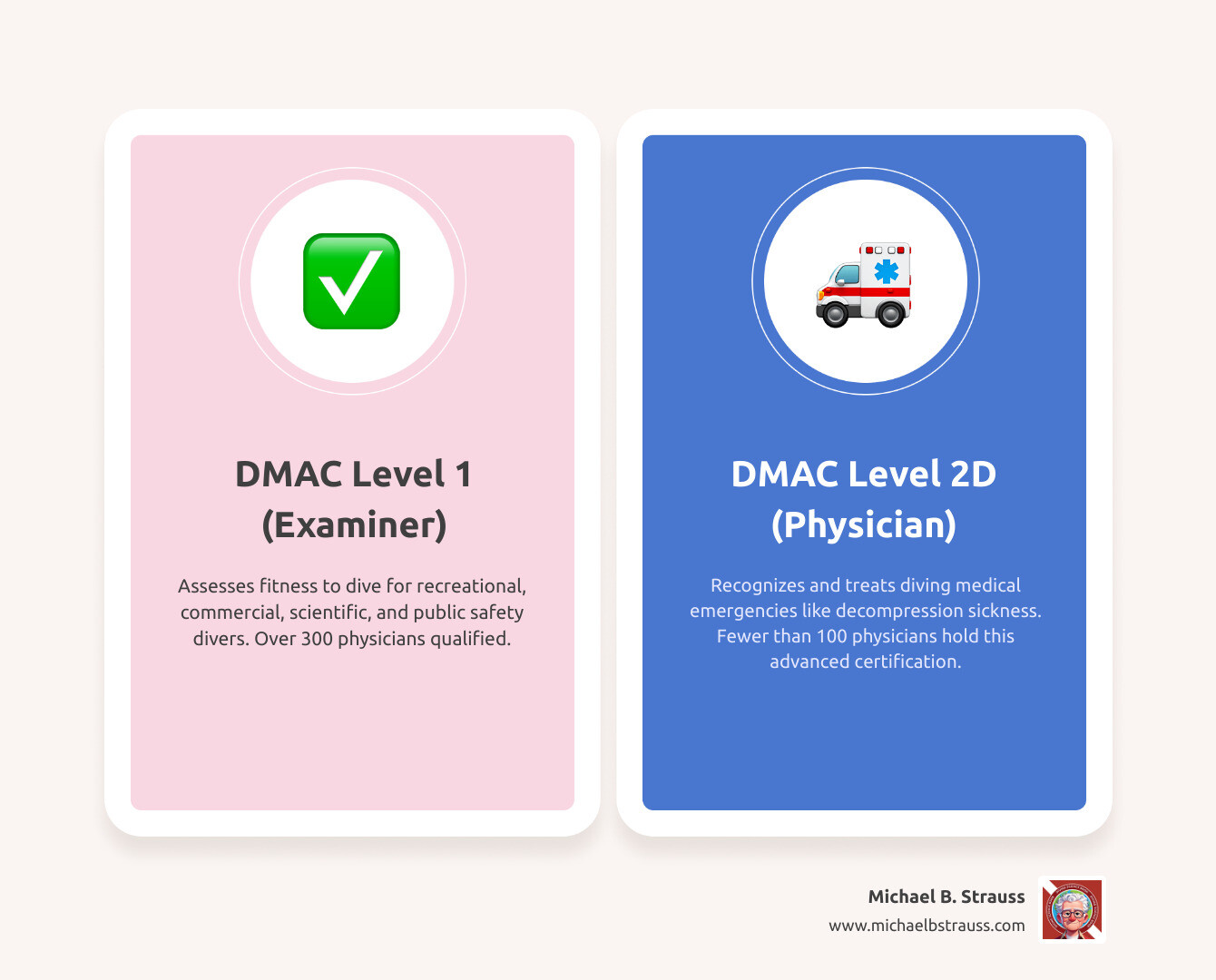
Key differences between DMAC Level 1 and Level 2D certifications, board exam requirements, and how to find a qualified

What Is Undersea and Hyperbaric Expertise?
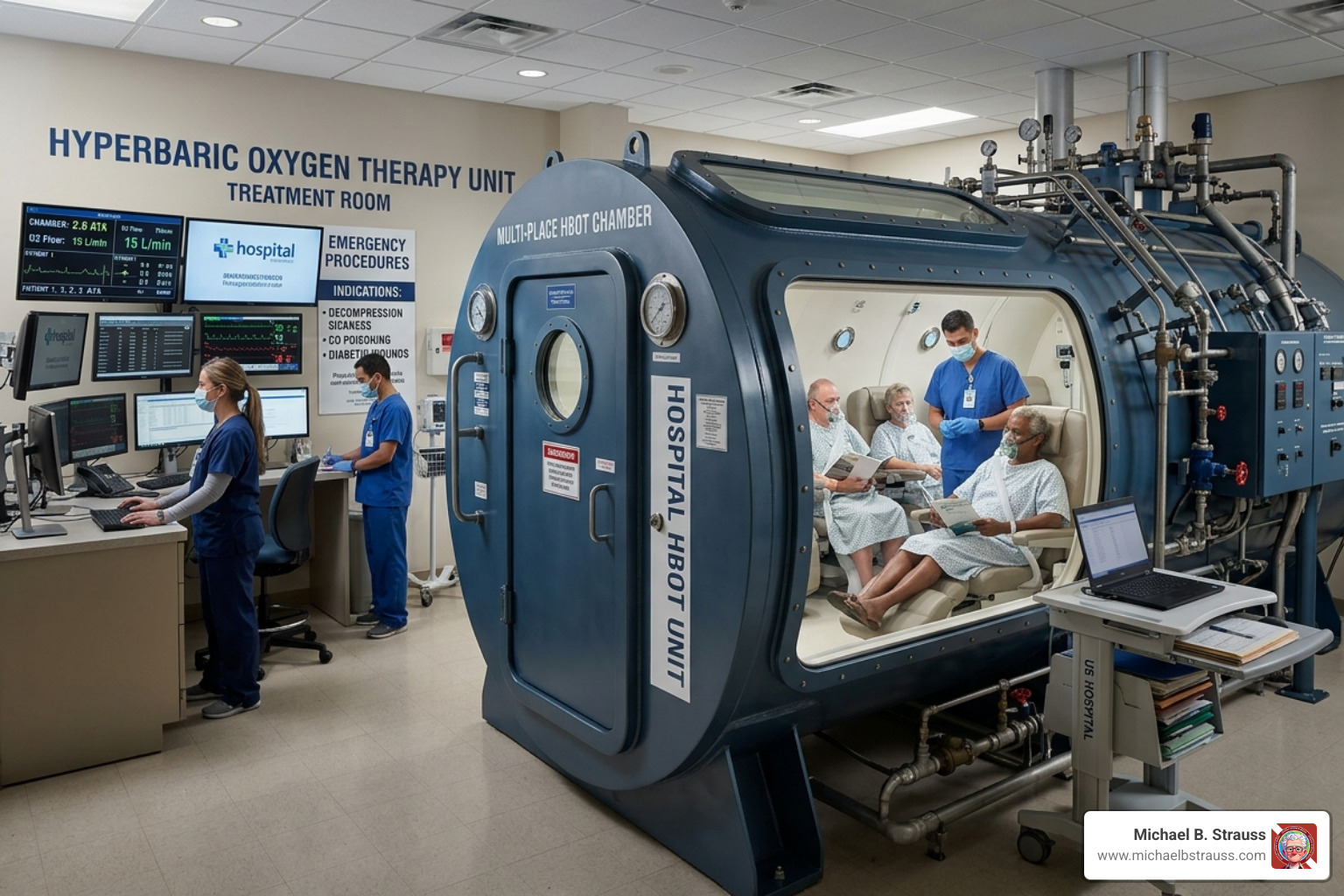
A multi-place hyperbaric oxygen chamber used for treating decompression sickness and carbon monoxide poisoning

Undersea medicine is a highly specialized field that studies the human body's response to underwater and high-pressure environments. This includes the physiological effects of immersion, the management of marine life injuries, and the complex physics of gases under pressure. While many people associate hyperbaric chambers solely with wound healing, the roots of this discipline are firmly planted in the maritime world.

How does diving medicine differ from general hyperbaric therapy?

While both utilize hyperbaric oxygen (HBO2) therapy, diving medicine focuses specifically on the "dysbaric" pathologies caused by changes in ambient pressure. General hyperbaric therapy often addresses chronic conditions like diabetic foot ulcers or radiation tissue damage. In contrast, diving medicine is preoccupied with Decompression Science and the mechanical effects of bubbles within the body.

The core of our expertise lies in understanding gas solubility and bubble dynamics. When a diver descends, inert gases (like nitrogen) dissolve into the blood and tissues according to Henry's Law. During ascent, if the ambient pressure drops too quickly, these gases come out of solution and form bubbles—much like opening a carbonated soda. Our proprietary insight into Why and at What Sites Decompression Sickness Can Occur highlights that DCS is not a random event; it is site-specific, often targeting tissues with high lipid content or poor blood flow. We utilize a "Stimulus-Response" framework to predict how specific diving profiles will manifest as clinical symptoms. This framework moves beyond simple depth-time tables to analyze the physiological stimulus (the pressure change) and the biological response (bubble formation and inflammatory cascade).

What are the specific board certifications for diving surgeons?

To be recognized as a specialist, a physician must pursue subspecialty certification in Undersea and Hyperbaric Medicine (UHM). This is recognized by the American Board of Preventive Medicine (ABPM) and the American Board of Emergency Medicine (ABEM).

The requirements are stringent:

  1. Primary Certification: The physician must already be board-certified in a primary specialty (such as Orthopedic Surgery, Anesthesiology, or Emergency Medicine).
  2. ACGME Fellowship: Completion of a 12-month ACGME-accredited fellowship in Undersea and Hyperbaric Medicine. These programs provide intensive training in hyperbaric chamber operations, dive accident management, and the clinical application of HBO2.
  3. Examination: Passing the UHM subspecialty exam, which is notoriously difficult and only offered in even-numbered years (the next cycle is 2026).
  4. Research and Evidence: Specialists must stay current with scientific research on hyperbaric oxygen indications, ensuring treatments are backed by clinical evidence rather than anecdote. This includes understanding the biochemical pathways of oxidative stress and the role of hyperbaric oxygen in modulating the immune response.

Visual guidance: a simple medical diagram comparing pressure-related bubble injury with non-dysbaric hyperbaric indications would strengthen this section for both readers and answer-engine extraction.

Why Do You Need Board-Certified Surgeons Specializing in Diving Medicine?

When a diving injury occurs, it often requires more than just "time in the tank." Board-certified surgeons specializing in diving medicine bring a unique perspective to the table: surgical precision combined with an understanding of pressure-related physiology. For instance, a surgeon can better evaluate whether a diver's orthopedic implant will be affected by pressure or if a barotrauma injury requires surgical intervention. In cases of Type II Decompression Sickness involving the musculoskeletal system, an orthopedic surgeon's understanding of bone vascularity is indispensable for preventing dysbaric osteonecrosis.

Furthermore, our understanding of fluid dynamics extends to the lymphatic system. Research indicates that lymphatic function and compression are intimately linked, which is vital when managing edema or "skin bends" in divers. The application of the Stimulus-Response framework allows us to differentiate between simple musculoskeletal strain and the more insidious bubble-induced tissue damage.

FeatureDMAC Level 1 (Examiner)DMAC Level 2D (Physician)
Primary FocusFitness-to-dive assessmentsEmergency treatment & management
ScopeRecreational, Scientific, Public SafetyCommercial, Saturation, Emergencies
TrainingUHMS-approved course (Level 1)Advanced UHMS/NOAA course (Level 2)
Population> 300 listed physicians< 100 listed physicians

How can you identify elite board-certified diving surgeons and their credentials?

Not every doctor who treats a diver is an "expert." Elite specialists are distinguished by:

  • Military-Grade Training: Many top experts have completed U.S. Navy Diving Medical Officer training. This provides exposure to extreme diving environments, including saturation and mixed-gas diving, that civilian training rarely covers.
  • Academic Leadership: Look for specialists who direct ACGME-accredited fellowships or hold faculty positions at major academic medical institutions and Level 1 trauma centers.
  • Clinical Depth: Managing complex dysbaric injuries requires thousands of hours of clinical experience. This includes the management of arterial gas embolism (AGE) and the nuances of recompression therapy protocols.
  • Research Contributions: Elite surgeons do not just follow protocols; they write them. They contribute to the body of knowledge regarding Mammalian Divers and the physiological adaptations required for deep-sea survival.

How do you verify board-certified surgeons specializing in diving medicine?

Verification is the most important step in hiring an expert. Do not take a website's word for it.

  1. Check the UHMS List: The Undersea and Hyperbaric Medical Society (UHMS) maintains a Physician Diver Assessment List. This directory identifies who has completed specific DMAC Level 1 or Level 2D training.
  2. ABMS Verification: Visit the American Board of Medical Specialties (ABMS) website to confirm the doctor holds a current subspecialty certification in Undersea and Hyperbaric Medicine.
  3. Certification Cycles: The UHM exam is only offered in even-numbered years. If a doctor claims to be "board-eligible," ask when they plan to sit for the 2026 exam.
  4. NBDHMT Status: For technical support, verify that the facility utilizes staff certified by the National Board of Diving and Hyperbaric Medical Technology.

For those interested in the academic rigors of the field, you can find more info about diving science on our dedicated resource page.

What services do diving medicine specialists provide?

The scope of a diving medicine specialist is far broader than just treating "the bends." We provide:

  • Diver Physicals: Comprehensive exams for recreational, scientific (AAUS standards), and commercial (OSHA-mandated) divers.
  • Emergency Consultations: 24/7 support for diving accidents, including arterial gas embolism and decompression sickness.
  • Pain Management: Specialized Evaluation and Management of Pain-Related Medical Problems of Diving, distinguishing between musculoskeletal injuries and DCS.
  • Commercial Support: On-site or on-call medical direction for deep tunneling projects and commercial diving operations.

Visual guidance: this section performs best with the credential table preserved and, if layout permits, a companion icon set for diver physicals, emergency consultations, recompression therapy, and commercial support.

Securing Your Safety with Elite Undersea Medical Care

At the practice of Michael B. Strauss, M.D., we believe that diving safety is built on a foundation of education and rigorous medical standards. My work in Diving Science Revisited and my decades of experience with Navy SEAL Teams have taught me that the most successful divers are those who respect the physics of the environment. We apply a clinical, precise approach to every case, ensuring that the Stimulus-Response framework is utilized to mitigate risks before they become life-threatening.

By integrating orthopedic surgery with hyperbaric medicine, we provide a holistic approach to diver health. Whether we are mentoring residents on limb-threatening infections or clearing a scientific diver for a mission, our goal is the same: maximum safety through scientific excellence. This involves a deep understanding of inert gas kinetics and the mechanical effects of pressure on human physiology.

How can patients find a qualified diving medicine specialist?

If you are looking for an expert, start with these trusted networks:

  • UHMS Directory: The gold standard for finding UHMS-trained physicians globally.
  • DAN (Divers Alert Network): An essential referral network for recreational divers facing emergencies.
  • Academic Centers: Major university-affiliated medical centers often provide access to board-certified specialists and multi-place chambers capable of handling complex recompressions.
  • Specialized Clinics: Look for established practices that focus exclusively on dive medicine and fitness evaluations, ensuring they are led by board-certified UHM specialists who maintain active certification.

For those seeking professional-grade insights, we recommend the following resources:

Visual guidance: conclude with a clean resource block and, where appropriate, a final figure showing the relationship between exposure profile, symptom pattern, and recompression decision-making.

Call to Action: For a deeper, clinically rigorous understanding of dive physiology, decompression injury, and the Stimulus-Response model, explore Dr. Michael B. Strauss’s educational resources and begin with the core reference materials on Diving Science.

Download Full PDF
Tags:

Board-Certified Surgeons Specializing in Diving Medicine

Board-certified surgeons specializing in diving medicine

Executive Summary: Board-certified surgeons specializing in diving medicine evaluate fitness to dive, diagnose dysbaric injury, and direct recompression treatment with a level of precision that general medical training rarely provides. The safest choice is a physician with verified Undersea and Hyperbaric Medicine subspecialty certification, relevant dive medicine credentials, and a clinical approach grounded in the Stimulus-Response framework for decompression illness.

Board-certified surgeons specializing in diving medicine

Board-certified surgeons specializing in diving medicine are physicians who have completed an ACGME-accredited fellowship of at least 12 months, hold primary specialty board certification, and have passed a subspecialty exam in Undersea and Hyperbaric Medicine (UHM) — offered only in even-numbered years. Here is a quick reference to help you identify the right specialist:

  • DMAC Level 1 (Diving Medical Examiner): Trained to assess fitness to dive for recreational, commercial, scientific, and public safety divers. Over 300 physicians hold this designation.
  • DMAC Level 2D (Diving Medical Physician): Trained to recognize and treat diving medical emergencies. Fewer than 100 physicians hold this advanced certification.
  • Board Certification pathway: Requires primary specialty certification (via ABPM or ABEM), a valid medical license, and completion of an ACGME-accredited UHM fellowship.
  • How to verify: Use the UHMS Physician Diver Assessment List or the American Board of Medical Specialties (ABMS) verification tool.

Diving medicine sits at a unique crossroads. It blends high-pressure physics, emergency care, surgical judgment, and occupational health — all in a specialty most physicians never encounter in standard training. For orthopedic surgeons, emergency physicians, and other specialists, this gap matters enormously. A diver who surfaces too fast faces decompression sickness that can damage joints, the spinal cord, or the brain. Getting that wrong is not a minor oversight — it can mean permanent disability.

The problem is that not all "diving doctors" are equal. Some have completed rigorous fellowship training and passed a demanding board exam. Others simply attended a weekend course. Knowing the difference is critical — whether you are a diver seeking clearance, a physician managing a complex dysbaric injury, or a surgeon looking to expand into this subspecialty.

I am Michael B. Strauss, M.D., an orthopedic surgeon with over three decades of clinical experience in hyperbaric and diving medicine, including a 33½-year affiliation with reserve Navy SEAL Teams — one of the most demanding environments where board-certified surgeons specializing in diving medicine must perform under pressure. That background shapes everything I will share in this guide.

Proprietary Insight: My clinical work emphasizes a Stimulus-Response model of decompression illness: the pressure exposure is the stimulus, while the injured tissue's bubble burden, vascular supply, and inflammatory reaction determine the response. This site-specific framework helps explain why two divers with similar profiles can present with very different neurologic, musculoskeletal, or cutaneous findings — a distinction that is often missed in generic discussions of "the bends."

Visual guidance: place a credential-comparison table immediately below this introduction and, where possible, pair it with a medical diagram illustrating inert gas uptake and bubble formation during ascent.

Key differences between DMAC Level 1 and Level 2D certifications, board exam requirements, and how to find a qualified

What Is Undersea and Hyperbaric Expertise?

A multi-place hyperbaric oxygen chamber used for treating decompression sickness and carbon monoxide poisoning

Undersea medicine is a highly specialized field that studies the human body's response to underwater and high-pressure environments. This includes the physiological effects of immersion, the management of marine life injuries, and the complex physics of gases under pressure. While many people associate hyperbaric chambers solely with wound healing, the roots of this discipline are firmly planted in the maritime world.

How does diving medicine differ from general hyperbaric therapy?

While both utilize hyperbaric oxygen (HBO2) therapy, diving medicine focuses specifically on the "dysbaric" pathologies caused by changes in ambient pressure. General hyperbaric therapy often addresses chronic conditions like diabetic foot ulcers or radiation tissue damage. In contrast, diving medicine is preoccupied with Decompression Science and the mechanical effects of bubbles within the body.

The core of our expertise lies in understanding gas solubility and bubble dynamics. When a diver descends, inert gases (like nitrogen) dissolve into the blood and tissues according to Henry's Law. During ascent, if the ambient pressure drops too quickly, these gases come out of solution and form bubbles—much like opening a carbonated soda. Our proprietary insight into Why and at What Sites Decompression Sickness Can Occur highlights that DCS is not a random event; it is site-specific, often targeting tissues with high lipid content or poor blood flow. We utilize a "Stimulus-Response" framework to predict how specific diving profiles will manifest as clinical symptoms. This framework moves beyond simple depth-time tables to analyze the physiological stimulus (the pressure change) and the biological response (bubble formation and inflammatory cascade).

What are the specific board certifications for diving surgeons?

To be recognized as a specialist, a physician must pursue subspecialty certification in Undersea and Hyperbaric Medicine (UHM). This is recognized by the American Board of Preventive Medicine (ABPM) and the American Board of Emergency Medicine (ABEM).

The requirements are stringent:

  1. Primary Certification: The physician must already be board-certified in a primary specialty (such as Orthopedic Surgery, Anesthesiology, or Emergency Medicine).
  2. ACGME Fellowship: Completion of a 12-month ACGME-accredited fellowship in Undersea and Hyperbaric Medicine. These programs provide intensive training in hyperbaric chamber operations, dive accident management, and the clinical application of HBO2.
  3. Examination: Passing the UHM subspecialty exam, which is notoriously difficult and only offered in even-numbered years (the next cycle is 2026).
  4. Research and Evidence: Specialists must stay current with scientific research on hyperbaric oxygen indications, ensuring treatments are backed by clinical evidence rather than anecdote. This includes understanding the biochemical pathways of oxidative stress and the role of hyperbaric oxygen in modulating the immune response.

Visual guidance: a simple medical diagram comparing pressure-related bubble injury with non-dysbaric hyperbaric indications would strengthen this section for both readers and answer-engine extraction.

Why Do You Need Board-Certified Surgeons Specializing in Diving Medicine?

When a diving injury occurs, it often requires more than just "time in the tank." Board-certified surgeons specializing in diving medicine bring a unique perspective to the table: surgical precision combined with an understanding of pressure-related physiology. For instance, a surgeon can better evaluate whether a diver's orthopedic implant will be affected by pressure or if a barotrauma injury requires surgical intervention. In cases of Type II Decompression Sickness involving the musculoskeletal system, an orthopedic surgeon's understanding of bone vascularity is indispensable for preventing dysbaric osteonecrosis.

Furthermore, our understanding of fluid dynamics extends to the lymphatic system. Research indicates that lymphatic function and compression are intimately linked, which is vital when managing edema or "skin bends" in divers. The application of the Stimulus-Response framework allows us to differentiate between simple musculoskeletal strain and the more insidious bubble-induced tissue damage.

FeatureDMAC Level 1 (Examiner)DMAC Level 2D (Physician)
Primary FocusFitness-to-dive assessmentsEmergency treatment & management
ScopeRecreational, Scientific, Public SafetyCommercial, Saturation, Emergencies
TrainingUHMS-approved course (Level 1)Advanced UHMS/NOAA course (Level 2)
Population> 300 listed physicians< 100 listed physicians

How can you identify elite board-certified diving surgeons and their credentials?

Not every doctor who treats a diver is an "expert." Elite specialists are distinguished by:

  • Military-Grade Training: Many top experts have completed U.S. Navy Diving Medical Officer training. This provides exposure to extreme diving environments, including saturation and mixed-gas diving, that civilian training rarely covers.
  • Academic Leadership: Look for specialists who direct ACGME-accredited fellowships or hold faculty positions at major academic medical institutions and Level 1 trauma centers.
  • Clinical Depth: Managing complex dysbaric injuries requires thousands of hours of clinical experience. This includes the management of arterial gas embolism (AGE) and the nuances of recompression therapy protocols.
  • Research Contributions: Elite surgeons do not just follow protocols; they write them. They contribute to the body of knowledge regarding Mammalian Divers and the physiological adaptations required for deep-sea survival.

How do you verify board-certified surgeons specializing in diving medicine?

Verification is the most important step in hiring an expert. Do not take a website's word for it.

  1. Check the UHMS List: The Undersea and Hyperbaric Medical Society (UHMS) maintains a Physician Diver Assessment List. This directory identifies who has completed specific DMAC Level 1 or Level 2D training.
  2. ABMS Verification: Visit the American Board of Medical Specialties (ABMS) website to confirm the doctor holds a current subspecialty certification in Undersea and Hyperbaric Medicine.
  3. Certification Cycles: The UHM exam is only offered in even-numbered years. If a doctor claims to be "board-eligible," ask when they plan to sit for the 2026 exam.
  4. NBDHMT Status: For technical support, verify that the facility utilizes staff certified by the National Board of Diving and Hyperbaric Medical Technology.

For those interested in the academic rigors of the field, you can find more info about diving science on our dedicated resource page.

What services do diving medicine specialists provide?

The scope of a diving medicine specialist is far broader than just treating "the bends." We provide:

  • Diver Physicals: Comprehensive exams for recreational, scientific (AAUS standards), and commercial (OSHA-mandated) divers.
  • Emergency Consultations: 24/7 support for diving accidents, including arterial gas embolism and decompression sickness.
  • Pain Management: Specialized Evaluation and Management of Pain-Related Medical Problems of Diving, distinguishing between musculoskeletal injuries and DCS.
  • Commercial Support: On-site or on-call medical direction for deep tunneling projects and commercial diving operations.

Visual guidance: this section performs best with the credential table preserved and, if layout permits, a companion icon set for diver physicals, emergency consultations, recompression therapy, and commercial support.

Securing Your Safety with Elite Undersea Medical Care

At the practice of Michael B. Strauss, M.D., we believe that diving safety is built on a foundation of education and rigorous medical standards. My work in Diving Science Revisited and my decades of experience with Navy SEAL Teams have taught me that the most successful divers are those who respect the physics of the environment. We apply a clinical, precise approach to every case, ensuring that the Stimulus-Response framework is utilized to mitigate risks before they become life-threatening.

By integrating orthopedic surgery with hyperbaric medicine, we provide a holistic approach to diver health. Whether we are mentoring residents on limb-threatening infections or clearing a scientific diver for a mission, our goal is the same: maximum safety through scientific excellence. This involves a deep understanding of inert gas kinetics and the mechanical effects of pressure on human physiology.

How can patients find a qualified diving medicine specialist?

If you are looking for an expert, start with these trusted networks:

  • UHMS Directory: The gold standard for finding UHMS-trained physicians globally.
  • DAN (Divers Alert Network): An essential referral network for recreational divers facing emergencies.
  • Academic Centers: Major university-affiliated medical centers often provide access to board-certified specialists and multi-place chambers capable of handling complex recompressions.
  • Specialized Clinics: Look for established practices that focus exclusively on dive medicine and fitness evaluations, ensuring they are led by board-certified UHM specialists who maintain active certification.

For those seeking professional-grade insights, we recommend the following resources:

Visual guidance: conclude with a clean resource block and, where appropriate, a final figure showing the relationship between exposure profile, symptom pattern, and recompression decision-making.

Call to Action: For a deeper, clinically rigorous understanding of dive physiology, decompression injury, and the Stimulus-Response model, explore Dr. Michael B. Strauss’s educational resources and begin with the core reference materials on Diving Science.