Read story

What Are the Essential Foundational and Modern Texts for Decompression Science?

a stack of classic diving books - Can you recommend some authoritative books on the topic of decompression science for

For advanced and technical divers, understanding decompression science is fundamental to safety and exploration. The complexities of gas kinetics and bubble mechanics require study beyond basic training. Authoritative texts, written by leading researchers and seasoned divers, provide the scientific foundation for planning complex dives. Dr. Michael B. Strauss, an expert in diving safety, advocates for continuous learning through comprehensive resources. This article recommends the most authoritative books on decompression science for an advanced diver's library.

Foundational Classics: Understanding the Roots of Decompression Theory

To grasp modern decompression, understanding its history is crucial. John Scott Haldane's 1908 work established the principles of controlled ascent and gas kinetics. While his tables are superseded, the core physiological principles remain relevant. These foundational texts explain how the human body reacts to pressure changes, providing context for today's technological advancements.

a stack of classic diving books - Can you recommend some authoritative books on the topic of decompression science for

  • "Deco for Divers: Decompression Theory and Physiology" by Mark Powell: A standard reference for technical instructors and students. It offers clear explanations of decompression theory and physiology, bridging the gap between academic theory and practical application. It covers fundamental models and gas kinetics in an accessible way.

  • "Essentials of Deeper Sport Diving" by John Lippmann: This text provides an in-depth review of decompression procedures and the physiological aspects of deeper diving. It is praised for its comprehensive coverage and ability to explain complex topics clearly for those moving beyond entry-level technical manuals.

  • "Bennett and Elliott's Physiology and Medicine of Diving" (Various Editors): Considered the "bible" of diving medicine since 1969, this textbook covers the scientific backing of decompression, hyperbaric medicine, and DCS treatment. Its rigorous approach makes it an unparalleled reference for academic-level understanding. Bennett and Elliott's physiology and medicine of diving

Cutting-Edge Research: Exploring Modern Decompression Models and Practices

Modern decompression science incorporates advanced algorithms and bubble mechanics. These texts reflect the latest research for multi-gas, deep, and extended-duration dives, integrating insights into bubble formation and physiological responses.
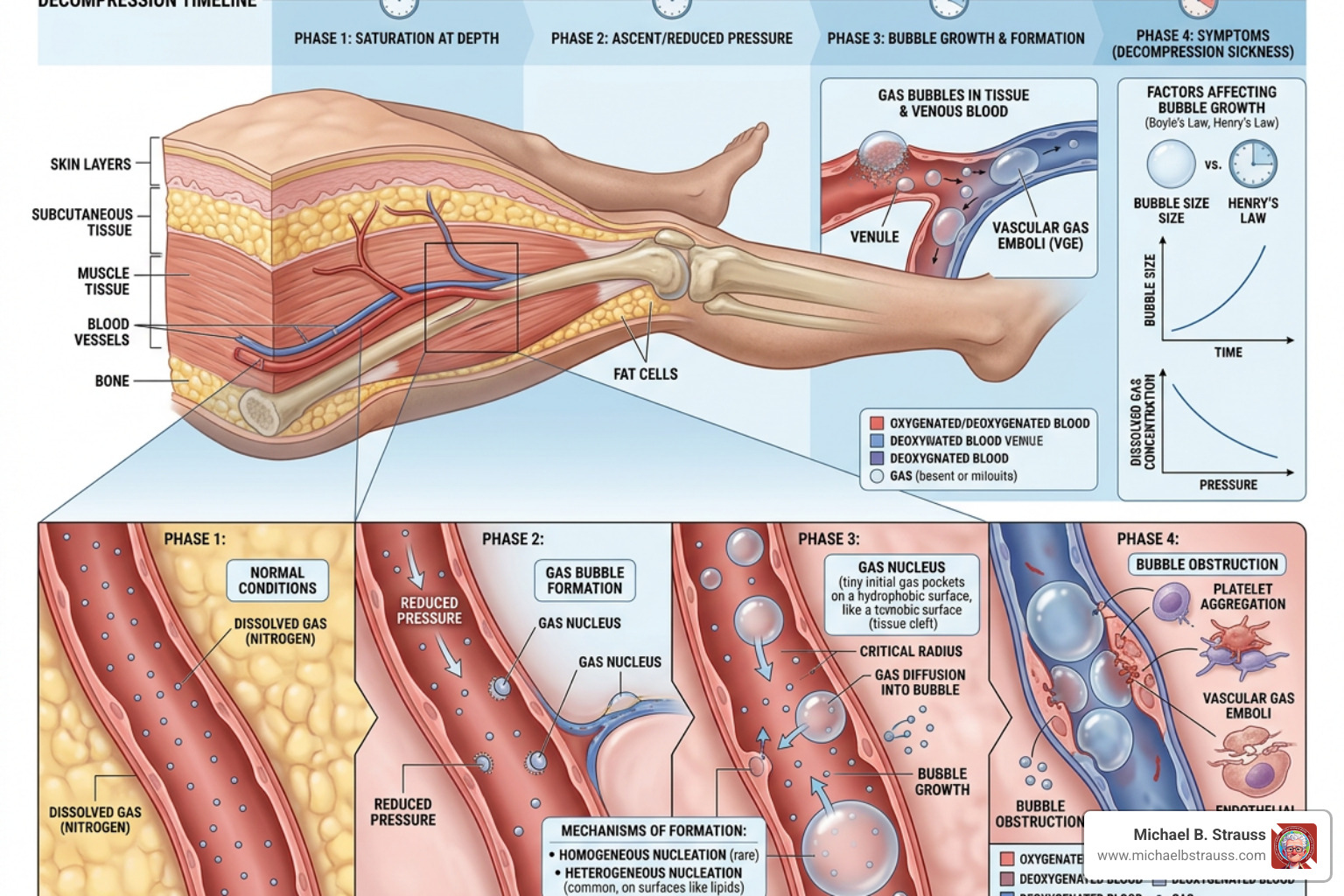
a scientific diagram related to bubble formation - Can you recommend some authoritative books on the topic of decompression

  • "Deep Into Deco: The Diver's Decompression Textbook" by Asser Salama: Highly recommended for up-to-date information on algorithms and oxygen use. Salama incorporates modern technology and interviews with leading researchers, presenting complex ideas without requiring advanced mathematics.

  • "Diving Physics with Bubble Mechanics and Decompression Theory in Depth" by Bruce R. Wienke: Wienke offers a technical deep dive into the physics of diving and bubble dynamics. This book is for those seeking the fundamental physical principles governing decompression.

  • "Basic Decompression Theory and Application" by Bruce R. Wienke: A more accessible text providing a solid understanding of mathematical and physical models behind decompression. The 3rd edition extends phase mechanics and model construction. Wienke's deco.pdf

  • "Technical Diving in Depth" by Bruce R. Wienke: Covers a broad range of technical topics with a focus on underlying decompression science and practical dive planning for complex scenarios.

  • "International Textbook of Mixed Gas Diving": Offers invaluable insights into mixed gas diving, detailing how different gas blends like trimix affect decompression profiles and safety.

  • "Scuba Physiological" by Simon Pridmore: Provides a contemporary perspective on diving physiology. Pridmore makes complex cellular processes understandable, connecting them to practical decompression planning.

  • "NOAA Diving Manual: Diving for Science & Technology": An authoritative guide for scientific diving, including sections on decompression procedures, nitrox, and rebreathers. It distills decades of research into practical guidelines.

Book TitlePrimary FocusLevel of DetailModern Topics Covered
Deco for DiversDecompression theory, physiologyIntermediateFoundational models, gas kinetics
Deep Into DecoModern algorithms, practical applicationAdvancedUp-to-date algorithms, oxygen use
Diving Physics with Bubble MechanicsPhysics, bubble mechanicsHighly TechnicalBubble models, advanced algorithms
Bennett and Elliott's PhysiologyDiving physiology, medicineAcademicPhysiological responses, DCS treatment

How Do These Authoritative Books Address Advanced Diving Topics and Practical Applications?

For advanced divers, decompression science is about applying theory to complex scenarios involving specialized gas mixtures, advanced apparatus, and emergency protocols. Authoritative books provide the depth required to navigate these technical challenges safely.

Beyond the Basics: Trimix, Rebreathers, and In-Water Recompression

Advanced decompression extends beyond air tables to include trimix, rebreathers, and in-water recompression (IWR). Recommended texts like "Deep Into Deco" and Wienke's works explain how helium affects decompression profiles and gas kinetics. The "International Textbook of Mixed Gas Diving" is particularly valuable for understanding the nuances of various gas blends.

Rebreather diving adds complexity by maintaining a constant partial pressure of oxygen (PPO2). Advanced texts address how this affects inert gas elimination and bailout planning. The NOAA Diving Manual also provides robust guidelines for rebreather operations.

In-water recompression (IWR) is a critical topic discussed in these books. They cover the physiological basis, benefits, and significant risks, emphasizing that IWR is a last resort when hyperbaric chambers are inaccessible. These texts provide the medical background to understand the dangers of uncontrolled recompression.
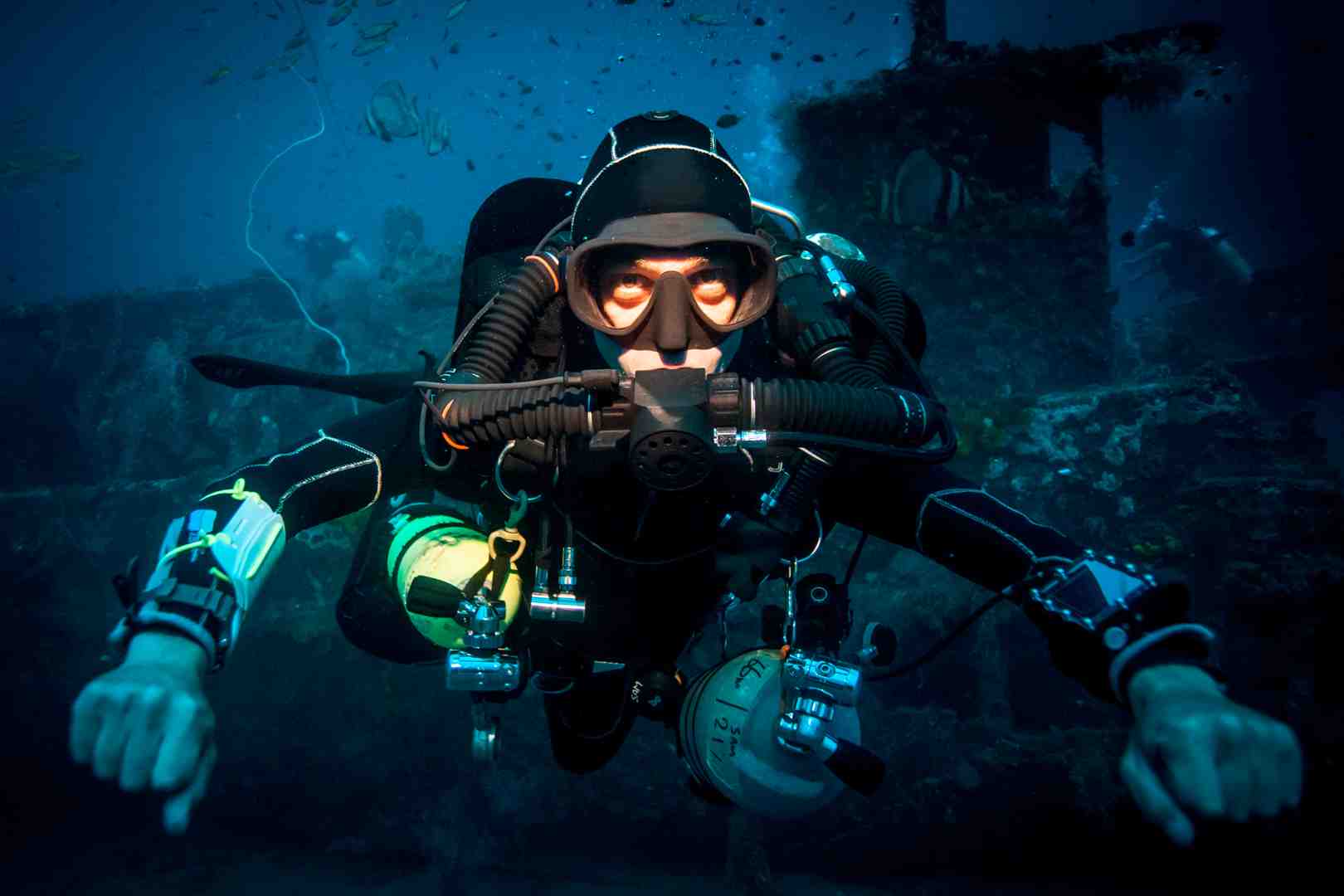
a rebreather diver - Can you recommend some authoritative books on the topic of decompression science for advanced divers?

Integrating Theory with Practice: Algorithms, Tables, and Real-World Scenarios

Authoritative books connect theory to practice by discussing decompression algorithms, dive table construction, and practical planning. Salama's "Deep Into Deco" explains how algorithms influence dive profiles, while Wienke's books explore the mathematical underpinnings.

Understanding the history of decompression tables remains vital for appreciating the safety margins in modern computers. These resources also offer practical advice on gas management, contingency planning, and thermal protection. Some texts include case studies, illustrating the consequences of improper decompression and analyzing factors contributing to DCS incidents.

Medical perspectives in "Bennett and Elliott's Physiology and Medicine of Diving" provide crucial knowledge for DCS prevention and response. Understanding the mechanisms of injury is vital for advanced divers. For more on decompression sickness, explore our resources on why and at what sites decompression sickness can occur.

Finally, many texts touch upon human factors, such as stress and decision-making, which impact adherence to decompression protocols. Integrating this with scientific knowledge creates a holistic approach to safety.

Where Can Advanced Divers Access and Further Their Decompression Knowledge?

Advanced decompression science requires continuous learning. The authoritative books discussed are available through specialized diving publishers and technical resources. Some authors, like Bruce R. Wienke, have made research and older editions available as free PDFs, providing foundational knowledge for the community.

Beyond books, divers should consult technical publications like InDEPTH Magazine for the latest research and incident analyses. These resources, combined with formal technical diving courses, form a robust framework for enhancing decompression practice. Dr. Michael B. Strauss emphasizes that the best divers are always learning. For more diving science resources, visit Dr. Michael B. Strauss's diving science page.

Key Characteristics of Authoritative Decompression Books:

  • Authored by recognized experts: Physiologists, medical doctors, and experienced technical instructors.
  • Based on scientific research: Grounded in peer-reviewed science and empirical data rather than anecdote.
  • Regularly updated: Revised to incorporate the latest research and technological advancements.
  • Comprehensive scope: Covering theory, physiology, algorithms, and real-world application.
  • Endorsed by the community: Cited and recommended by leading technical diving organizations.

To get your copy of "Diving Science Revisited," visit: https://www.bestpub.com/view-all-products/product/diving-science-revisited/category_pathway-48.html

DISCLAIMER: Articles are for "EDUCATIONAL PURPOSES ONLY", not to be considered advice or recommendations.

Download Full PDF
Tags:

What Are the Essential Foundational and Modern Texts for Decompression Science?

a stack of classic diving books - Can you recommend some authoritative books on the topic of decompression science for

For advanced and technical divers, understanding decompression science is fundamental to safety and exploration. The complexities of gas kinetics and bubble mechanics require study beyond basic training. Authoritative texts, written by leading researchers and seasoned divers, provide the scientific foundation for planning complex dives. Dr. Michael B. Strauss, an expert in diving safety, advocates for continuous learning through comprehensive resources. This article recommends the most authoritative books on decompression science for an advanced diver's library.

Foundational Classics: Understanding the Roots of Decompression Theory

To grasp modern decompression, understanding its history is crucial. John Scott Haldane's 1908 work established the principles of controlled ascent and gas kinetics. While his tables are superseded, the core physiological principles remain relevant. These foundational texts explain how the human body reacts to pressure changes, providing context for today's technological advancements.

a stack of classic diving books - Can you recommend some authoritative books on the topic of decompression science for

  • "Deco for Divers: Decompression Theory and Physiology" by Mark Powell: A standard reference for technical instructors and students. It offers clear explanations of decompression theory and physiology, bridging the gap between academic theory and practical application. It covers fundamental models and gas kinetics in an accessible way.

  • "Essentials of Deeper Sport Diving" by John Lippmann: This text provides an in-depth review of decompression procedures and the physiological aspects of deeper diving. It is praised for its comprehensive coverage and ability to explain complex topics clearly for those moving beyond entry-level technical manuals.

  • "Bennett and Elliott's Physiology and Medicine of Diving" (Various Editors): Considered the "bible" of diving medicine since 1969, this textbook covers the scientific backing of decompression, hyperbaric medicine, and DCS treatment. Its rigorous approach makes it an unparalleled reference for academic-level understanding. Bennett and Elliott's physiology and medicine of diving

Cutting-Edge Research: Exploring Modern Decompression Models and Practices

Modern decompression science incorporates advanced algorithms and bubble mechanics. These texts reflect the latest research for multi-gas, deep, and extended-duration dives, integrating insights into bubble formation and physiological responses.

a scientific diagram related to bubble formation - Can you recommend some authoritative books on the topic of decompression

  • "Deep Into Deco: The Diver's Decompression Textbook" by Asser Salama: Highly recommended for up-to-date information on algorithms and oxygen use. Salama incorporates modern technology and interviews with leading researchers, presenting complex ideas without requiring advanced mathematics.

  • "Diving Physics with Bubble Mechanics and Decompression Theory in Depth" by Bruce R. Wienke: Wienke offers a technical deep dive into the physics of diving and bubble dynamics. This book is for those seeking the fundamental physical principles governing decompression.

  • "Basic Decompression Theory and Application" by Bruce R. Wienke: A more accessible text providing a solid understanding of mathematical and physical models behind decompression. The 3rd edition extends phase mechanics and model construction. Wienke's deco.pdf

  • "Technical Diving in Depth" by Bruce R. Wienke: Covers a broad range of technical topics with a focus on underlying decompression science and practical dive planning for complex scenarios.

  • "International Textbook of Mixed Gas Diving": Offers invaluable insights into mixed gas diving, detailing how different gas blends like trimix affect decompression profiles and safety.

  • "Scuba Physiological" by Simon Pridmore: Provides a contemporary perspective on diving physiology. Pridmore makes complex cellular processes understandable, connecting them to practical decompression planning.

  • "NOAA Diving Manual: Diving for Science & Technology": An authoritative guide for scientific diving, including sections on decompression procedures, nitrox, and rebreathers. It distills decades of research into practical guidelines.

Book TitlePrimary FocusLevel of DetailModern Topics Covered
Deco for DiversDecompression theory, physiologyIntermediateFoundational models, gas kinetics
Deep Into DecoModern algorithms, practical applicationAdvancedUp-to-date algorithms, oxygen use
Diving Physics with Bubble MechanicsPhysics, bubble mechanicsHighly TechnicalBubble models, advanced algorithms
Bennett and Elliott's PhysiologyDiving physiology, medicineAcademicPhysiological responses, DCS treatment

How Do These Authoritative Books Address Advanced Diving Topics and Practical Applications?

For advanced divers, decompression science is about applying theory to complex scenarios involving specialized gas mixtures, advanced apparatus, and emergency protocols. Authoritative books provide the depth required to navigate these technical challenges safely.

Beyond the Basics: Trimix, Rebreathers, and In-Water Recompression

Advanced decompression extends beyond air tables to include trimix, rebreathers, and in-water recompression (IWR). Recommended texts like "Deep Into Deco" and Wienke's works explain how helium affects decompression profiles and gas kinetics. The "International Textbook of Mixed Gas Diving" is particularly valuable for understanding the nuances of various gas blends.

Rebreather diving adds complexity by maintaining a constant partial pressure of oxygen (PPO2). Advanced texts address how this affects inert gas elimination and bailout planning. The NOAA Diving Manual also provides robust guidelines for rebreather operations.

In-water recompression (IWR) is a critical topic discussed in these books. They cover the physiological basis, benefits, and significant risks, emphasizing that IWR is a last resort when hyperbaric chambers are inaccessible. These texts provide the medical background to understand the dangers of uncontrolled recompression.

a rebreather diver - Can you recommend some authoritative books on the topic of decompression science for advanced divers?

Integrating Theory with Practice: Algorithms, Tables, and Real-World Scenarios

Authoritative books connect theory to practice by discussing decompression algorithms, dive table construction, and practical planning. Salama's "Deep Into Deco" explains how algorithms influence dive profiles, while Wienke's books explore the mathematical underpinnings.

Understanding the history of decompression tables remains vital for appreciating the safety margins in modern computers. These resources also offer practical advice on gas management, contingency planning, and thermal protection. Some texts include case studies, illustrating the consequences of improper decompression and analyzing factors contributing to DCS incidents.

Medical perspectives in "Bennett and Elliott's Physiology and Medicine of Diving" provide crucial knowledge for DCS prevention and response. Understanding the mechanisms of injury is vital for advanced divers. For more on decompression sickness, explore our resources on why and at what sites decompression sickness can occur.

Finally, many texts touch upon human factors, such as stress and decision-making, which impact adherence to decompression protocols. Integrating this with scientific knowledge creates a holistic approach to safety.

Where Can Advanced Divers Access and Further Their Decompression Knowledge?

Advanced decompression science requires continuous learning. The authoritative books discussed are available through specialized diving publishers and technical resources. Some authors, like Bruce R. Wienke, have made research and older editions available as free PDFs, providing foundational knowledge for the community.

Beyond books, divers should consult technical publications like InDEPTH Magazine for the latest research and incident analyses. These resources, combined with formal technical diving courses, form a robust framework for enhancing decompression practice. Dr. Michael B. Strauss emphasizes that the best divers are always learning. For more diving science resources, visit Dr. Michael B. Strauss's diving science page.

Key Characteristics of Authoritative Decompression Books:

  • Authored by recognized experts: Physiologists, medical doctors, and experienced technical instructors.
  • Based on scientific research: Grounded in peer-reviewed science and empirical data rather than anecdote.
  • Regularly updated: Revised to incorporate the latest research and technological advancements.
  • Comprehensive scope: Covering theory, physiology, algorithms, and real-world application.
  • Endorsed by the community: Cited and recommended by leading technical diving organizations.

To get your copy of "Diving Science Revisited," visit: https://www.bestpub.com/view-all-products/product/diving-science-revisited/category_pathway-48.html

DISCLAIMER: Articles are for "EDUCATIONAL PURPOSES ONLY", not to be considered advice or recommendations.