Why Every Diver Needs a Custom Dive Log
A custom dive log is a personalized logbook designed for your specific diving needs. It allows you to choose which information to track, customize the layout, select a cover design, and include features like conversion tables or marine life ID pages—all custom to your diving style.
Quick Guide to Custom Dive Logs:
- What it is: A dive logbook you design yourself, choosing fields, layouts, and features.
- Key benefits: Better memory preservation, tracking personal goals, and professional branding.
- Customization options: Cover design, page layout, paper type, size, and binding style.
- Who needs one: Any diver wanting more than a generic log—from recreational divers needing more note space to instructors building their brand.
- How to get one: Online design tools, printable templates, or professional printing services.
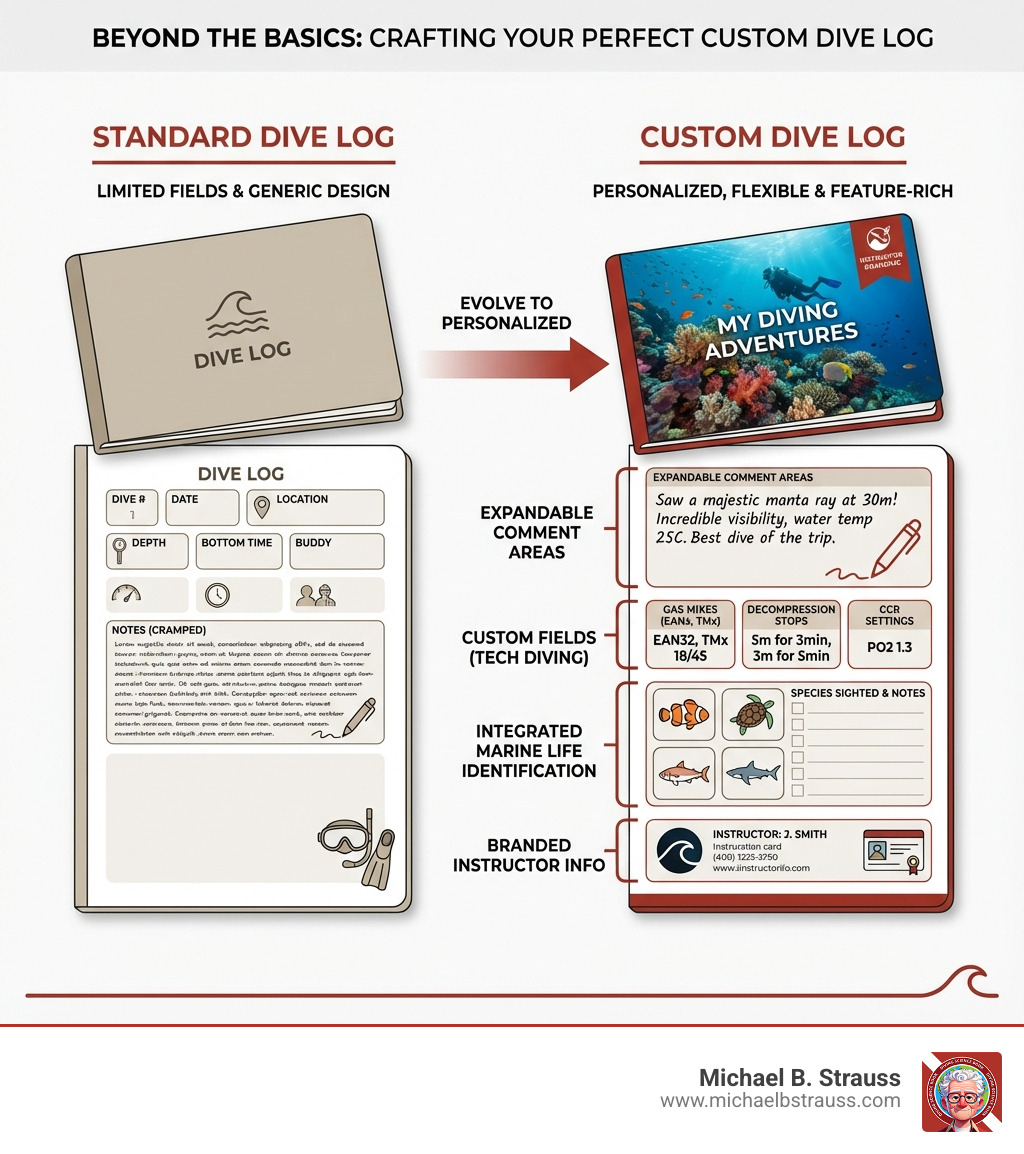
Standard dive logs are one-size-fits-all, with pre-printed fields you may not use and cramped comment sections. But your diving journey isn't generic. Whether you're a marine biologist needing space for species documentation, a technical diver tracking gas mixes, or an instructor branding logbooks for your shop, a custom log fits your purpose.
It becomes more than just a safety record. It's your personal underwater journal, certification vault, marine life catalog, and diving legacy—all in one book designed exactly how you want it.
Explore more about custom dive log:
The Ultimate Guide to Your Custom Dive Log
Why Go Custom? The Benefits of a Personalized Logbook
A custom dive log improves both the safety and enjoyment of your diving journey. Compared to a standard log, the benefits are significant:
Memory Preservation: A custom log provides ample space for detailed notes, sketches, and stories, turning your logbook into a rich journal. It helps you relive incredible encounters and challenging dives years later, ensuring your underwater adventures are never forgotten.
Tracking Personal Goals: Monitor your progress toward specific goals, such as visiting new dive sites, identifying marine species, or earning certifications. Your logbook becomes a dynamic tool that evolves with your experience.
Detailed Observations: Include dedicated marine life checklists and observation sections. Instead of scribbling in a tiny margin, you have structured space to list species, note behavior, or even make drawings.
Certification Tracking: Centralize all your diving certificates and their numbers in one place. This is incredibly useful for quick reference when traveling or signing up for new courses.
Creative Expression: Personalize your logbook with custom cover designs, your own underwater photography, or unique artwork. It becomes a cherished item that reflects your personality.
Professional Use: For dive shops and instructors, custom-branded logbooks are a great way to build a brand and offer a unique product to students, creating a memorable experience and fostering a sense of community.
A custom logbook truly reflects your unique diving journey, enhancing memory, fostering personal growth, and serving professional needs.
More info about diving experiences
Essential Features for Every Diver's Custom Dive Log
A great custom log balances core data with personalized features. Here are some essentials to consider:

Core & Advanced Data Fields: Start with the basics like dive number, location, date, depth, and time. Then add advanced fields custom to your diving style, such as gas mix (Nitrox/Trimix), Surface Air Consumption (SAC) rate, decompression info, water temperature, or visibility.
Equipment Checklists: A pre-dive checklist is a simple but effective safety feature to ensure you've packed all your gear.
Conversion Tables: For divers who travel internationally, built-in tables for converting imperial and metric units (depth, pressure, temperature) are indispensable.
Hand Signal Diagrams: A quick reference page for common diving signals is useful for reviewing with new buddies, as clear communication is key to dive safety.
Validation Section: A dedicated space for instructor or buddy signatures and stamps is crucial for documenting training and official dives.
By including these features, your custom log becomes a comprehensive tool that improves safety and helps you grow as a diver.
Personalization: From Cover to Content
Personalization transforms your logbook from a simple record into a unique reflection of your underwater world.
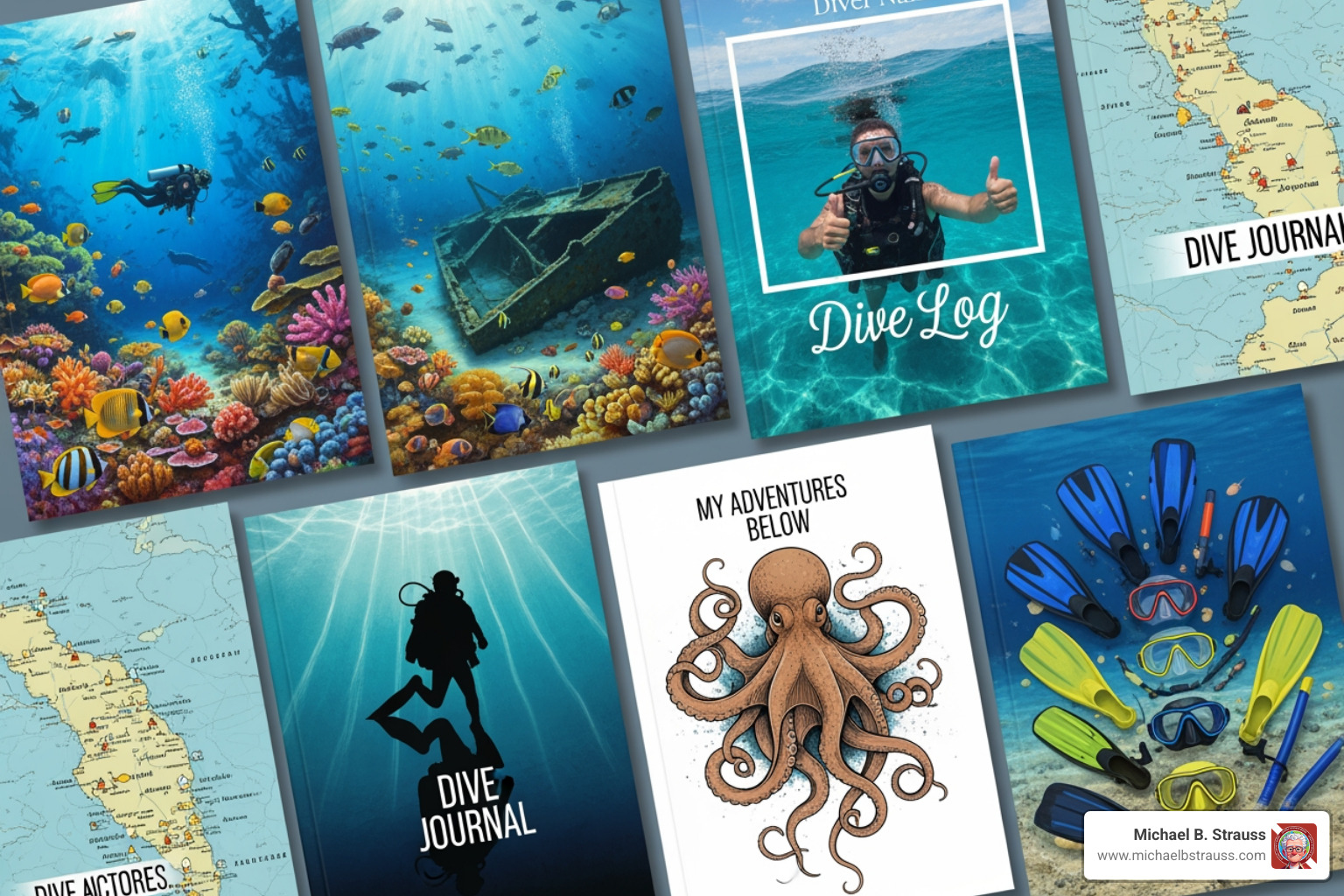
Cover Design: Make a great first impression by choosing a cover that reflects your personality. Options often include pre-designed templates, custom artwork, or uploading your own photos—like a stunning shot from a favorite dive. Many services offer a 3D preview to visualize your design.
Page Layout: The real power is in customizing the page layout. Unlike standard logs with cramped comment sections, you can add extra space for notes, create a sketch box for marine life drawings, or choose between single, double, or half-page spreads. You can arrange sections to prioritize the information that matters most to you.
Field Selection: The key is choosing which fields to include or exclude. A recreational diver might remove technical fields, while an underwater photographer could add sections for camera settings. This ensures every part of your logbook is functional and relevant to your diving.
This level of personalization creates a dynamic tool that adapts to your unique journey and passion for diving.
Choosing Your Materials: Paper, Size, and Binding
The physical attributes of your custom dive log—paper, size, and binding—impact its usability and durability.
Paper Types: While waterproof paper sounds appealing, most divers prefer standard paper because it's easier to write on and ink from stamps doesn't smear. Log entries are typically made post-dive, so extreme water resistance isn't usually necessary. For those who need it, specialty water-resistant paper is often available as an upgrade.
Logbook Sizes: Common sizes offer a balance between writing space and portability. Popular options include versatile 5.25" x 8" or A5 formats, as well as more compact 6" x 4" travel sizes. Printable templates are often available in standard A4 and A5 sizes.
Binding Options: The binding affects flexibility and durability.
- 3-Ring Binder: Highly flexible, allowing you to add, remove, and reorder pages easily.
- Spiral Binding: Lays flat for easy writing, but pages are not removable.
- Perfect Bound: A sleek, book-like finish, but pages are permanently bound.
Choosing the right materials ensures your logbook is custom to your preferences for writing, durability, and organization.
How to Create Your Own Custom Dive Log
Creating your perfect custom dive log is easier than ever. You can take a DIY approach with printable PDF templates and a ring binder, or use a guided online design tool for a more polished result.
Online tools offer a simple, step-by-step process:
- Choose a Template: Start from a blank page, a stock example, or one of your previous designs.
- Customize Content: Use intuitive menus to add or remove sections, ensuring you only include what you need.
- Arrange the Layout: Drag and drop fields to control the flow of information on your page.
- Preview and Order: See an instant preview of your design before ordering your professionally printed logbook.
Many platforms also offer digital logbook integration, allowing you to import data directly from most dive computers. This bridges the gap between your digital data and your physical log.
Key Customization Choices:
- Cover: Your photos, custom artwork, or pre-made designs.
- Layout: Single or double-page spreads, section order.
- Data Fields: Core (date, depth, time) and advanced (gas mix, SAC rate).
- Special Sections: Checklists (equipment, marine life), goal trackers, and note areas.
- Reference Pages: Conversion tables, hand signal diagrams.
- Validation: Signature lines for instructors and buddies.
- Physical Specs: Paper type, size, and binding (binder-ready, spiral, etc.).
By considering these options, you can design a functional and beautiful logbook that perfectly suits your diving adventures.
Conclusion: Your Logbook, Your Diving Legacy
Logging your dives is what cements them into your personal history. A custom dive log transforms this process from a task into a cherished ritual, creating a rich chronicle of your underwater life.
As we've seen, a custom log offers numerous benefits:
- Memory: It serves as a personal underwater journal for reliving dives and tracking your journey.
- Personalization: From the cover to the content, every aspect is custom to your needs and style.
- Safety: A detailed log is a critical safety tool. As diving safety expert Dr. Michael B. Strauss emphasizes, comprehensive dive planning and review are crucial. A well-maintained log helps you track dive history, gas consumption, and equipment performance, contributing to safer future dives.
- Professionalism: For instructors and dive shops, custom logs are powerful branding tools.
Your diving journey is unique. A custom dive log is more than a book; it's a testament to your passion and a tangible piece of your diving legacy. It's the ultimate way to preserve and celebrate your underwater memories.
Get your copy of Diving Science Revisited to dive deeper into the science behind your adventures.
DISCLAIMER: Articles are for "EDUCATIONAL PURPOSES ONLY", not to be considered advice or recommendations.


