Read story

Understanding the Bends and Decompression Illness Prevention Tips
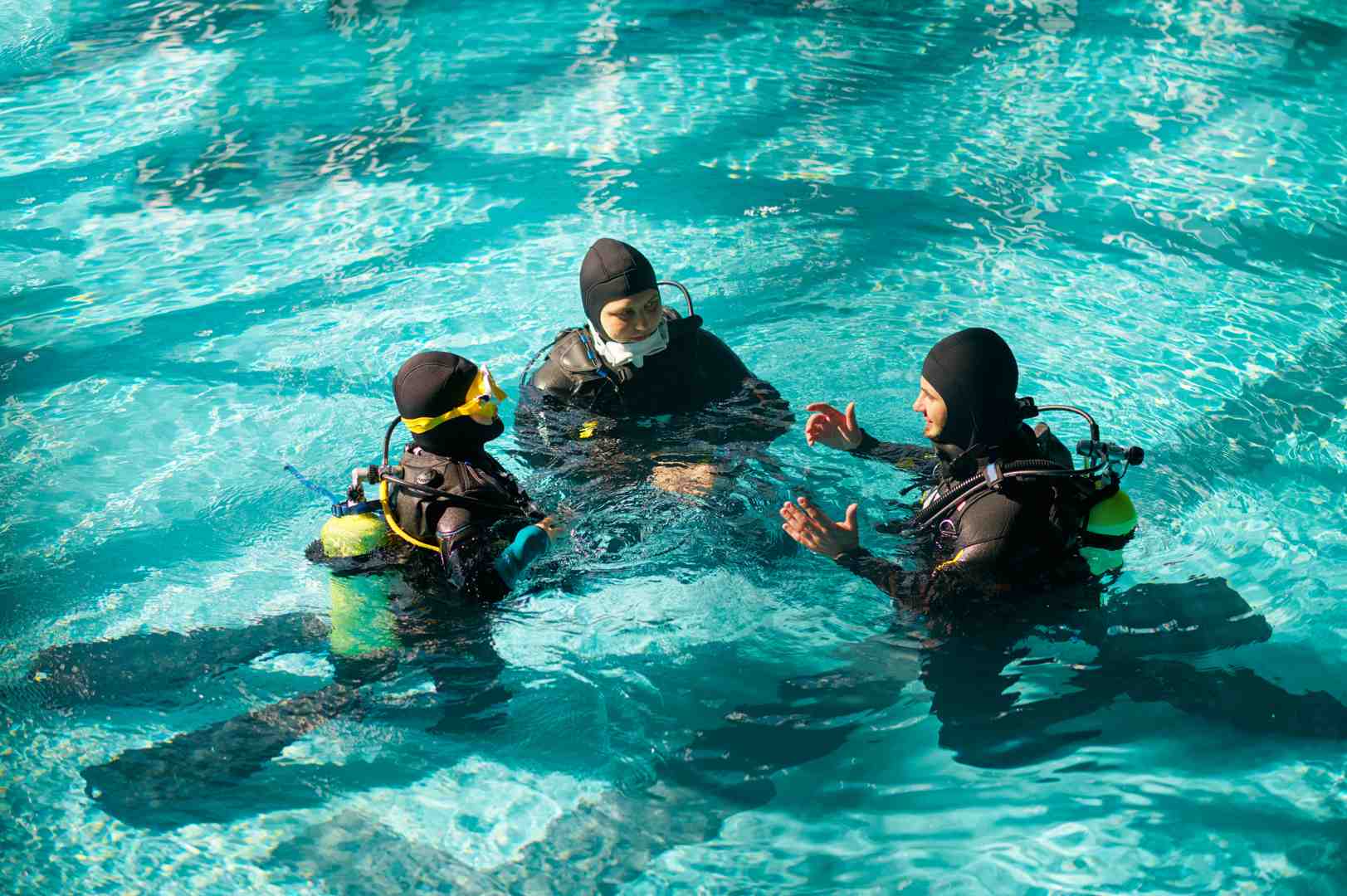
decompression illness prevention tips

Decompression illness prevention tips every diver needs to know, fast:

  1. Ascend slowly — no faster than 30 feet (9 meters) per minute
  2. Do a safety stop — at 15 feet for 3–5 minutes on every dive
  3. Stay hydrated — drink water before, during, and after diving
  4. Avoid alcohol before and after dives
  5. Wait before flying — at least 12 hours after a single dive, 18+ hours after multiple dives, and 24–48 hours after dives requiring decompression stops
  6. Dive conservatively — stay well within your no-decompression limits
  7. Use a dive computer — to track nitrogen loading in real time
  8. Know the symptoms — joint pain, fatigue, skin rash, numbness, or dizziness after surfacing are all warning signs
  9. Call DAN immediately if you suspect decompression sickness — their emergency line is available 24/7

Every year, scuba divers experience decompression sickness (DCS) — also called "the bends" — often despite following what seemed like a safe dive plan. The hard truth? Any dive can carry some risk. Even careful divers following standard guidelines are not fully immune.

What makes DCS so serious is how fast it can escalate. Research shows that about 75% of DCS cases show symptoms within the first hour after surfacing. Left untreated, what starts as mild joint pain can become permanent neurological damage.

The good news: most cases are preventable. With the right strategies — covering everything from ascent technique and hydration to gear choices and post-dive habits — you can dramatically reduce your risk every time you get in the water.

This guide breaks down the smartest, most evidence-based decompression illness prevention tips, organized so you can put them to work on your very next dive.
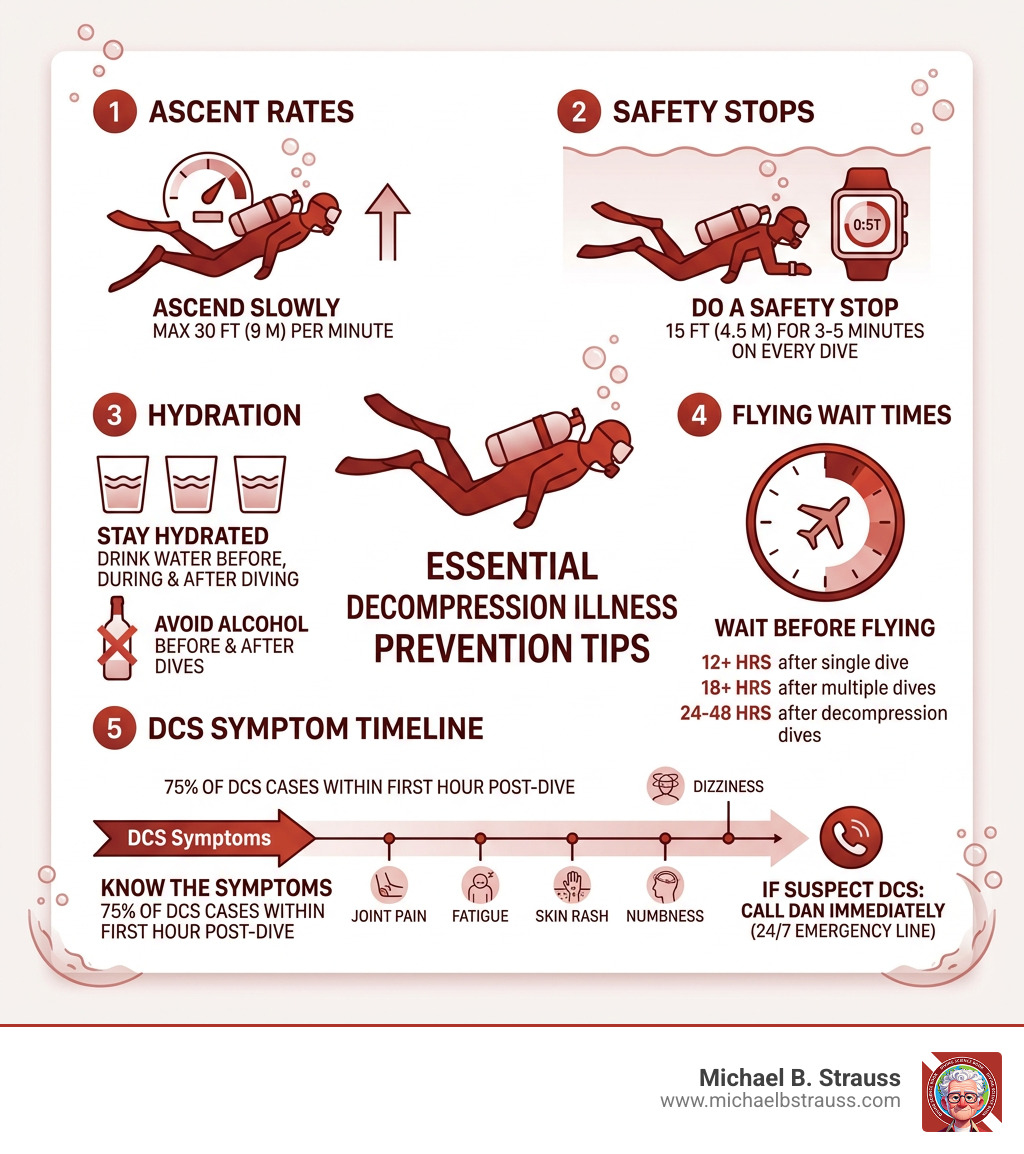
Infographic showing key decompression illness prevention tips including ascent rates, safety stops, hydration, flying wait

To truly master decompression illness prevention tips, we first have to understand the "why" behind the bubbles. When we dive, we breathe air under pressure. According to Henry’s Law, the amount of gas dissolved in a liquid is proportional to the pressure of that gas. In our case, the nitrogen in our scuba tanks dissolves into our blood and tissues as we descend.

As we surface and pressure decreases, that nitrogen must leave our bodies. If we ascend slowly, the nitrogen stays dissolved and travels to our lungs to be exhaled—a process called off-gassing. But if we come up too fast, the nitrogen "fizzes" out of solution, much like opening a soda bottle too quickly. These bubbles can block blood flow or cause painful inflammation in our tissues. This is the core of Decompression Science.

Medical experts generally categorize DCS into three types:

  • Type I (The "Bends"): Usually involves the skin, joints, or lymphatic system. It is often painful but typically not life-threatening.
  • Type II (Neurological): This is more serious, affecting the brain, spinal cord, or inner ear. It can lead to paralysis, unconsciousness, or permanent disability.
  • Type III (Pulmonary/Chokes): A rare but critical condition where bubbles obstruct the blood vessels in the lungs.

Recognizing Symptoms and Risk Factors

Knowing when you’re in trouble is just as important as knowing how to stay out of it. While we often think of "the bends" as just joint pain, the symptoms can be much more diverse. Statistics show that while 50% of divers feel symptoms within an hour, nearly 90% will show signs by the six-hour mark.

Common symptoms include:

  • Joint Pain: Often felt in the shoulders or elbows; it may feel like a deep, dull ache.
  • The "Chokes": Shortness of breath, coughing, or chest pain.
  • Skin Marbling (Cutis Marmorata): A blotchy, reddish-purple rash that can be itchy.
  • Extreme Fatigue: Feeling completely wiped out, far beyond what a normal dive should cause.
  • Neurological Signs: Tingling, numbness ("pins and needles"), weakness, or confusion.

scuba diver signaling okay while monitoring their surroundings - decompression illness prevention tips

We must also account for individual risk factors. Did you know the DCS risk in males is estimated to be 2.5 times higher than in females? Other factors that increase your likelihood of a "hit" include dehydration, being over the age of 30, high body fat (nitrogen loves to hide in fat), and diving in cold water. Cold water is particularly tricky because it changes our circulation, making it harder for our bodies to eliminate nitrogen efficiently during the ascent. For a deeper dive into these issues, see the Scientific research on decompression sickness symptoms.

Mastering Safe Ascent Rates and Decompression Illness Prevention Tips

The most critical part of your dive isn't the bottom time—it's the trip back to the surface. We always recommend an ascent rate of no faster than 30 feet (9 meters) per minute. If you don't have a computer, a good rule of thumb is to never go faster than your smallest exhaled bubbles.

One of our favorite decompression illness prevention tips is the mandatory safety stop. Even if your dive doesn't technically require a "decompression stop," you should spend 3 to 5 minutes at 15 feet (4.5 meters). This acts as a "buffer zone," allowing your body to off-gas a significant amount of nitrogen before you take that final, most dangerous step to the surface.

In his work on the Evaluation and Management of Pain-Related Medical Problems of Diving, Dr. Michael B. Strauss emphasizes that the pressure change in the last 15 feet is the most dramatic. Moving from 15 feet to the surface represents a larger proportional pressure change than moving from 60 feet to 45 feet. Take your time!

Essential Decompression Illness Prevention Tips for Lifestyle and Gear

Preventing DCS starts long before you put your fins on. Your physical condition and the equipment you choose play massive roles in your safety.

1. Hydration is KingDehydration is perhaps the most common contributing factor to DCS. When you are dehydrated, your blood is thicker and moves more slowly, which hinders nitrogen elimination. We suggest drinking enough water so that your urine remains "straw-colored." If it’s dark, you need more water!

2. The Truth About AlcoholWe all love a post-dive drink, but alcohol is a major risk factor. It dehydrates you and increases your heart rate, which can interfere with how your body processes nitrogen. Statistics show alcohol is involved in 3 out of 4 adult deaths associated with water recreation. Save the "sauce" for the night after your diving is done.

3. Have a Gas (Use Nitrox)Using Enriched Air Nitrox (EANx) is a fantastic way to lower your risk. Nitrox has a higher percentage of oxygen and a lower percentage of nitrogen than regular air. By breathing less nitrogen during the dive, your tissues absorb less of it. However, you must be certified to use it, as oxygen becomes toxic at depth.

4. Trust Your TechModern dive computers are incredible tools. They use complex algorithms to track your nitrogen loading in real-time. Make sure yours is set to a conservative level, especially if you are older or doing repetitive dives. Never "saw-tooth" your profile (constantly going up and down), as this confuses the computer's math and increases bubble risk.

Emergency Response and Long-Term Dive Safety

Despite our best efforts, accidents happen. If you or your buddy suspect DCS, every second counts. The first step is always 100% supplemental oxygen. Breathing pure oxygen creates a "pressure gradient" that helps flush nitrogen out of the blood and shrinks existing bubbles.

If symptoms appear, we should:

  • Maintain a horizontal position (but avoid tilting the head down, which was once recommended but is now discouraged).
  • Administer fluids if the diver is conscious.
  • Contact the Divers Alert Network (DAN) at 919-684-9111.
  • Arrange for transport to a hyperbaric recompression chamber.

Understanding Why and at What Sites Decompression Sickness Can Occur is vital for first responders and divers alike. Recompression in a chamber is the only definitive cure for DCS, as it physically shrinks the bubbles and restores blood flow to oxygen-starved tissues.

Post-Dive Protocols, Repetitive Dives, and Flying

The "danger zone" doesn't end when you step back onto the boat. Nitrogen can stay in your system for 12 to 24 hours after a dive. This is why planning your trip home is a vital part of decompression illness prevention tips.

The Flying After Diving Rule:Flying in a commercial airplane involves a drop in cabin pressure (usually equivalent to being 6,000–8,000 feet up a mountain). If you still have excess nitrogen in your blood, that pressure drop can cause bubbles to form mid-flight.

  • Single No-Decompression Dive: Wait at least 12 hours.
  • Repetitive or Multi-Day Dives: Wait at least 18 hours (24 is much safer).
  • Dives Requiring Decompression Stops: Wait 24 to 48 hours.

For multi-day trips, we recommend taking a "dry day" in the middle of the week to let your nitrogen levels reset. Always do your deepest dive of the day first, and keep your subsequent dives shallower. Check out the Scientific research on flying after diving for the latest consensus on these wait times.

Special Considerations for Medical Conditions

Some divers are naturally more "bends-prone" due to underlying health issues. One of the most significant is a Patent Foramen Ovale (PFO)—a small hole between the chambers of the heart that didn't close after birth. About 25% of the general population has this. In divers, a PFO can allow nitrogen bubbles to bypass the lungs (where they would normally be filtered out) and go directly to the brain or body, causing "undeserved" DCS.

Other conditions to watch for include:

  • Lung Bullae: Small air pockets in the lungs that can rupture during ascent.
  • Cardiovascular Health: A strong heart and clear arteries are essential for moving nitrogen-rich blood to the lungs for off-gassing.
  • Previous Injuries: Old scar tissue from surgeries or broken bones can sometimes become a site for bubble formation.

If you have any of these conditions, we strongly urge you to get medical clearance from a physician trained in dive medicine before hitting the water.

Conclusion: Diving Smarter with Expert Guidance

Scuba diving is an incredible privilege, but it demands respect for the laws of physics. By following these decompression illness prevention tips—staying hydrated, ascending slowly, and using the right technology—you put the odds firmly in your favor.

Dr. Michael B. Strauss has dedicated his career to making these complex scientific principles accessible to every diver. His books are more than just manuals; they are a roadmap to a long, safe career in the underwater world. Embarking on a scuba diving adventure can be one of the most thrilling experiences of your life. However, it’s crucial to prioritize safety to ensure each dive is as enjoyable as it is unforgettable. Dr. Michael B. Strauss, a renowned expert in diving safety, offers invaluable insights in his comprehensive diving books. These books for scuba divers are essential reads for both novices and experienced divers.

The best dive is the one where everyone comes home safe. For more resources on how to protect yourself and your dive buddies, visit our diving science services page. Dive safe, dive smart, and keep exploring!

To deepen your understanding of dive safety, you can purchase Dr. Strauss's book here: Diving Science Revisited.

DISCLAIMER: Articles are for "EDUCATIONAL PURPOSES ONLY", not to be considered advice or recommendations.

Download Full PDF
Tags:

Understanding the Bends and Decompression Illness Prevention Tips

decompression illness prevention tips

Decompression illness prevention tips every diver needs to know, fast:

  1. Ascend slowly — no faster than 30 feet (9 meters) per minute
  2. Do a safety stop — at 15 feet for 3–5 minutes on every dive
  3. Stay hydrated — drink water before, during, and after diving
  4. Avoid alcohol before and after dives
  5. Wait before flying — at least 12 hours after a single dive, 18+ hours after multiple dives, and 24–48 hours after dives requiring decompression stops
  6. Dive conservatively — stay well within your no-decompression limits
  7. Use a dive computer — to track nitrogen loading in real time
  8. Know the symptoms — joint pain, fatigue, skin rash, numbness, or dizziness after surfacing are all warning signs
  9. Call DAN immediately if you suspect decompression sickness — their emergency line is available 24/7

Every year, scuba divers experience decompression sickness (DCS) — also called "the bends" — often despite following what seemed like a safe dive plan. The hard truth? Any dive can carry some risk. Even careful divers following standard guidelines are not fully immune.

What makes DCS so serious is how fast it can escalate. Research shows that about 75% of DCS cases show symptoms within the first hour after surfacing. Left untreated, what starts as mild joint pain can become permanent neurological damage.

The good news: most cases are preventable. With the right strategies — covering everything from ascent technique and hydration to gear choices and post-dive habits — you can dramatically reduce your risk every time you get in the water.

This guide breaks down the smartest, most evidence-based decompression illness prevention tips, organized so you can put them to work on your very next dive.

Infographic showing key decompression illness prevention tips including ascent rates, safety stops, hydration, flying wait

To truly master decompression illness prevention tips, we first have to understand the "why" behind the bubbles. When we dive, we breathe air under pressure. According to Henry’s Law, the amount of gas dissolved in a liquid is proportional to the pressure of that gas. In our case, the nitrogen in our scuba tanks dissolves into our blood and tissues as we descend.

As we surface and pressure decreases, that nitrogen must leave our bodies. If we ascend slowly, the nitrogen stays dissolved and travels to our lungs to be exhaled—a process called off-gassing. But if we come up too fast, the nitrogen "fizzes" out of solution, much like opening a soda bottle too quickly. These bubbles can block blood flow or cause painful inflammation in our tissues. This is the core of Decompression Science.

Medical experts generally categorize DCS into three types:

  • Type I (The "Bends"): Usually involves the skin, joints, or lymphatic system. It is often painful but typically not life-threatening.
  • Type II (Neurological): This is more serious, affecting the brain, spinal cord, or inner ear. It can lead to paralysis, unconsciousness, or permanent disability.
  • Type III (Pulmonary/Chokes): A rare but critical condition where bubbles obstruct the blood vessels in the lungs.

Recognizing Symptoms and Risk Factors

Knowing when you’re in trouble is just as important as knowing how to stay out of it. While we often think of "the bends" as just joint pain, the symptoms can be much more diverse. Statistics show that while 50% of divers feel symptoms within an hour, nearly 90% will show signs by the six-hour mark.

Common symptoms include:

  • Joint Pain: Often felt in the shoulders or elbows; it may feel like a deep, dull ache.
  • The "Chokes": Shortness of breath, coughing, or chest pain.
  • Skin Marbling (Cutis Marmorata): A blotchy, reddish-purple rash that can be itchy.
  • Extreme Fatigue: Feeling completely wiped out, far beyond what a normal dive should cause.
  • Neurological Signs: Tingling, numbness ("pins and needles"), weakness, or confusion.

scuba diver signaling okay while monitoring their surroundings - decompression illness prevention tips

We must also account for individual risk factors. Did you know the DCS risk in males is estimated to be 2.5 times higher than in females? Other factors that increase your likelihood of a "hit" include dehydration, being over the age of 30, high body fat (nitrogen loves to hide in fat), and diving in cold water. Cold water is particularly tricky because it changes our circulation, making it harder for our bodies to eliminate nitrogen efficiently during the ascent. For a deeper dive into these issues, see the Scientific research on decompression sickness symptoms.

Mastering Safe Ascent Rates and Decompression Illness Prevention Tips

The most critical part of your dive isn't the bottom time—it's the trip back to the surface. We always recommend an ascent rate of no faster than 30 feet (9 meters) per minute. If you don't have a computer, a good rule of thumb is to never go faster than your smallest exhaled bubbles.

One of our favorite decompression illness prevention tips is the mandatory safety stop. Even if your dive doesn't technically require a "decompression stop," you should spend 3 to 5 minutes at 15 feet (4.5 meters). This acts as a "buffer zone," allowing your body to off-gas a significant amount of nitrogen before you take that final, most dangerous step to the surface.

In his work on the Evaluation and Management of Pain-Related Medical Problems of Diving, Dr. Michael B. Strauss emphasizes that the pressure change in the last 15 feet is the most dramatic. Moving from 15 feet to the surface represents a larger proportional pressure change than moving from 60 feet to 45 feet. Take your time!

Essential Decompression Illness Prevention Tips for Lifestyle and Gear

Preventing DCS starts long before you put your fins on. Your physical condition and the equipment you choose play massive roles in your safety.

1. Hydration is KingDehydration is perhaps the most common contributing factor to DCS. When you are dehydrated, your blood is thicker and moves more slowly, which hinders nitrogen elimination. We suggest drinking enough water so that your urine remains "straw-colored." If it’s dark, you need more water!

2. The Truth About AlcoholWe all love a post-dive drink, but alcohol is a major risk factor. It dehydrates you and increases your heart rate, which can interfere with how your body processes nitrogen. Statistics show alcohol is involved in 3 out of 4 adult deaths associated with water recreation. Save the "sauce" for the night after your diving is done.

3. Have a Gas (Use Nitrox)Using Enriched Air Nitrox (EANx) is a fantastic way to lower your risk. Nitrox has a higher percentage of oxygen and a lower percentage of nitrogen than regular air. By breathing less nitrogen during the dive, your tissues absorb less of it. However, you must be certified to use it, as oxygen becomes toxic at depth.

4. Trust Your TechModern dive computers are incredible tools. They use complex algorithms to track your nitrogen loading in real-time. Make sure yours is set to a conservative level, especially if you are older or doing repetitive dives. Never "saw-tooth" your profile (constantly going up and down), as this confuses the computer's math and increases bubble risk.

Emergency Response and Long-Term Dive Safety

Despite our best efforts, accidents happen. If you or your buddy suspect DCS, every second counts. The first step is always 100% supplemental oxygen. Breathing pure oxygen creates a "pressure gradient" that helps flush nitrogen out of the blood and shrinks existing bubbles.

If symptoms appear, we should:

  • Maintain a horizontal position (but avoid tilting the head down, which was once recommended but is now discouraged).
  • Administer fluids if the diver is conscious.
  • Contact the Divers Alert Network (DAN) at 919-684-9111.
  • Arrange for transport to a hyperbaric recompression chamber.

Understanding Why and at What Sites Decompression Sickness Can Occur is vital for first responders and divers alike. Recompression in a chamber is the only definitive cure for DCS, as it physically shrinks the bubbles and restores blood flow to oxygen-starved tissues.

Post-Dive Protocols, Repetitive Dives, and Flying

The "danger zone" doesn't end when you step back onto the boat. Nitrogen can stay in your system for 12 to 24 hours after a dive. This is why planning your trip home is a vital part of decompression illness prevention tips.

The Flying After Diving Rule:Flying in a commercial airplane involves a drop in cabin pressure (usually equivalent to being 6,000–8,000 feet up a mountain). If you still have excess nitrogen in your blood, that pressure drop can cause bubbles to form mid-flight.

  • Single No-Decompression Dive: Wait at least 12 hours.
  • Repetitive or Multi-Day Dives: Wait at least 18 hours (24 is much safer).
  • Dives Requiring Decompression Stops: Wait 24 to 48 hours.

For multi-day trips, we recommend taking a "dry day" in the middle of the week to let your nitrogen levels reset. Always do your deepest dive of the day first, and keep your subsequent dives shallower. Check out the Scientific research on flying after diving for the latest consensus on these wait times.

Special Considerations for Medical Conditions

Some divers are naturally more "bends-prone" due to underlying health issues. One of the most significant is a Patent Foramen Ovale (PFO)—a small hole between the chambers of the heart that didn't close after birth. About 25% of the general population has this. In divers, a PFO can allow nitrogen bubbles to bypass the lungs (where they would normally be filtered out) and go directly to the brain or body, causing "undeserved" DCS.

Other conditions to watch for include:

  • Lung Bullae: Small air pockets in the lungs that can rupture during ascent.
  • Cardiovascular Health: A strong heart and clear arteries are essential for moving nitrogen-rich blood to the lungs for off-gassing.
  • Previous Injuries: Old scar tissue from surgeries or broken bones can sometimes become a site for bubble formation.

If you have any of these conditions, we strongly urge you to get medical clearance from a physician trained in dive medicine before hitting the water.

Conclusion: Diving Smarter with Expert Guidance

Scuba diving is an incredible privilege, but it demands respect for the laws of physics. By following these decompression illness prevention tips—staying hydrated, ascending slowly, and using the right technology—you put the odds firmly in your favor.

Dr. Michael B. Strauss has dedicated his career to making these complex scientific principles accessible to every diver. His books are more than just manuals; they are a roadmap to a long, safe career in the underwater world. Embarking on a scuba diving adventure can be one of the most thrilling experiences of your life. However, it’s crucial to prioritize safety to ensure each dive is as enjoyable as it is unforgettable. Dr. Michael B. Strauss, a renowned expert in diving safety, offers invaluable insights in his comprehensive diving books. These books for scuba divers are essential reads for both novices and experienced divers.

The best dive is the one where everyone comes home safe. For more resources on how to protect yourself and your dive buddies, visit our diving science services page. Dive safe, dive smart, and keep exploring!

To deepen your understanding of dive safety, you can purchase Dr. Strauss's book here: Diving Science Revisited.

DISCLAIMER: Articles are for "EDUCATIONAL PURPOSES ONLY", not to be considered advice or recommendations.