Why Decompression Sickness Risk Factors Can Make or Break a Dive
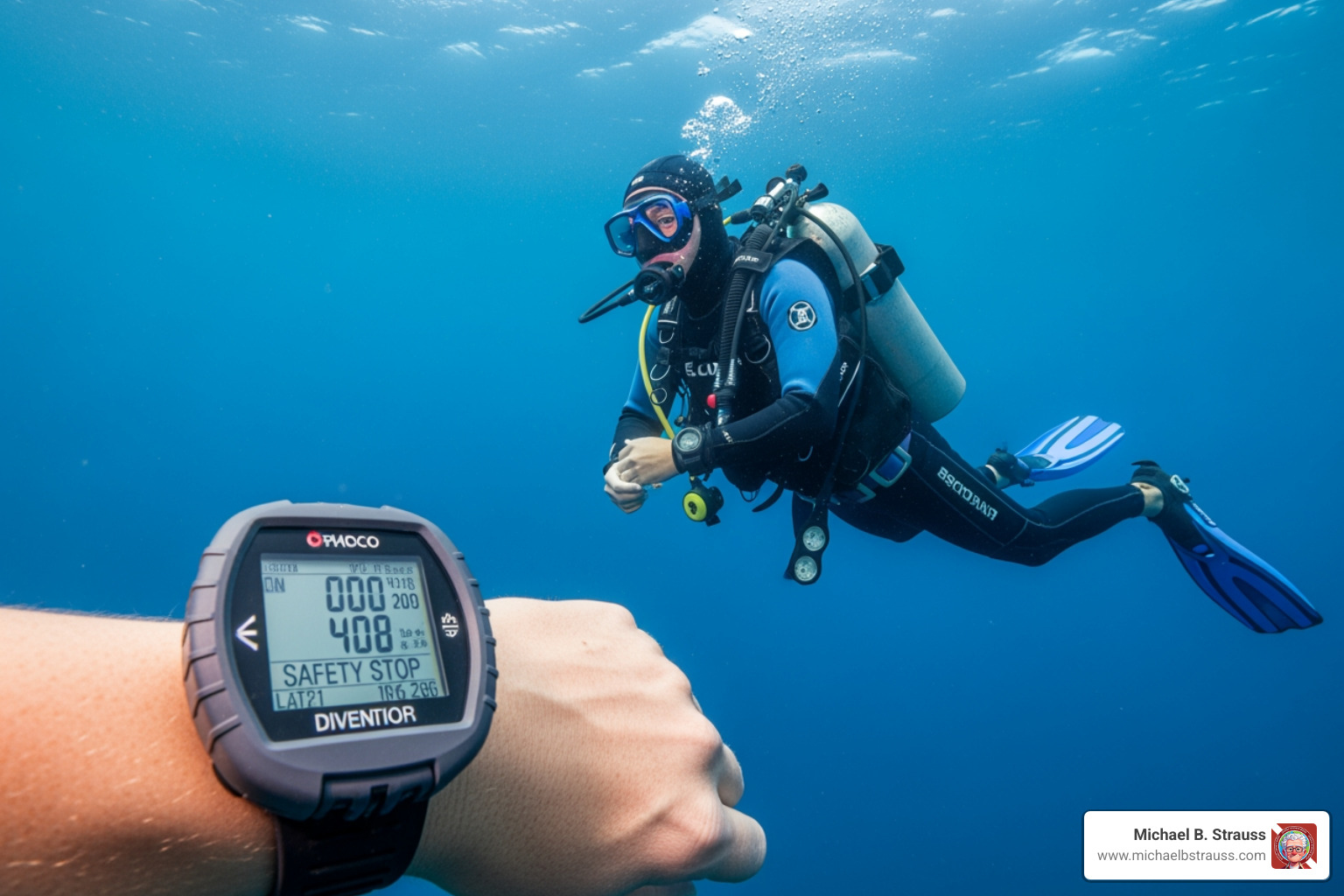
Decompression sickness risk factors include a wide range of dive, physical, and environmental variables that increase the likelihood of nitrogen bubbles forming in the body's tissues after a pressure change.
The most important risk factors at a glance:
- Dive profile: rapid ascent, deep dives, long bottom time, repetitive dives
- Physiology: high body fat, age over 30, patent foramen ovale (PFO), poor cardiovascular fitness
- Environment: cold water, heavy physical exertion, dehydration, alcohol use
- Post-dive behavior: flying too soon, ascending to altitude within 12-24 hours of diving
Here is the short version of how it works.
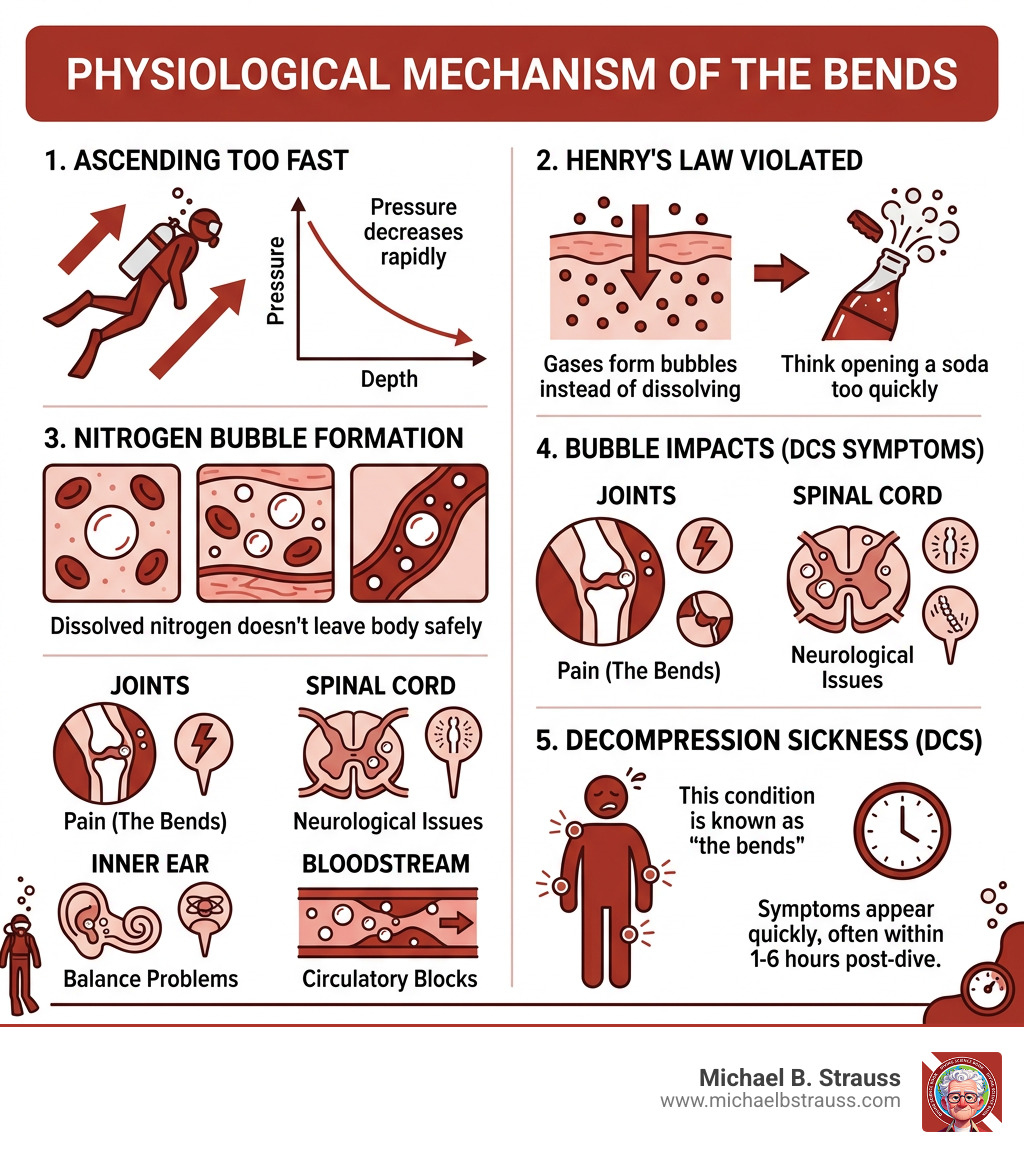
When you breathe compressed air underwater, your body absorbs extra nitrogen under pressure. This follows Henry's Law — gases dissolve into liquid at a rate proportional to pressure. The deeper and longer you dive, the more nitrogen your tissues absorb.
Ascend too fast, and that dissolved nitrogen doesn't have time to leave your body safely through your lungs. Instead, it forms bubbles — in your joints, your spinal cord, your inner ear, or your bloodstream. That is decompression sickness (DCS), also known as "the bends."
Think of it like opening a can of soda too quickly. The pressure drops, and the gas comes out of solution fast — producing bubbles where you don't want them.
According to clinical data, about 50% of DCS patients develop symptoms within the first hour after surfacing, and 90% show symptoms within 6 hours. In sport diving, roughly 3 cases occur per 10,000 dives — but among commercial divers, that number climbs as high as 10 per 10,000.
No two divers respond the same way. Individual susceptibility can even shift from day to day based on hydration, fatigue, and thermal status. That's what makes understanding the full picture of DCS risk so critical — whether you're a diver, a dive medicine specialist, or a clinician managing hyperbaric cases.
Primary Decompression Sickness Risk Factors in Diving Profiles
When we talk about decompression sickness risk factors, the most obvious culprits are the choices we make underwater. Our dive profile is the blueprint of our nitrogen exposure. If we push the limits of depth and time, we are essentially inviting more nitrogen to take up residence in our tissues.
Depth and Bottom Time
It is a simple relationship: the deeper you go and the longer you stay there, the more inert gas your body absorbs. Research indicates that dive duration and depth correlate directly with DCS incidence. For recreational divers, staying well within the "no-decompression limits" (NDL) is the primary defense. However, even "square" profiles—where a diver stays at a constant deep depth for the duration of the dive—can be more provocative than multi-level profiles that allow for gradual off-gassing. To dive deeper into the physics of this, you can learn more about Decompression Science.
The Danger of Rapid Ascent
If depth is the gas pedal, the ascent rate is the brake. We’ve all been taught to ascend slowly, but why? A rapid ascent causes a sudden drop in ambient pressure. This creates a high pressure gradient between the nitrogen in your tissues and the surrounding environment. If the pressure drops too fast, the nitrogen "pops" out of solution as bubbles rather than being transported to the lungs for exhalation. Modern standards suggest an ascent rate of no more than 30 feet (9 meters) per minute.
Repetitive Diving
We love a good three-dive day, but repetitive diving is a major contributor to decompression sickness risk factors. Residual nitrogen stays in your system for hours after a dive. If you descend again before your body has fully cleared that gas, you start the next dive with a "head start" on nitrogen loading. This cumulative effect is why dive computers are so vital—they track this residual gas in real-time.
Physiological Decompression Sickness Risk Factors
While the dive profile is about what we do, physiological factors are about who we are. Our unique biology plays a massive role in how we handle pressure.
Age and Body Composition
As we get older, our circulatory efficiency tends to decrease. Statistics show that after age 30, aerobic fitness declines by about 1% per year, which can slow down the rate at which we eliminate nitrogen. Additionally, nitrogen is roughly five times more soluble in fat than in blood or muscle. This means that individuals with higher body fat percentages may store more nitrogen during a dive and take longer to release it during decompression.
Patent Foramen Ovale (PFO)
One of the most discussed medical decompression sickness risk factors is the Patent Foramen Ovale (PFO). This is a small hole between the right and left atria of the heart that failed to close after birth. It is present in approximately 25% of the general population. In a diver with a PFO, venous bubbles (which are usually filtered out by the lungs) can "shunt" directly into the arterial bloodstream. This can lead to Type II (neurological) DCS or inner-ear symptoms even after a conservative dive. Scientific research on PFO and inner-ear DCS has highlighted this as a significant concern for "undeserved" bends. Understanding why and at what sites decompression sickness can occur is essential for anyone with known cardiac shunts.
Gender Differences
Interestingly, some studies suggest that the DCS risk in males may be up to 2.5 times higher than in females, though this is often debated and may be linked more to diving behavior and workload rather than pure hormonal differences. Regardless, every diver must account for their own physical limits.
Environmental and Lifestyle Decompression Sickness Risk Factors
The world around us—and what we put into our bodies—can drastically shift our risk profile.
Thermal Management
The temperature of the water is a sneaky risk factor. The U.S. Navy has conducted extensive scientific research on thermal management and DCS risk, revealing an "optimal" thermal pattern. Ideally, you want to be cool or neutral during the descent and bottom phase (to reduce gas uptake) and warm during the ascent and safety stops (to promote gas elimination). If you are very warm at the start of a dive, your increased circulation helps you absorb nitrogen faster. If you are cold during decompression, your peripheral circulation constricts, trapping nitrogen in your tissues.
Physical Exertion and Workload
Heavy exercise during the deep portion of a dive increases your heart rate and blood flow, which accelerates nitrogen uptake. Conversely, strenuous exercise immediately after a dive can stimulate the formation of bubbles by creating "nucleation sites" in the joints and muscles. We recommend keeping the workload low during the dive and avoiding the gym for at least 24 hours after surfacing.
Dehydration and Alcohol
While some experts believe the risk of dehydration is slightly overstated compared to dive profiles, it remains a factor. Dehydration reduces blood volume, which can impair gas transport. Alcohol is a double-whammy: it dehydrates the body and acts as a vasodilator, which can alter nitrogen uptake and elimination. It also masks early symptoms of DCS, which is a recipe for disaster.
Post-Dive Altitude and Flying Risks
The dive isn't over when you step onto the boat. The transition from the high pressure of the ocean to the lower pressure of an airplane cabin (or a mountain pass) is a critical window for DCS.
The 24-Hour Rule
Commercial aircraft cabins are typically pressurized to an equivalent altitude of 6,000 to 8,000 feet. If you have residual nitrogen in your tissues, this further reduction in pressure can trigger bubble formation. Current scientific research on the risks of flying after diving suggests waiting at least 12 hours after a single no-decompression dive and at least 18 to 24 hours after multiple dives or dives requiring decompression stops. We always advocate for a full 24-hour surface interval before flying to be as safe as possible.
Recognizing Symptoms and Expert Prevention Strategies
Recognizing the signs of DCS is just as important as knowing the decompression sickness risk factors. Symptoms are generally categorized into two main types, though they can overlap.
Type I DCS: The "Mild" Manifestations
Type I DCS usually involves the musculoskeletal system, the skin, or the lymphatic system.
- Joint Pain: Often described as a "deep, boring" ache, most commonly in the shoulders or elbows. This accounts for 60% to 70% of all altitude-related DCS cases.
- Skin Symptoms: Itching, rashes, or a mottled appearance known as cutis marmorata.
- Lymphatic Swelling: Swelling of the lymph nodes or localized tissues.
Type II DCS: The Serious Stuff
Type II DCS is life-threatening and involves the central nervous system or the respiratory system.
- Neurological Symptoms: Numbness, tingling (paresthesia), muscle weakness, or paralysis. Neurological symptoms are present in 10% to 15% of cases.
- Vestibular DCS: Vertigo, dizziness, and hearing loss (often called "the staggers").
- Pulmonary DCS: Known as "the chokes," this involves chest pain, a dry cough, and shortness of breath. It is caused by a massive amount of bubbles obstructing the pulmonary circulation.
| Symptom Category | Type I (Musculoskeletal) | Type II (Neurological/Pulmonary) |
|---|---|---|
| Pain | Localized joint/muscle pain | Often absent or secondary |
| Sensation | Itching, skin rash | Numbness, tingling, "pins and needles" |
| Motor Function | Normal | Weakness, paralysis, loss of coordination |
| Respiratory | Normal | Coughing, shortness of breath, chest pain |
| Mental State | Alert | Confusion, fatigue, loss of consciousness |
Effective scientific research on pre-hospital DCS management emphasizes that any symptom appearing after a dive should be treated as DCS until proven otherwise.
Critical Treatment and Early Intervention
If you suspect someone has DCS, time is of the essence. Early intervention significantly improves the prognosis.
- High-Flow Oxygen: Administering 100% normobaric oxygen is the first step. This creates a "washout" effect, increasing the pressure gradient to help nitrogen leave the tissues and shrinking existing bubbles.
- Hydration: If the patient is conscious and not vomiting, oral fluids (isotonic) can help. In a clinical setting, IV fluids are often used to maintain blood volume.
- Hyperbaric Oxygen Therapy (HBOT): This is the definitive treatment. The patient is placed in a recompression chamber, where the pressure is increased to "crush" the bubbles and drive the nitrogen back into solution.
- U.S. Navy Table 6: This is the gold standard for treating DCS. It involves a specific schedule of oxygen breathing and pressure changes over several hours. Scientific research on the efficacy of hyperbaric treatment shows that most recreational divers respond very well to these protocols if treated promptly.
Long-term Complications and Prevention
Ignoring decompression sickness risk factors can lead to more than just a trip to the chamber; it can cause permanent damage.
Dysbaric Osteonecrosis (DON)
This is a late-term complication often seen in commercial divers who have had repeated, prolonged exposures to pressure. It involves the death of bone tissue, usually in the shoulders or hips, due to impaired blood flow from nitrogen bubbles. It can be insidious, developing without any acute symptoms of DCS.
Safety Stops and Conservative Settings
Prevention is always better than a cure. We recommend:
- Safety Stops: Always perform a 3-to-5-minute stop at 15 feet (5 meters), even on no-stop dives.
- Conservative Computer Settings: Most dive computers allow you to adjust the "gradient factors" or safety margins. If you have risk factors like age or high body fat, bump up the conservatism.
- Stay Hydrated and Rested: A tired, hungover diver is a diver at risk.
For those interested in how nature handles these challenges, looking into insights on Mammalian Divers provides a fascinating perspective on how whales and seals avoid the bends through physiological adaptations.
Expert Guidance for Safer Diving
Embarking on a scuba diving adventure can be one of the most thrilling experiences of your life. However, it’s crucial to prioritize safety to ensure each dive is as enjoyable as it is unforgettable. Dr. Michael B. Strauss, a renowned expert in diving safety, offers invaluable insights in his comprehensive diving books. These books for scuba divers are essential reads for both novices and experienced divers.
We believe that education is the best tool in a diver's kit. By understanding decompression sickness risk factors, you can make informed decisions that keep you safe in the water.
Our top recommendations for safe diving:
- Get a Medical Clearance: If you have any underlying conditions, especially heart or lung issues, consult a doctor trained in dive medicine.
- Invest in Quality Equipment: Ensure your dive computer is modern and that you know how to read its nitrogen loading bar graphs.
- Keep Learning: Safety protocols evolve. Stay updated with the latest research.
You can explore comprehensive resources on Diving Science to further your knowledge and ensure your next dive is your safest one yet. Safe bubbles, everyone!
To further enhance your diving safety and knowledge, we highly recommend getting your copy of "Diving Science Revisited" from this link: https://www.bestpub.com/view-all-products/product/diving-science-revisited/category_pathway-48.html
DISCLAIMER: Articles are for "EDUCATIONAL PURPOSES ONLY", not to be considered advice or recommendations.


