Read story

Why Every Diver Needs a Logbook System
dive log binder

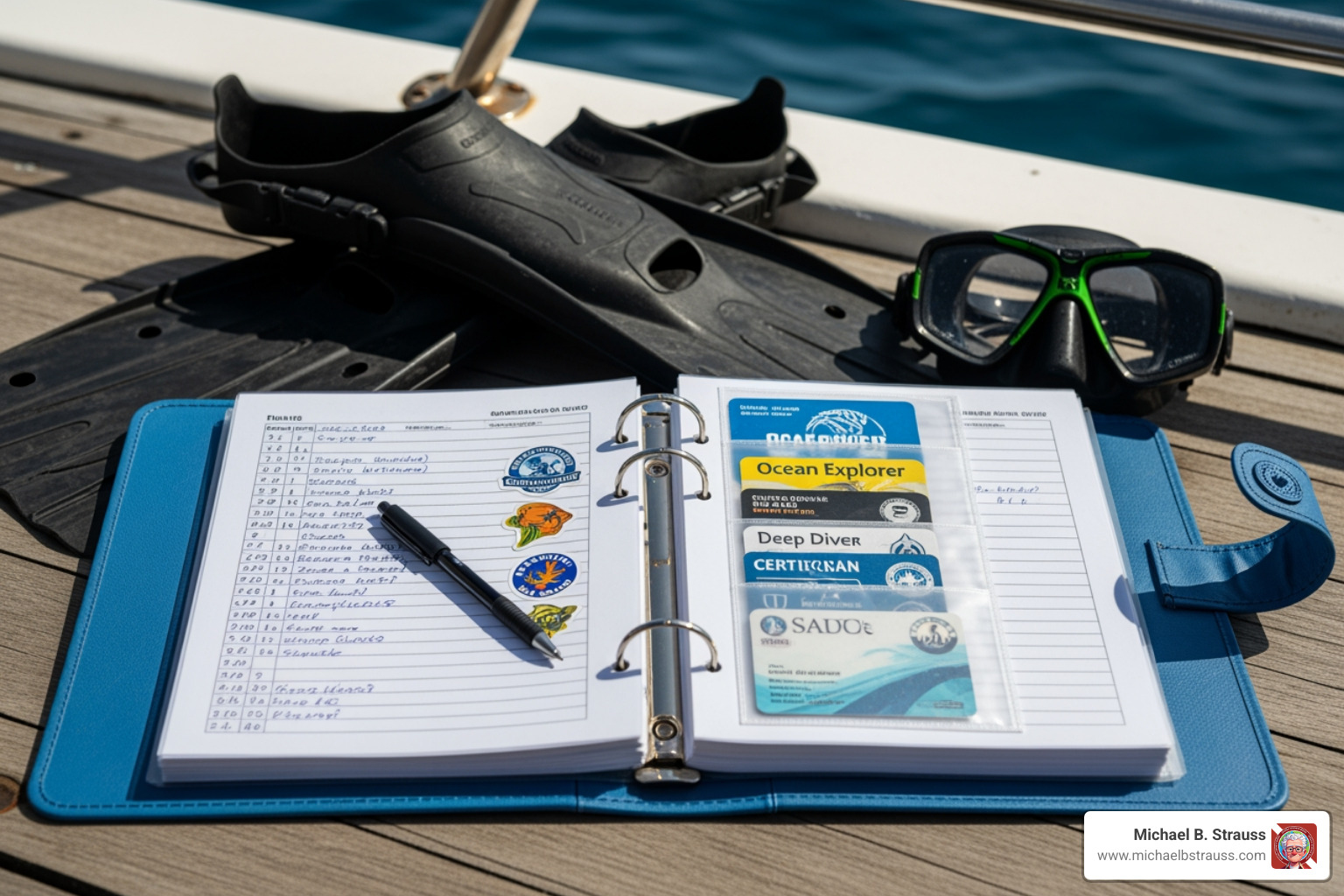
A dive log binder is a specialized, water-resistant organizer designed to protect and organize your dive logs, certification cards, and dive-related documents. Here's what you need to know:

Top Dive Log Binder Features:

  • Water-resistant materials with protective zippers to keep contents dry on dive boats
  • Multiple storage options including mesh pockets, card holders, and pen loops
  • Standard sizes - 3-ring (10.75" H x 8" W) or compact 6-ring (8.25" H x 7" W)
  • Universal compatibility with PADI, SSI, NAUI, and other certification agency log pages
  • Durable construction with double-stitched seams and padded exteriors

You've just surfaced from an incredible dive. The colors, the marine life, the feeling of weightlessness—it's all vivid right now. But without proper documentation, those details fade fast.

Logging your dives isn't just about nostalgia. It's about tracking your air consumption patterns, noting what worked (and what didn't) with your gear, and building a verifiable record of your diving experience. Whether you're working toward advanced certifications or simply want to remember that hammerhead shark encounter off the coast of Belize, a quality dive log binder keeps everything organized and protected.

The dive boat environment is harsh on paperwork. Salt spray, wet gear bags, and constant movement threaten loose pages and cards. A proper dive log binder solves this with water-resistant materials, secure storage pockets, and organizational features specifically designed for divers.

One diver reported that their binder was "accidentally drenched on a dive boat, but the contents remained completely dry." That's the kind of protection your certification cards and dive records deserve.
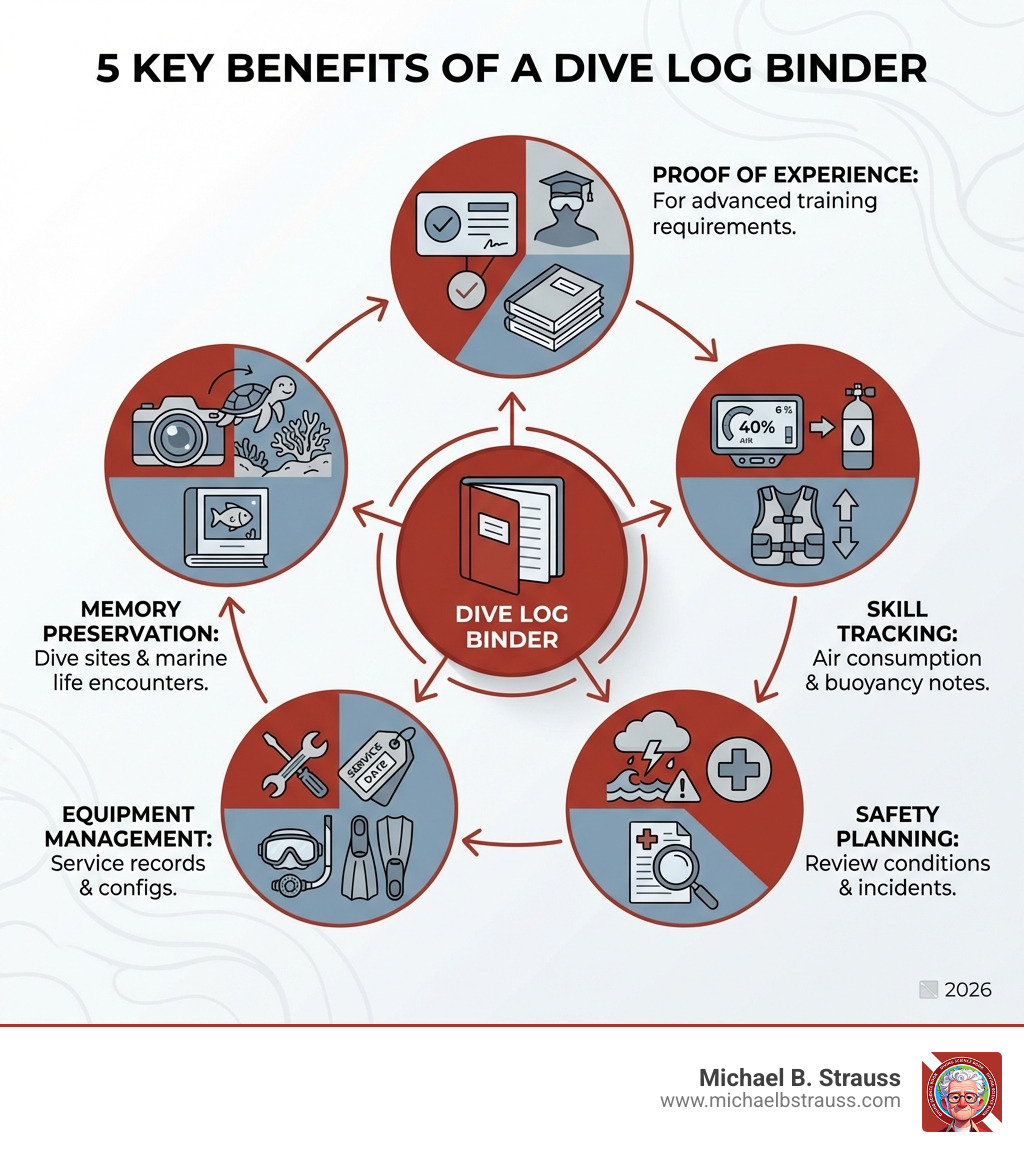
infographic showing the 5 key benefits of maintaining a dive log binder: Skill Tracking through air consumption and buoyancy notes, Safety Planning by reviewing past conditions and incidents, Equipment Management with service records and configurations, Memory Preservation of dive sites and marine life encounters, and Proof of Experience for advanced training requirements - dive log binder infographic

If you want a neutral overview of what traditional paper dive logs typically include, the summary on Scuba diving logbooks offers additional context in the section discussing record-keeping and training.

Dive log binder terms simplified:

The Role of Logging in Skill Improvement

A dive log binder is far more than just a scrapbook; it's a powerful tool for self-improvement in your diving journey. By diligently logging each dive, we create a personal database of our underwater experiences. This data becomes invaluable for analyzing our performance and identifying areas for growth. For instance, consistently noting our air consumption allows us to track patterns and work towards becoming more efficient divers, extending our bottom time and minimizing stress. Similarly, detailed notes on buoyancy control, weight requirements for different gear configurations, and even environmental conditions can help us fine-tune our skills.

We can reflect on past dives, recalling specific challenges or triumphs, and apply those lessons to future excursions. Did that new fin type really improve propulsion? How did our breathing rate change during a drift dive versus a static reef dive? A well-maintained dive log binder provides the answers. This systematic approach to self-assessment aligns perfectly with the principles of Diving Science, emphasizing a data-driven understanding of our interactions with the underwater world. Logging our dives cultivates safer habits and a deeper understanding of our capabilities and limitations as divers.

Preserving Memories and Documenting Experience

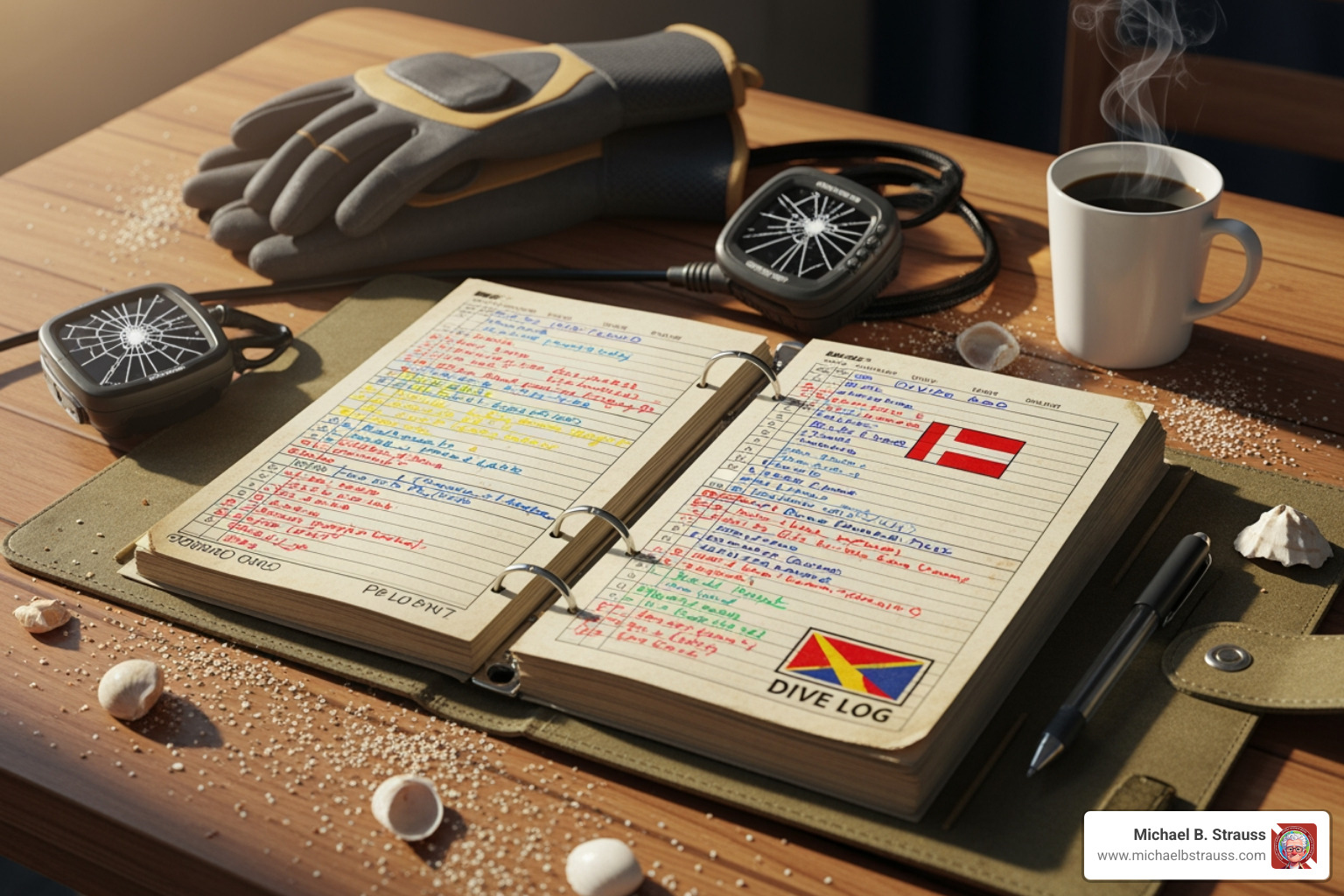
Beyond skill improvement, a dive log binder serves as a cherished repository of our underwater adventures, changing fleeting moments into lasting memories. Each entry becomes a chapter in our personal diving story, allowing us to relive the excitement of encountering a majestic manta ray or the serenity of a coral garden. Many divers enjoy sketching the marine life they've seen or the unique topography of a dive site directly into their log pages, making each entry a unique piece of art. Collecting dive stamps from various dive centers and destinations further personalizes these records, turning the binder into a tangible testament to our global explorations.

This detailed documentation also provides crucial proof of experience, which is often required for enrolling in advanced diving courses, specialty certifications, or even demonstrating proficiency to dive organizations or professional bodies. It’s not uncommon for divers to use their dive log binder to document dives for specific purposes, such as conservation projects or even for prestigious organizations like National Geographic, as some of our research indicates. The ability to physically flip through pages, see our progress, and remember every detail adds a rich, tactile dimension that digital logs often can't replicate. It transforms our diving history into a tangible legacy.

Choosing the Perfect Dive Log Binder System

Selecting the ideal dive log binder system involves balancing several practical considerations to ensure it meets our individual diving needs. We need something that's not only durable and water-resistant but also portable, well-organized, and compatible with our preferred log pages. The choice often comes down to the ring system, overall size, and the capacity it offers.

Essential Features of a Quality Dive Log Binder

When we look for a quality dive log binder, we're seeking a blend of ruggedness and thoughtful design. The essential features ensure our valuable dive records are protected and easily accessible. We look for binders constructed from durable materials, often with a padded exterior, that can withstand the rigors of dive travel and boat environments. Water-resistant zippers are a must, forming a crucial barrier against splashes and moisture, as one user attested after their binder survived an accidental drenching.

Internal organization is key. Good dive log binders come equipped with multiple pockets, including mesh pouches for smaller items, cardholders specifically designed for certification (C-cards), and handy pen loops. These features help us keep everything in its place, preventing the frustrating scramble for a pen or a missing cert card. A sturdy ring mechanism is fundamental, whether it's a 3-ring or 6-ring system, ensuring our pages stay secure and are easy to turn. Some binders even offer integrated page protectors to keep log sheets flat and pristine. And for dive shops, resorts, or teams, the option for customized or branded dive log binders adds a professional touch, making them more than just a utility item. These organizational features aren't just convenient; they contribute significantly to a smoother, more enjoyable diving experience.

Sizing Up Your Options: Which Dive Log Binder is Right for You?

diver reviewing their dive log binder on a boat - dive log binder

When it comes to dive log binders, size definitely matters, impacting both usability and portability. We generally find two main categories: standard 3-ring binders and more compact 6-ring travel-sized options.

The standard 3-ring dive log binder is often preferred by divers who appreciate a larger page size, offering ample space for detailed notes, sketches, or even affixing photos. These binders typically measure around 10.75″ H x 8″ W x 2″ D, with a 1″ ring size, making them substantial enough to hold a significant number of log pages—some can accommodate up to 125 sheets. While they offer superior capacity and writing space, their larger footprint might be a consideration for divers who prioritize packing light. They are often compatible with standard PADI log books and many other certification agency log pages.

In contrast, the compact 6-ring dive log binder is designed with portability in mind. These travel-friendly binders are sleeker, measuring approximately 8.25″ high and 7″ wide. They are excellent for divers who want to minimize bulk in their gear bags, as highlighted by one user who described it as "perfect for holiday packing." Despite their smaller size, clever design often maximizes writing area, and they can still hold a good number of pages, often around 100 sheets. They commonly use a standard 6-ring system, making them compatible with various personal organizer refills, including those for SSI or BSAC log pages. The key difference lies in the ring mechanism and page dimensions, so it's crucial to ensure your chosen refill pages match your binder's ring system.

The choice between a standard and compact dive log binder depends on our personal preferences for detail, capacity, and how much we value a streamlined travel setup.

Beyond the Log: A Hub for Your Dive Gear

A dive log binder is much more than just a place to store log pages; it's a centralized hub for much of our essential dive documentation and small accessories. The primary benefit of a binder system over loose-leaf pages is the superior organization and protection it offers. Loose pages can easily get lost, damaged by moisture, or crumpled in a gear bag, whereas a binder keeps everything neatly secured and protected within its durable, often water-resistant, cover.

Think of it as a diver's administrative center. Beyond just logging our dives, these binders are perfectly designed to hold our certification cards (C-cards) for various agencies like PADI, NAUI, or DAN, often in dedicated cardholder slots. We can neatly tuck away our air and nitrox dive tables in mesh pockets, making them easily accessible for planning. Many divers also store fish ID cards, allowing for quick identification of marine life spotted during a dive. Some even use the internal waterproof pouches to keep personal items like phones or wallets dry while on a rocking dive boat.

This comprehensive approach to organization not only streamlines our pre- and post-dive routines but also contributes significantly to our overall gear protection. By having all critical documents in one secure, protected location, we reduce the risk of loss or damage, which can be particularly important for documents like certification cards that are vital for continued diving. This meticulous organization aligns with the broader principles of dive safety, ensuring we have all necessary information at hand, whether it's for reviewing dive profiles or for quick reference, as discussed in Evaluation and Management of Pain-Related Medical Problems of Diving.

Finalizing Your Choice and Getting the Most Out of It

Making the final decision on a dive log binder often comes down to personal preference, but there are several factors we consider to ensure we're getting the best value and functionality for our needs. From customer feedback to potential bonus offers, each element plays a role in our informed choice.

Making an Informed Purchase

The role of customer reviews and testimonials in choosing a dive log binder cannot be overstated. These insights offer real-world perspectives on a product's performance, durability, and user-friendliness. We pay close attention to reviews that discuss how well the binder holds up to water exposure, the quality of its materials, and the ease of use of its organizational features. For example, some users have noted initial skepticism about a binder's waterproof claims, only to be thoroughly impressed when their contents remained dry despite significant splashes. This kind of feedback helps verify a manufacturer's claims.

We also look out for bonus offers, such as included refill pages. Many binders, especially top-selling ones, offer a generous number of bonus log page refills (like 50 or even 70 pages) with the initial purchase, which adds significant value. It's also wise to consider the availability and variety of refill packs, logbooks, binders, stamps, and other accessories from the same brand, ensuring long-term compatibility and customization options. A well-researched purchase ensures we invest in a dive log binder that will serve us faithfully for countless dives to come.

The Ultimate Diver's Gift
close-up of a personalized dive log binder with stamps and stickers - dive log binder

A dive log binder makes an exceptionally valuable gift for any diver, regardless of their experience level. It's a present that beautifully blends practicality with thoughtfulness, showing that we truly support their passion for the underwater world. For new divers, it's an essential piece of gear that immediately instills good habits of documentation and organization. For seasoned divers, it offers an upgrade to their existing system or a fresh start for new adventures.

The ability to customize or personalize a dive log binder further improves its gift potential. Many companies offer options for custom branding, making it a fantastic gift for a dive buddy, a club member, or even as a promotional item for a dive center. Imagine a binder featuring unique artwork or a special message, turning a functional item into a cherished keepsake. As a renowned expert in diving safety, Dr. Michael B. Strauss emphasizes that proper documentation is a cornerstone of safe diving practices, making a dive log binder not just a thoughtful gift, but one that actively promotes safer diving. It's a gift that keeps on giving, preserving memories and aiding skill development dive after dive. Get your copy of the book, Diving Science Revisited, here: https://www.bestpub.com/view-all-products/product/diving-science-revisited/category_pathway-48.html

DISCLAIMER: Articles are for "EDUCATIONAL PURPOSES ONLY", not to be considered advice or recommendations.

Download Full PDF
Tags:

Why Every Diver Needs a Logbook System

dive log binder

A dive log binder is a specialized, water-resistant organizer designed to protect and organize your dive logs, certification cards, and dive-related documents. Here's what you need to know:

Top Dive Log Binder Features:

  • Water-resistant materials with protective zippers to keep contents dry on dive boats
  • Multiple storage options including mesh pockets, card holders, and pen loops
  • Standard sizes - 3-ring (10.75" H x 8" W) or compact 6-ring (8.25" H x 7" W)
  • Universal compatibility with PADI, SSI, NAUI, and other certification agency log pages
  • Durable construction with double-stitched seams and padded exteriors

You've just surfaced from an incredible dive. The colors, the marine life, the feeling of weightlessness—it's all vivid right now. But without proper documentation, those details fade fast.

Logging your dives isn't just about nostalgia. It's about tracking your air consumption patterns, noting what worked (and what didn't) with your gear, and building a verifiable record of your diving experience. Whether you're working toward advanced certifications or simply want to remember that hammerhead shark encounter off the coast of Belize, a quality dive log binder keeps everything organized and protected.

The dive boat environment is harsh on paperwork. Salt spray, wet gear bags, and constant movement threaten loose pages and cards. A proper dive log binder solves this with water-resistant materials, secure storage pockets, and organizational features specifically designed for divers.

One diver reported that their binder was "accidentally drenched on a dive boat, but the contents remained completely dry." That's the kind of protection your certification cards and dive records deserve.

infographic showing the 5 key benefits of maintaining a dive log binder: Skill Tracking through air consumption and buoyancy notes, Safety Planning by reviewing past conditions and incidents, Equipment Management with service records and configurations, Memory Preservation of dive sites and marine life encounters, and Proof of Experience for advanced training requirements - dive log binder infographic

If you want a neutral overview of what traditional paper dive logs typically include, the summary on Scuba diving logbooks offers additional context in the section discussing record-keeping and training.

Dive log binder terms simplified:

The Role of Logging in Skill Improvement

A dive log binder is far more than just a scrapbook; it's a powerful tool for self-improvement in your diving journey. By diligently logging each dive, we create a personal database of our underwater experiences. This data becomes invaluable for analyzing our performance and identifying areas for growth. For instance, consistently noting our air consumption allows us to track patterns and work towards becoming more efficient divers, extending our bottom time and minimizing stress. Similarly, detailed notes on buoyancy control, weight requirements for different gear configurations, and even environmental conditions can help us fine-tune our skills.

We can reflect on past dives, recalling specific challenges or triumphs, and apply those lessons to future excursions. Did that new fin type really improve propulsion? How did our breathing rate change during a drift dive versus a static reef dive? A well-maintained dive log binder provides the answers. This systematic approach to self-assessment aligns perfectly with the principles of Diving Science, emphasizing a data-driven understanding of our interactions with the underwater world. Logging our dives cultivates safer habits and a deeper understanding of our capabilities and limitations as divers.

Preserving Memories and Documenting Experience

Beyond skill improvement, a dive log binder serves as a cherished repository of our underwater adventures, changing fleeting moments into lasting memories. Each entry becomes a chapter in our personal diving story, allowing us to relive the excitement of encountering a majestic manta ray or the serenity of a coral garden. Many divers enjoy sketching the marine life they've seen or the unique topography of a dive site directly into their log pages, making each entry a unique piece of art. Collecting dive stamps from various dive centers and destinations further personalizes these records, turning the binder into a tangible testament to our global explorations.

This detailed documentation also provides crucial proof of experience, which is often required for enrolling in advanced diving courses, specialty certifications, or even demonstrating proficiency to dive organizations or professional bodies. It’s not uncommon for divers to use their dive log binder to document dives for specific purposes, such as conservation projects or even for prestigious organizations like National Geographic, as some of our research indicates. The ability to physically flip through pages, see our progress, and remember every detail adds a rich, tactile dimension that digital logs often can't replicate. It transforms our diving history into a tangible legacy.

Choosing the Perfect Dive Log Binder System

Selecting the ideal dive log binder system involves balancing several practical considerations to ensure it meets our individual diving needs. We need something that's not only durable and water-resistant but also portable, well-organized, and compatible with our preferred log pages. The choice often comes down to the ring system, overall size, and the capacity it offers.

Essential Features of a Quality Dive Log Binder

When we look for a quality dive log binder, we're seeking a blend of ruggedness and thoughtful design. The essential features ensure our valuable dive records are protected and easily accessible. We look for binders constructed from durable materials, often with a padded exterior, that can withstand the rigors of dive travel and boat environments. Water-resistant zippers are a must, forming a crucial barrier against splashes and moisture, as one user attested after their binder survived an accidental drenching.

Internal organization is key. Good dive log binders come equipped with multiple pockets, including mesh pouches for smaller items, cardholders specifically designed for certification (C-cards), and handy pen loops. These features help us keep everything in its place, preventing the frustrating scramble for a pen or a missing cert card. A sturdy ring mechanism is fundamental, whether it's a 3-ring or 6-ring system, ensuring our pages stay secure and are easy to turn. Some binders even offer integrated page protectors to keep log sheets flat and pristine. And for dive shops, resorts, or teams, the option for customized or branded dive log binders adds a professional touch, making them more than just a utility item. These organizational features aren't just convenient; they contribute significantly to a smoother, more enjoyable diving experience.

Sizing Up Your Options: Which Dive Log Binder is Right for You?

diver reviewing their dive log binder on a boat - dive log binder

When it comes to dive log binders, size definitely matters, impacting both usability and portability. We generally find two main categories: standard 3-ring binders and more compact 6-ring travel-sized options.

The standard 3-ring dive log binder is often preferred by divers who appreciate a larger page size, offering ample space for detailed notes, sketches, or even affixing photos. These binders typically measure around 10.75″ H x 8″ W x 2″ D, with a 1″ ring size, making them substantial enough to hold a significant number of log pages—some can accommodate up to 125 sheets. While they offer superior capacity and writing space, their larger footprint might be a consideration for divers who prioritize packing light. They are often compatible with standard PADI log books and many other certification agency log pages.

In contrast, the compact 6-ring dive log binder is designed with portability in mind. These travel-friendly binders are sleeker, measuring approximately 8.25″ high and 7″ wide. They are excellent for divers who want to minimize bulk in their gear bags, as highlighted by one user who described it as "perfect for holiday packing." Despite their smaller size, clever design often maximizes writing area, and they can still hold a good number of pages, often around 100 sheets. They commonly use a standard 6-ring system, making them compatible with various personal organizer refills, including those for SSI or BSAC log pages. The key difference lies in the ring mechanism and page dimensions, so it's crucial to ensure your chosen refill pages match your binder's ring system.

The choice between a standard and compact dive log binder depends on our personal preferences for detail, capacity, and how much we value a streamlined travel setup.

Beyond the Log: A Hub for Your Dive Gear

A dive log binder is much more than just a place to store log pages; it's a centralized hub for much of our essential dive documentation and small accessories. The primary benefit of a binder system over loose-leaf pages is the superior organization and protection it offers. Loose pages can easily get lost, damaged by moisture, or crumpled in a gear bag, whereas a binder keeps everything neatly secured and protected within its durable, often water-resistant, cover.

Think of it as a diver's administrative center. Beyond just logging our dives, these binders are perfectly designed to hold our certification cards (C-cards) for various agencies like PADI, NAUI, or DAN, often in dedicated cardholder slots. We can neatly tuck away our air and nitrox dive tables in mesh pockets, making them easily accessible for planning. Many divers also store fish ID cards, allowing for quick identification of marine life spotted during a dive. Some even use the internal waterproof pouches to keep personal items like phones or wallets dry while on a rocking dive boat.

This comprehensive approach to organization not only streamlines our pre- and post-dive routines but also contributes significantly to our overall gear protection. By having all critical documents in one secure, protected location, we reduce the risk of loss or damage, which can be particularly important for documents like certification cards that are vital for continued diving. This meticulous organization aligns with the broader principles of dive safety, ensuring we have all necessary information at hand, whether it's for reviewing dive profiles or for quick reference, as discussed in Evaluation and Management of Pain-Related Medical Problems of Diving.

Finalizing Your Choice and Getting the Most Out of It

Making the final decision on a dive log binder often comes down to personal preference, but there are several factors we consider to ensure we're getting the best value and functionality for our needs. From customer feedback to potential bonus offers, each element plays a role in our informed choice.

Making an Informed Purchase

The role of customer reviews and testimonials in choosing a dive log binder cannot be overstated. These insights offer real-world perspectives on a product's performance, durability, and user-friendliness. We pay close attention to reviews that discuss how well the binder holds up to water exposure, the quality of its materials, and the ease of use of its organizational features. For example, some users have noted initial skepticism about a binder's waterproof claims, only to be thoroughly impressed when their contents remained dry despite significant splashes. This kind of feedback helps verify a manufacturer's claims.

We also look out for bonus offers, such as included refill pages. Many binders, especially top-selling ones, offer a generous number of bonus log page refills (like 50 or even 70 pages) with the initial purchase, which adds significant value. It's also wise to consider the availability and variety of refill packs, logbooks, binders, stamps, and other accessories from the same brand, ensuring long-term compatibility and customization options. A well-researched purchase ensures we invest in a dive log binder that will serve us faithfully for countless dives to come.

The Ultimate Diver's Gift

close-up of a personalized dive log binder with stamps and stickers - dive log binder

A dive log binder makes an exceptionally valuable gift for any diver, regardless of their experience level. It's a present that beautifully blends practicality with thoughtfulness, showing that we truly support their passion for the underwater world. For new divers, it's an essential piece of gear that immediately instills good habits of documentation and organization. For seasoned divers, it offers an upgrade to their existing system or a fresh start for new adventures.

The ability to customize or personalize a dive log binder further improves its gift potential. Many companies offer options for custom branding, making it a fantastic gift for a dive buddy, a club member, or even as a promotional item for a dive center. Imagine a binder featuring unique artwork or a special message, turning a functional item into a cherished keepsake. As a renowned expert in diving safety, Dr. Michael B. Strauss emphasizes that proper documentation is a cornerstone of safe diving practices, making a dive log binder not just a thoughtful gift, but one that actively promotes safer diving. It's a gift that keeps on giving, preserving memories and aiding skill development dive after dive. Get your copy of the book, Diving Science Revisited, here: https://www.bestpub.com/view-all-products/product/diving-science-revisited/category_pathway-48.html

DISCLAIMER: Articles are for "EDUCATIONAL PURPOSES ONLY", not to be considered advice or recommendations.