Understanding the Scope and Reality of Diving Accidents
Diving accident statistics from the Divers Alert Network (DAN) show that recreational scuba diving has a low fatality rate of approximately 2 deaths per 100,000 dives. While statistically safer than activities like jogging, the reality is nuanced. Most fatalities are not from a single failure but a chain of events: a trigger (like low air), an escalating error (like a rapid ascent), and a disabling injury (like an arterial gas embolism).
Key statistics show:
- Annual Fatalities: Around 150-190 recreational diving deaths worldwide.
- Fatality Rate: 1.8 per million recreational dives (US data).
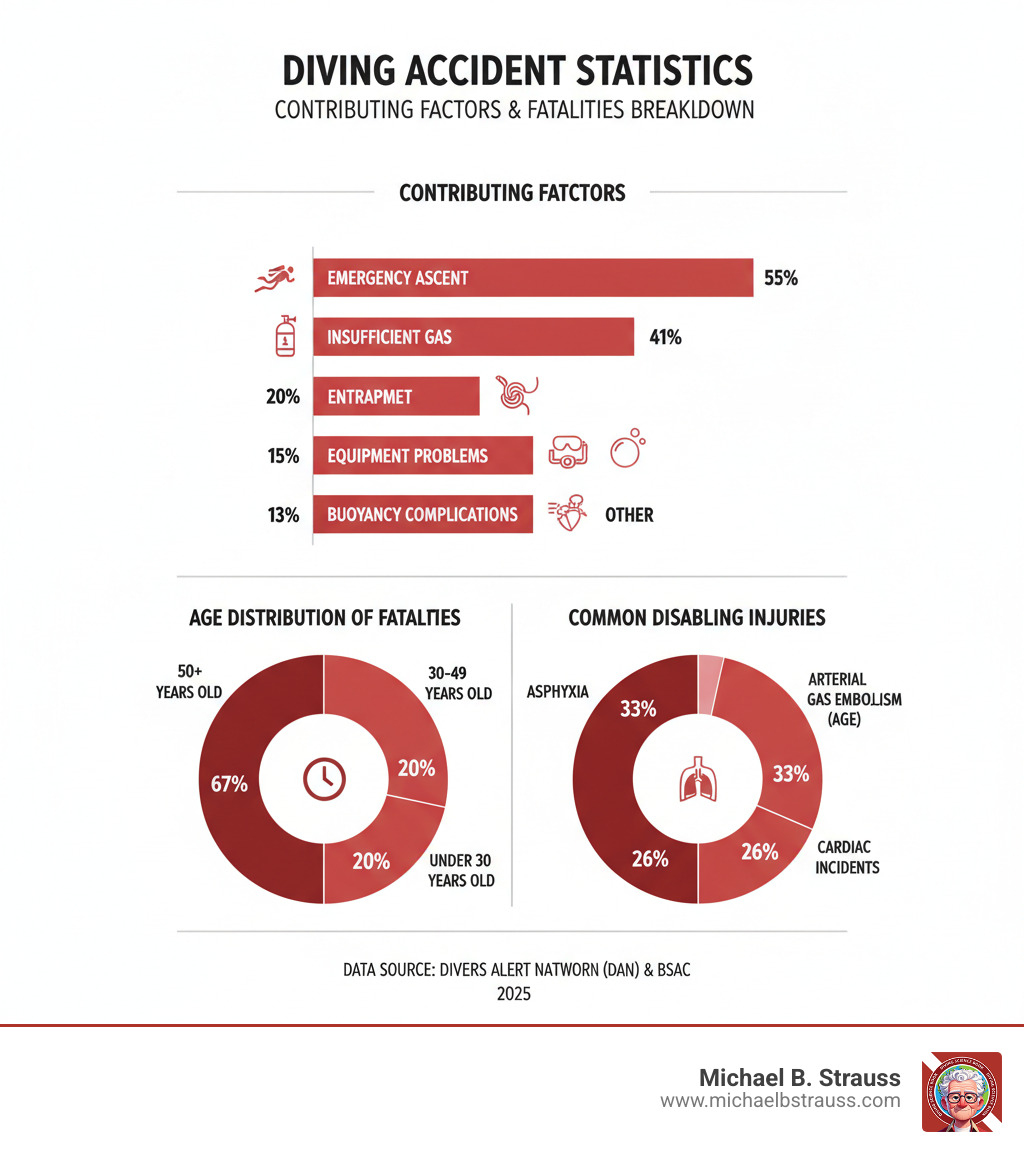
- Demographics: 80% of fatalities are male, and 67% are divers aged 50 or older.
- UK Data (2023): 242 domestic incidents (9 fatalities) and 113 overseas incidents.
Decades of data from organizations like DAN and the British Sub-Aqua Club (BSAC) reveal consistent patterns. Human error, pre-existing medical conditions, and violations of safety protocols are far more common causes of accidents than equipment failure. For medical professionals and divers alike, these statistics provide crucial context, showing that physiological factors—especially cardiovascular health in an aging diver population—play a significant role.
A Deep Dive into Diving Accident Statistics and Contributing Factors
When we look closely at diving accident statistics, we find that safety in diving is a dynamic landscape, constantly shaped by human factors, environmental conditions, and advances in equipment and training. Our goal is to illuminate these factors, helping every diver, from novice to expert, make informed decisions that improve safety.
Overall Trends and Geographic Variations
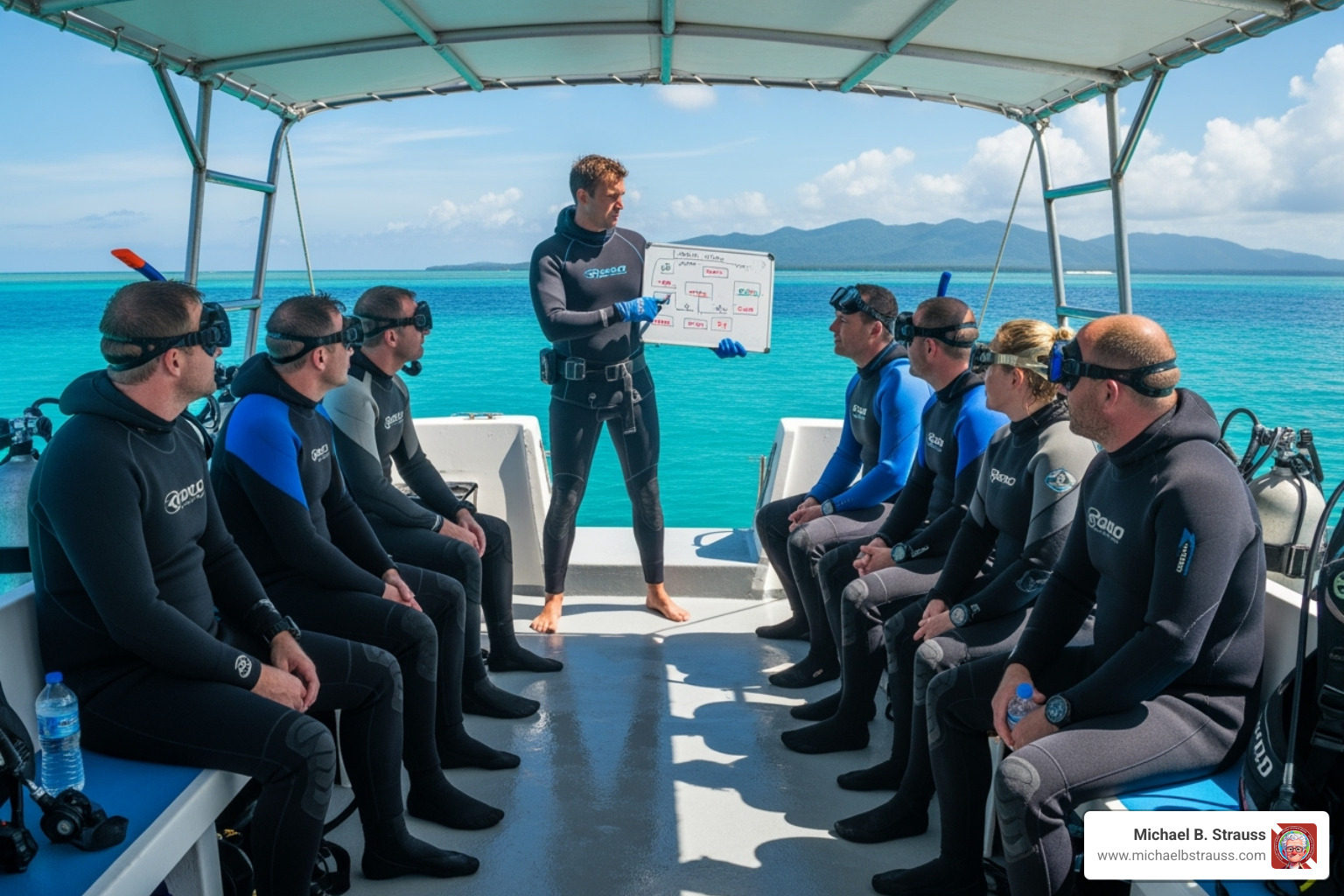
Overall trends in diving incidents show a complex picture. The British Sub-Aqua Club (BSAC) Annual Diving Incident Report for 2023 noted a return to pre-pandemic incident levels, though fatality numbers fluctuate annually. Across the Atlantic, US and Canada data also reflects these fluctuations, with a notable trend of a rising median age for victims, mirroring the aging diver population. Geographically, popular diving destinations like Florida, California, and Hawaii consistently report higher numbers of scuba deaths, which is likely due to the sheer volume of diving activities in those regions. This highlights the importance of understanding local conditions and emergency services wherever you dive.
Common Causes: The Chain of Events in Diving Accidents
Diving accidents rarely have a single cause. Instead, they follow a “chain of events” that often begins with procedural errors. Human error is the primary contributor, with studies suggesting it's a factor in up to 90% of accident litigation cases.
The most common trigger is running out of air, or “insufficient gas,” identified in 41% of cases in a DAN study. This is often followed by an “emergency ascent,” the most frequent disabling agent (55%). Other triggers include entrapment (20%) and equipment problems (15%).
Buoyancy problems are another critical factor. A staggering 90% of divers who died did so with their weight belt still on, and 50% did not inflate their buoyancy compensator (BCD). Being over-weighted is a dangerous practice that can lead to rapid gas consumption and difficulty controlling an ascent.
The buddy system often fails when needed most. A concerning 86% of divers were alone when they died (either diving solo or separated from their buddy). This underscores the importance of maintaining close contact and teamwork. Finally, panic is a formidable factor, associated with 40% to 60% of deaths, as it leads to irrational, life-threatening decisions. While equipment failure is rare, equipment misuse is associated with 35% of fatalities. For a deeper understanding of the physics involved, you can explore More info about Decompression Science.
Demographic and Environmental Risk Factors
Analysis of diving accident statistics reveals clear demographic and environmental patterns. The median age of divers in fatal incidents has risen to 56, with 67% of deaths occurring in divers aged 50 or older. This reflects an aging diving community, which often has a higher prevalence of pre-existing medical conditions. There is also a significant gender disparity, with males accounting for 80% of fatalities.
The role of experience level is complex. While inexperience is a factor (50% of deaths involved divers with fewer than 20 dives), a 2023 BSAC report noted a rise in incidents involving experienced Dive Leaders, highlighting the danger of complacency.
The type of diving also influences risk. Leisurely sightseeing is the most common activity, but spearfishing carries an increased risk due to distraction. Training dives account for a smaller but significant portion of incidents.
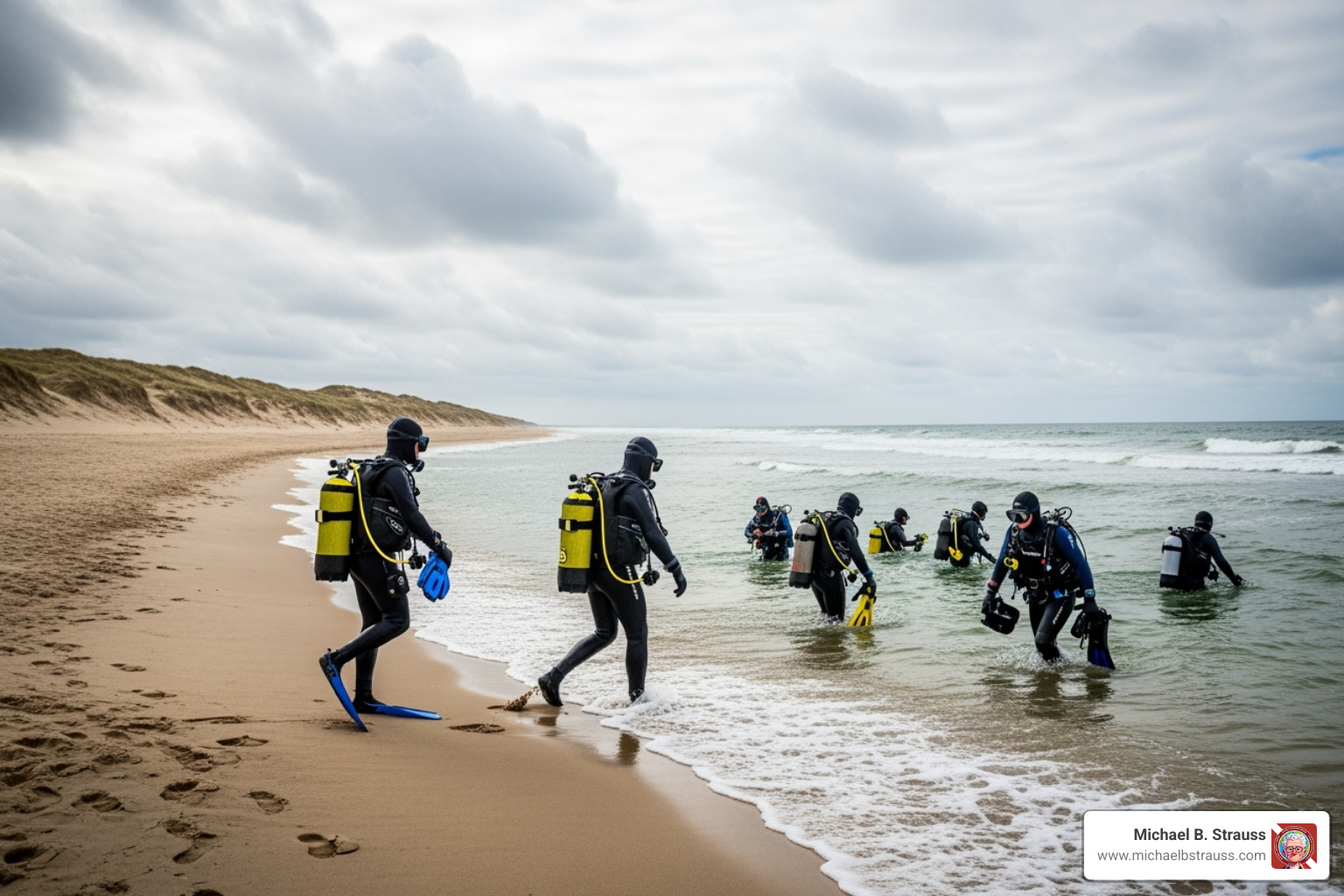
Environmental hazards are frequent triggers. Most fatal dives (75%) occur in the ocean. Poor visibility (31%), changing sea conditions (37%), and strong currents (34%) are commonly cited factors that can quickly escalate a situation.
The Role of Medical Conditions and Disabling Injuries
Pre-existing medical conditions play a critical role in diving fatalities, often becoming disabling under the physiological stress of diving.
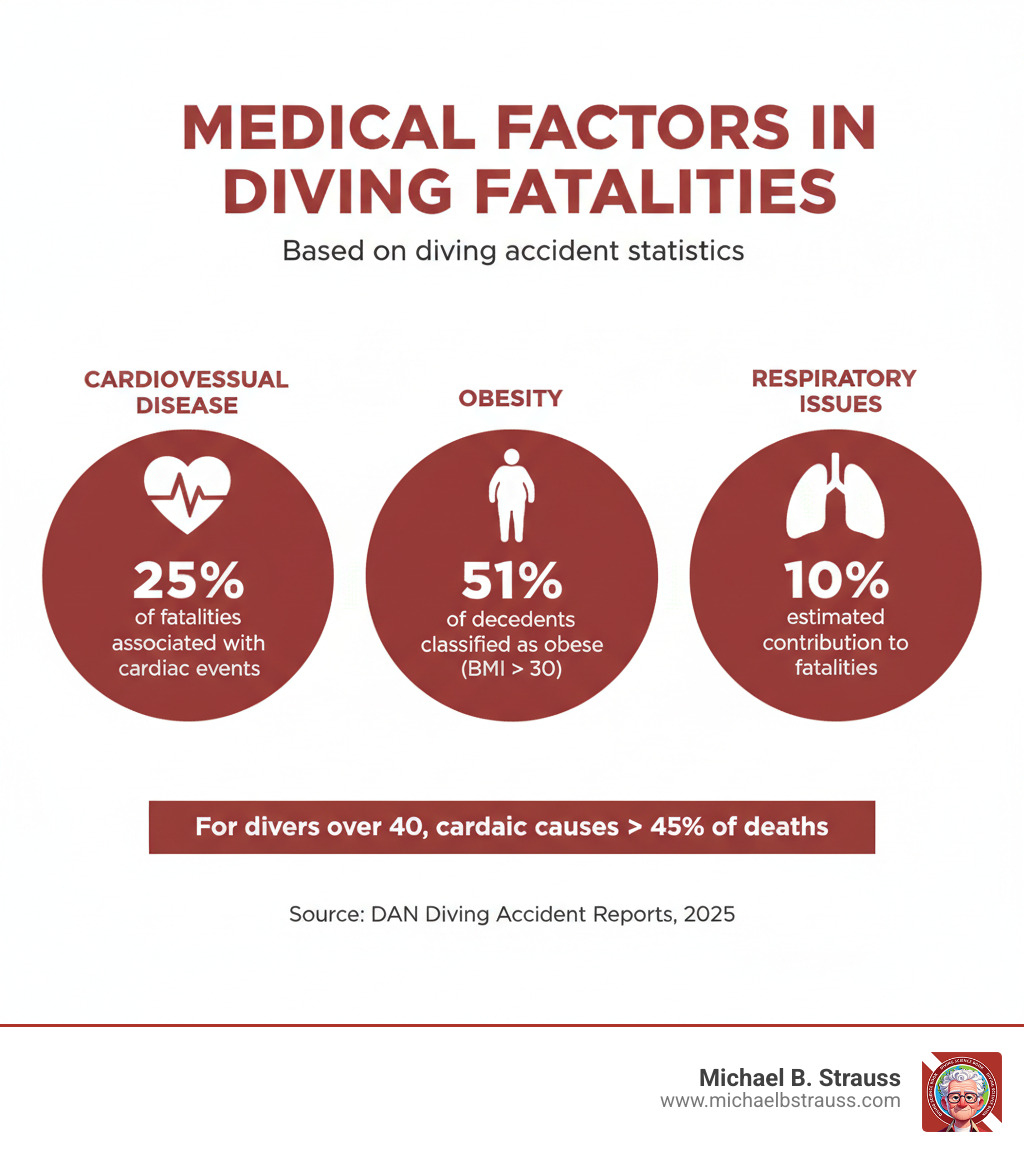
Cardiovascular disease (CVD) is a primary concern, especially in older divers. It is associated with about a quarter of all diving fatalities and is implicated in 45% of deaths for divers over 40. Conditions like hypertension are frequently found in decedents.
Obesity is another major risk factor. In one study, 51% of deceased divers were classified as obese (BMI > 30). This can impact physical exertion, gas consumption, and cardiovascular health. Alarmingly, 10% of divers in fatal incidents had previously been advised they were medically unfit to dive. For more on medical issues, see More info about Evaluation and Management of Pain-Related Medical Problems of Diving.
While drowning is often the final cause of death, it is usually preceded by a disabling injury. The true culprits are often:
- Arterial Gas Embolism (AGE): A disabling injury in 29% of cases, often linked to rapid ascents.
- Cardiac events: A disabling injury in 26% of cases, leading to sudden incapacitation.
- Immersion Pulmonary Edema (IPE): A condition where fluid builds up in the lungs, now recognized as a major, and possibly underreported, killer of divers.
Understanding this sequence is key to prevention, as detailed in DAN's report on 2018 diving fatalities, injuries, and incidents.
Enhancing Diver Safety: Prevention and Key Takeaways
After examining the sobering reality of diving accident statistics, we arrive at the most important part: prevention. The encouraging truth is that most diving accidents are preventable. They typically result not from unavoidable catastrophes but from breakdowns in basic safety practices that every diver can control.
Understanding the Data: Key Diving Accident Statistics
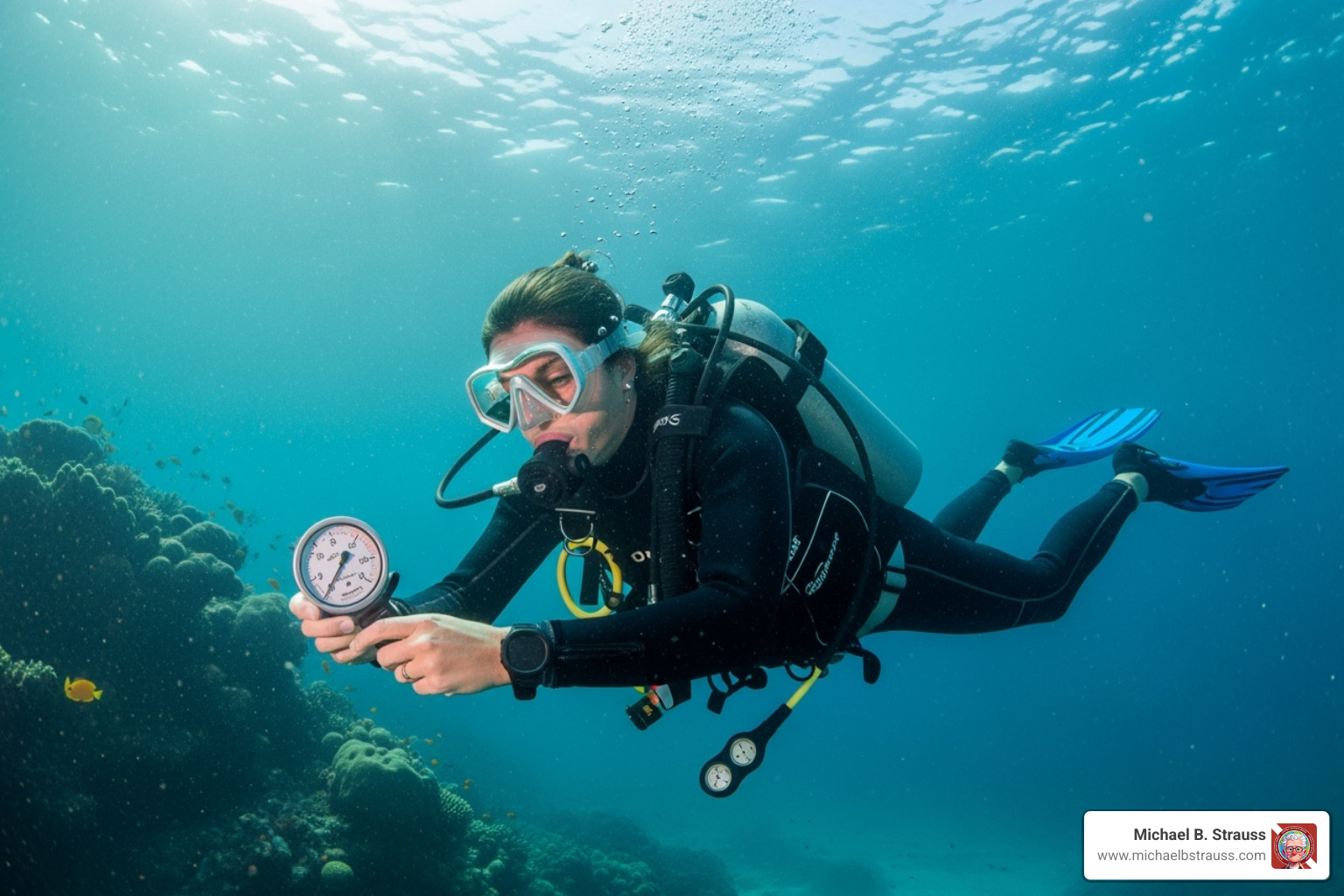
When we distill years of diving accident statistics, certain factors appear with alarming consistency. Understanding these helps us recognize when a dive starts going wrong.
- 90% of divers who died still had their weight belt on. The single fastest way to gain positive buoyancy was not used.
- 86% of divers were alone or separated from their buddy when they died. They faced their emergency without immediate help.
- 50% of fatalities involved divers who never inflated their buoyancy compensator. Another fundamental emergency skill was missed.
- 50% of all diving fatalities happen on the surface, not at depth.
- 25% of divers first encountered their difficulty on the surface, even before descending.
These statistics show that fatal incidents typically involve failures in fundamental safety procedures, not exotic scenarios or equipment failures.
Best Practices and Recommendations for Safer Diving
How do we translate these insights into action? By building a personal safety culture.
Maintain Medical Fitness. Your health is the foundation of safe diving. Given that cardiovascular disease and obesity are major factors in fatalities, schedule regular check-ups with a physician familiar with diving medicine. Be honest about your health, and if advised you are medically unfit to dive, respect that guidance.
Plan Your Dive, Dive Your Plan. Before every dive, assess environmental conditions and review the plan with your buddy. Establish clear communication and conduct a thorough pre-dive check. Sticking to your plan, especially regarding depth and time limits, is where safety begins.
Master Gas Management. Insufficient gas triggers 41% of accidents, yet it's entirely preventable. Monitor your pressure gauge constantly, know your consumption rate, and always surface with a safe reserve of air.
Perfect Your Buoyancy Control. Practice buoyancy until it's second nature. Avoid over-weighting, which increases air consumption and risk. Divers who were grossly over-weighted were six times more likely to die. In an emergency, inflating your BCD and ditching weights should be automatic.
Work the Buddy System. Stay within visual contact of your buddy and communicate regularly. Discuss emergency procedures before you get in the water. If separated, follow your agreed-upon protocol: search for one minute, then surface.
Know Your Equipment. Equipment misuse, not failure, appears in 35% of fatalities. Service your gear regularly, inspect it before each dive, and practice using all its features, especially your alternate air source.
Continue Your Education. Diving skills deteriorate without practice. Take a refresher course if you've been out of the water for a while. Stay informed on safety recommendations from organizations like DAN and BSAC. You can Learn more about the science of safe diving to deepen your understanding of the principles that keep you safe.
The path to safer diving is about applying the lessons from diving accident statistics consistently. By doing so, we honor the memory of those who didn't make it home and ensure diving remains the incredible activity it should be.
To learn more about the science behind safe diving, get your copy of Diving Science Revisited.
DISCLAIMER: Articles are for "EDUCATIONAL PURPOSES ONLY", not to be considered advice or recommendations.


