Introduction to Great Lakes Diving: An Underwater Museum
_compressed.png "shipwreck in great lakes underwater - Diving the Great Lakes")
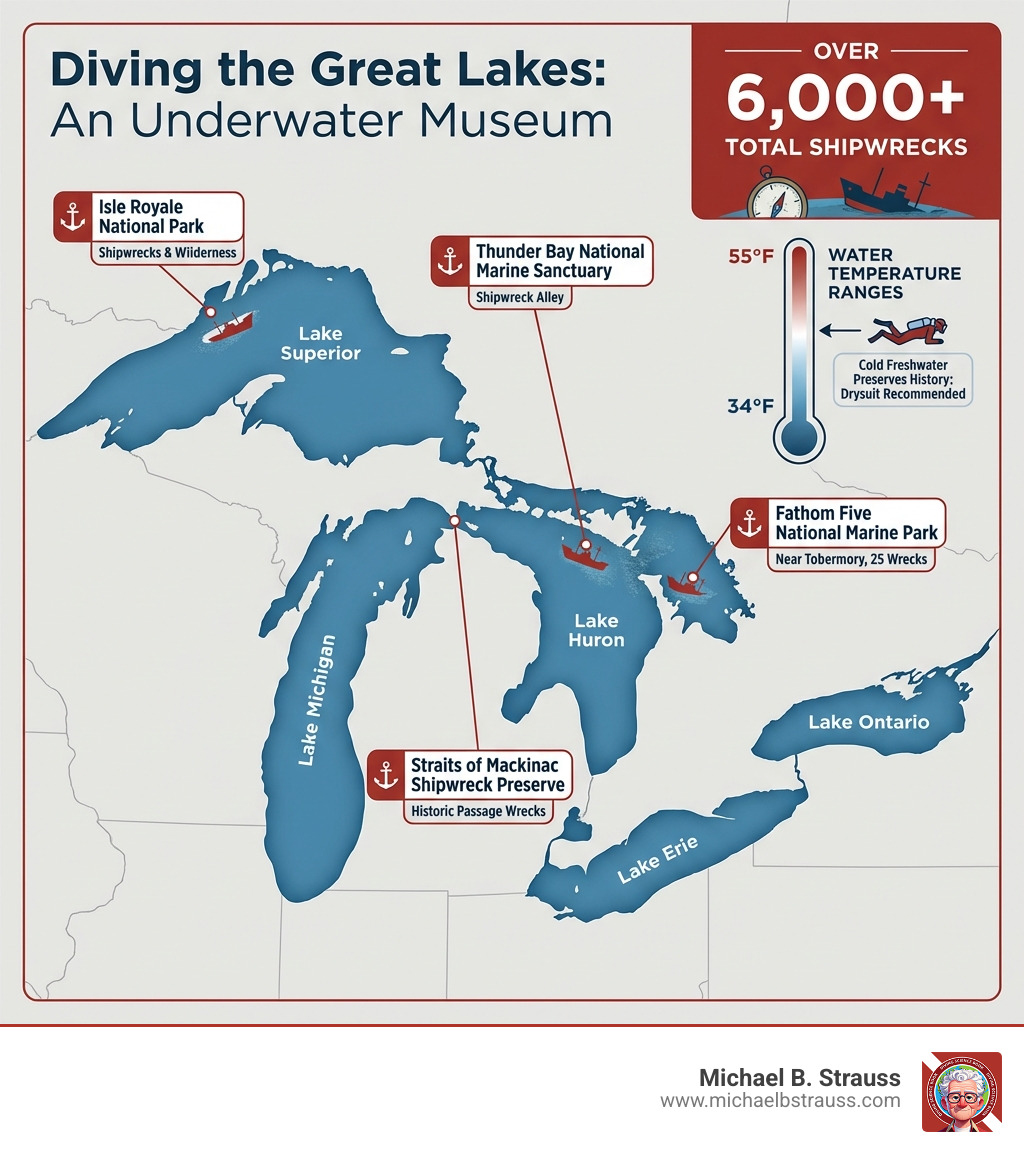
Diving the Great Lakes offers access to one of the world's most remarkable underwater museums. This vast freshwater system is home to over 6,000 shipwrecks, many of which are perfectly preserved in the cold, clear water.
Quick Guide to Great Lakes Diving:
- What makes it unique: Cold freshwater acts as a natural preservative, keeping 19th-century wooden schooners and steel freighters remarkably intact.
- Top destinations: Lake Huron's Thunder Bay (100+ wrecks), Lake Michigan (3,000+ wrecks), Fathom Five National Marine Park (25 accessible wrecks).
- Best for: Wreck diving enthusiasts seeking historical artifacts and well-preserved vessels.
- Skill levels: Shallow wrecks for beginners; deep technical dives for advanced divers.
- Essential gear: Drysuit or 7mm wetsuit (water temperatures 34-55°F).
- Peak season: Late summer to early fall for best conditions.
Unlike tropical diving, the Great Lakes experience focuses on shipwrecks. As underwater photographer Andy Morrison notes, "You're not going to see a lot of marine life; it's all about the shipwrecks." These wrecks are underwater time capsules, with artifacts like ship wheels, anchors, and cargo still visible.
The lakes earned their reputation through tragedy. Fierce weather and dangerous passages led to thousands of wrecks, earning Lake Superior the name "Graveyard of the Great Lakes." Today, these sites provide unique diving opportunities protected by underwater preserves across US and Canadian waters.
Must-know Diving the Great Lakes terms:
A Comprehensive Guide to Diving the Great Lakes
The Great Lakes offer a world-class diving experience centered on maritime history. The cold, fresh water has preserved over 6,000 shipwrecks, creating an unparalleled underwater museum. While wreck diving is the main attraction, some areas like Fathom Five National Marine Park also feature natural geological formations and submerged forests.
Top Destinations for Diving the Great Lakes
Each of the five Great Lakes offers distinct diving opportunities:
- Lake Superior: Nicknamed the "Graveyard of the Great Lakes," its extremely cold water (34-55b0F / 1-13b0C) offers the best shipwreck preservation. Isle Royale National Park features a remote and intact collection of wrecks, from wooden steamers to steel freighters.
- Lake Huron: Known as "Shipwreck Alley," this is a premier destination. Thunder Bay National Marine Sanctuary and Canada's Fathom Five National Marine Park together contain hundreds of accessible, well-preserved wrecks with excellent visibility.
- Lake Michigan: With over 3,000 shipwrecks, this is a historically rich diving ground entirely within the US. The Michigan Underwater Preserve System protects numerous wrecks for exploration.
- Lake Erie: As the shallowest and warmest lake, its many wrecks are highly accessible, making it a good starting point for those new to Great Lakes diving.
- Lake Ontario: A top 10 dive destination, it offers hundreds of sites, including wrecks, wall dives, and shore dives with vibrant fish life.
For an additional historical overview of the region and its maritime heritage, divers can explore the general background of the Great Lakes as a shipping corridor before planning specific dive sites.
Famous Shipwrecks and Underwater Formations
The lakes preserve vessels from 19th-century schooners to modern freighters, each telling a unique story.
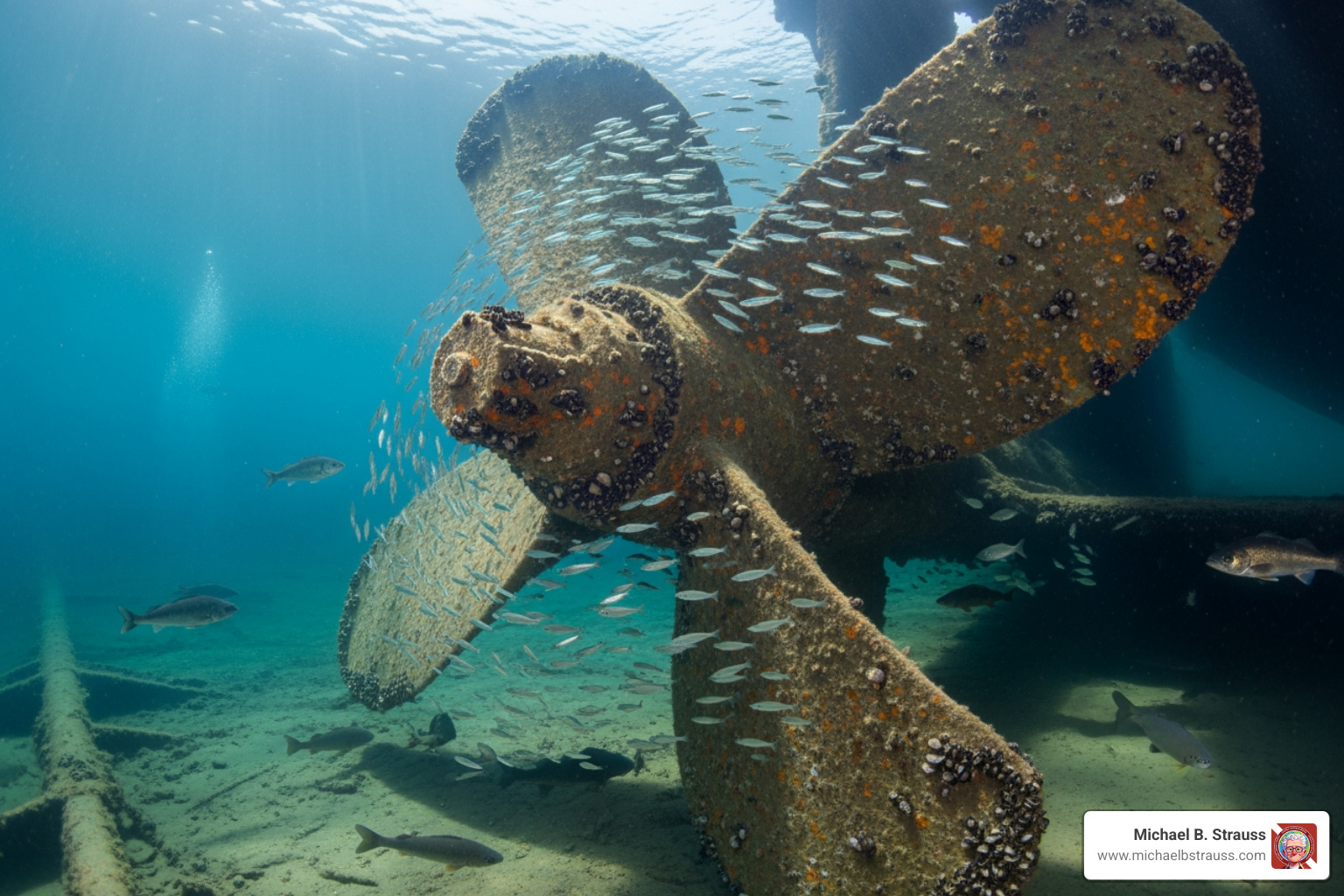
The SS Cedarville, a massive freighter in the Straits of Mackinac, is a captivating site for experienced divers. Lying at 40-106 feet, its size makes it a multi-dive exploration. For a more accessible dive, the Bermuda in Lake Superior is a wooden schooner resting in less than 13 feet of water. In Lake Huron, the Sport was one of the first steel-hulled vessels in the US and is a popular dive in 33 feet of water.
Other notable wrecks include:
- The Eber Ward: A deep wooden steamer in the Straits of Mackinac.
- The Nordmeer: A German ship in Lake Huron resting in 40 feet of water.
- The Ironsides: A Civil War-era steamer in Lake Michigan at 120 feet.
- The Regina, Sport, Checotah, and Mary Alice B: A range of wrecks in Lake Huron's Sanilac Shores Underwater Preserve.
Beyond wrecks, Fathom Five National Marine Park is renowned for its stunning geological formations, including underwater caves and ancient submerged forests.
Essential Gear and Recommended Certifications
Diving the Great Lakes requires preparation for its cold-water conditions.
Exposure Suits: Proper thermal protection is critical.
- Dry Suit: Highly recommended for warmth and comfort, especially in deeper, colder water. A Dry Suit Diver certification is invaluable.
- 7mm Wetsuit: The minimum for summer diving, and should be paired with a hood and gloves.
Essential Gear:
- Hood and Gloves
- Primary and Backup Dive Lights
- Surface Marker Buoy (SMB)
- Cutting Device
- Compass and a cold-water capable dive computer
Recommended Certifications:
- Advanced Open Water Diver: A prerequisite for many deeper wreck sites.
- Deep Diver: Essential, as many wrecks are at deeper depths.
- Wreck Diver: Provides skills for safe wreck penetration and exploration.
- Enriched Air Nitrox: Can increase bottom times on deeper wrecks.
Finally, safety planning is paramount. Dive insurance is highly recommended. Dr. Michael B. Strauss's comprehensive diving science and decompression science resources are essential reads for any diver preparing for this challenging environment.
Understanding Diving Conditions and Potential Hazards
Diving the Great Lakes means adapting to a unique environment.
- Water Temperature: Surface temperatures may reach 55b0F (13b0C) in summer, but drop dramatically with depth, often to a frigid 34-37b0F (1-3b0C). This cold increases the risk of decompression problems.
- Visibility: Varies from over 100 feet to less than one foot. Local divers consider 20-30 feet to be excellent.
- Depth: Wrecks range from shallow (under 10 feet) to technical depths, with most recreational dives capped at 130 feet.
- Potential Hazards:
- Cold Water Risks: Dive conservatively and use proper exposure protection. Dr. Strauss's work on why and at what sites decompression sickness can occur is highly relevant.
- Narcosis: The combination of depth and cold can increase narcosis.
- Wreck Penetration: Poses risks of mess, silt-outs, and disorientation. Only penetrate wrecks with proper training and equipment.
- Changing Weather: Lake weather is unpredictable. Always check marine forecasts and trust your captain's decisions.
- Remoteness: Some sites, like Isle Royale, are far from emergency care. Plan for self-sufficiency.
With the right training, gear, and mindset, Diving the Great Lakes is an incredibly rewarding experience.
Planning Your Trip and Diving Responsibly
A Great Lakes diving adventure requires careful planning for a safe and enjoyable experience.
Best Seasons and Trip Logistics
The best time to dive the Great Lakes is late summer to early fall, when water is warmest and weather is most stable. Book charters well in advance, especially for popular sites. Be flexible, as weather can change rapidly, and always trust your captain's judgment.
Popular hubs like Alpena, Michigan, and Tobermory, Canada, offer a range of accommodations, dive shops, and charter services. For non-divers, many shallow wrecks are accessible to snorkelers, and some areas offer glass-bottom boat tours.
Regulations and Underwater Conservation
Exploring the Great Lakes' treasures comes with a profound responsibility to protect them.
Underwater Preserves and Regulations: Most wrecks are in protected underwater preserves or marine sanctuaries. It is illegal to disturb or remove any artifacts. The rule is simple: "Take only pictures, leave only bubbles." These historical resources must be preserved for future generations.
Dive Flag Laws: Always use a "Diver Down" flag (red with a white diagonal stripe) and follow local laws regarding boat proximity to ensure diver safety.
Invasive Species Prevention: To protect the ecosystem, clean and dry your gear thoroughly between dives, especially when moving between different bodies of water. Follow local guidelines, such as those at Isle Royale National Park, which require specific disinfection protocols.
The role of conservation in preserving the Great Lakes' heritage cannot be overstated. By practicing responsible diving, we help ensure these underwater museums remain pristine.
To learn more about the science behind safe diving, get your copy of Diving Science Revisited today.
DISCLAIMER: Articles are for "EDUCATIONAL PURPOSES ONLY", not to be considered advice or recommendations.


