Read story

Why Ear Health is Critical for Divers

Ear drops for scuba divers are essential for preventing ear problems that can ruin a dive trip. Here's a quick guide:

Best Types of Ear Drops for Divers:

  • Alcohol-based drops: Use after diving to dry ears and prevent swimmer's ear.
  • Acetic acid drops: Restore pH balance and prevent bacterial growth.
  • Oil-based drops: Use before diving to create a protective barrier.

When to Use Them:

  1. After each dive to dry water from ear canals.
  2. During multi-day dive trips as a preventative measure.
  3. After showering or surface swimming.

An ear infection can quickly end a diving holiday. The issue often starts with water trapped in the ear canal, creating a breeding ground for bacteria and fungi. Combined with the pressure changes of diving, this can lead to serious discomfort.

Your ears are not designed for rapid pressure shifts. Water exposure alters the natural pH balance that protects the ear canal from infection. Ear drops for scuba divers work by drying moisture, restoring the ear's acidic environment, and sometimes lubricating the skin to prevent cracking. Proper ear care is preventative and can be the difference between a fantastic trip and one spent on the boat.
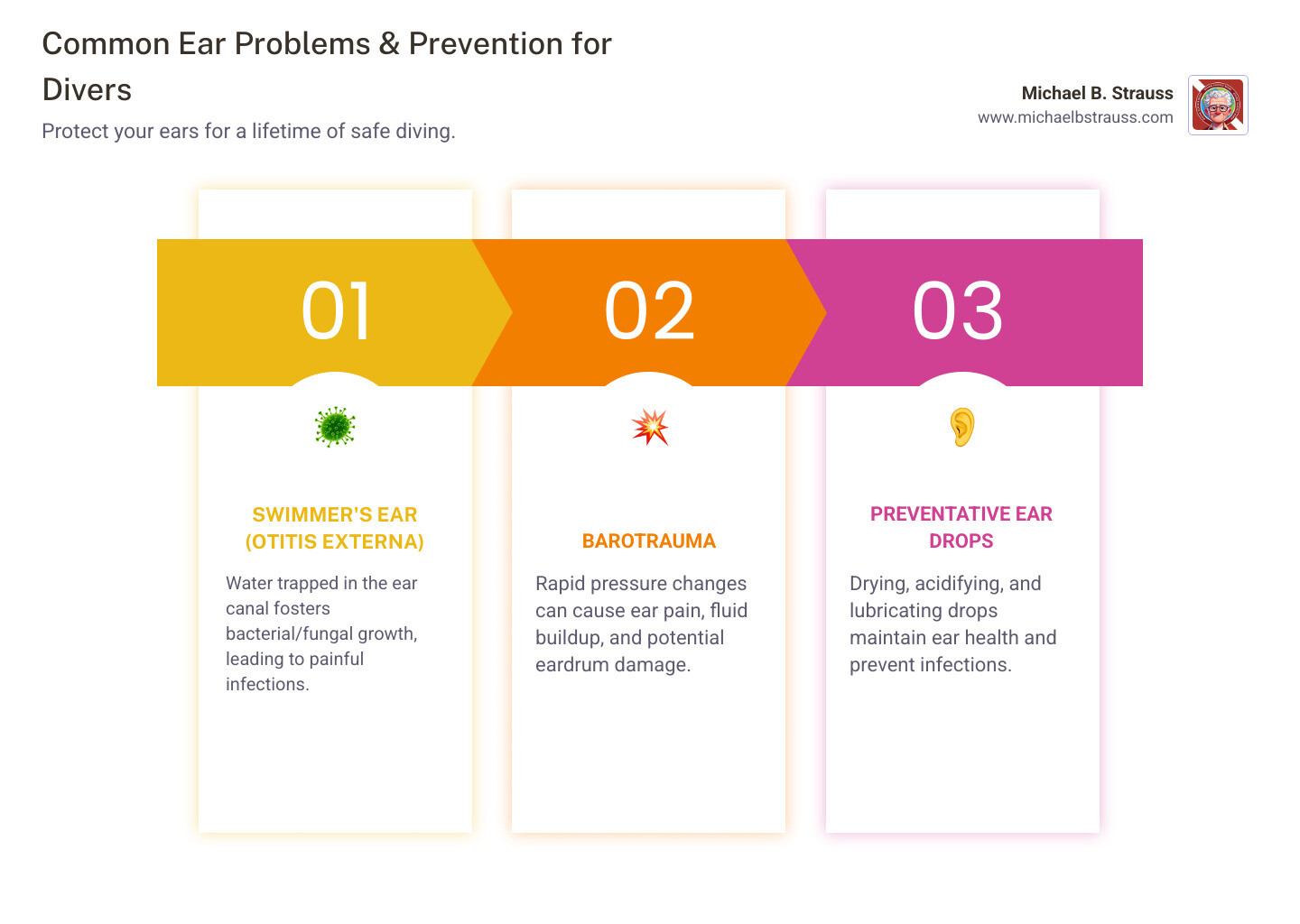
infographic showing common ear problems for scuba divers including swimmer's ear (otitis externa) with water trapped in ear canal leading to bacterial infection, and barotrauma from pressure changes causing pain and potential eardrum damage, plus prevention methods using ear drops after diving - ear drops for scuba divers infographic pillar-3-steps

Ear drops for scuba divers terms simplified:

Common Ear Problems: From Swimmer's Ear to Barotrauma

Divers are susceptible to several ear issues due to pressure changes and water exposure.

The most common is Otitis Externa, or Swimmer's Ear. This painful infection of the outer ear canal happens when trapped water creates a moist environment ideal for bacterial or fungal infections. Improper cleaning can strip away protective earwax, increasing vulnerability.

Pressure changes during descent and ascent can cause barotrauma—an injury from pressure differences between your ears and the water. This can range from discomfort to a ruptured eardrum. While proper equalization is key, a healthy ear canal is the first line of defense.

Middle-ear infections can also cause swelling in the Eustachian tubes, making equalization difficult and leading to pain or muffled hearing. Fortunately, most of these problems are preventable with good ear care.

How Ear Drops Work: Prevention and Relief

The mechanism of action for ear drops for scuba divers is straightforward, focusing on drying the ear canal and restoring pH balance.

After a dive, lingering water can make the ear canal less acidic, creating a welcoming environment for bacteria and fungi. Ear drops with drying agents wick away this moisture. At the same time, they work on restoring the ear canal's acidic environment. A low pH is the ear's natural defense, and these drops create an unfriendly environment for bacterial or fungal colonization.

This makes them ideal for prophylactic use (prevention), especially on multi-day dive trips with constant water exposure. Some ear drops for scuba divers also contain ingredients for lubricating the skin. This prevents the ear canal from becoming overly dry or cracked from repeated wetting and drying, which could create an entry point for infection. By counteracting the effects of water exposure, these drops keep your ears healthy and ready for your next dive.

A Practical Guide to Ear Drops for Scuba Divers
generic ear drop bottles - ear drops for scuba divers

Choosing from the many ear drops for scuba divers can feel overwhelming. The secret isn't just buying any drops; it's understanding the ingredients and using them correctly. Like maintaining dive gear, using the right tool at the right time makes all the difference.

Key Ingredients and Their Functions

Understanding the key ingredients in ear drops helps you choose the right product for your needs.

  • Isopropyl Alcohol: A powerful drying agent that quickly evaporates trapped water from the ear canal.
  • Anhydrous Glycerin: Often paired with alcohol, it acts as a lubricant to prevent the ear canal skin from becoming too dry or irritated.
  • Acetic Acid: Essentially vinegar, this acidifying agent lowers the ear's pH, creating an acidic environment where bacteria and fungi cannot thrive. It's highly effective for preventing swimmer's ear.
  • Boric Acid: Works similarly to acetic acid to help maintain an acidic environment.
  • Olive Oil: Used before diving, it creates a water-resistant barrier in the ear canal to prevent water from getting trapped.
  • Tea Tree Oil: A natural biocide with anti-fungal and anti-bacterial properties. When combined with olive oil, it offers both a barrier and an active defense against infection.
  • Aluminum Acetate & Sodium Acetate: These are astringents that help reduce swelling and inflammation.

Knowing these ingredients helps you select the best drops for your diving style. For multi-day trips, drying and acidifying drops are ideal for post-dive care. For occasional dives, an oil-based barrier might be sufficient.

How to Properly Use Ear Drops for Diving

Using ear drops correctly is as important as choosing the right ones. Timing and technique are everything.
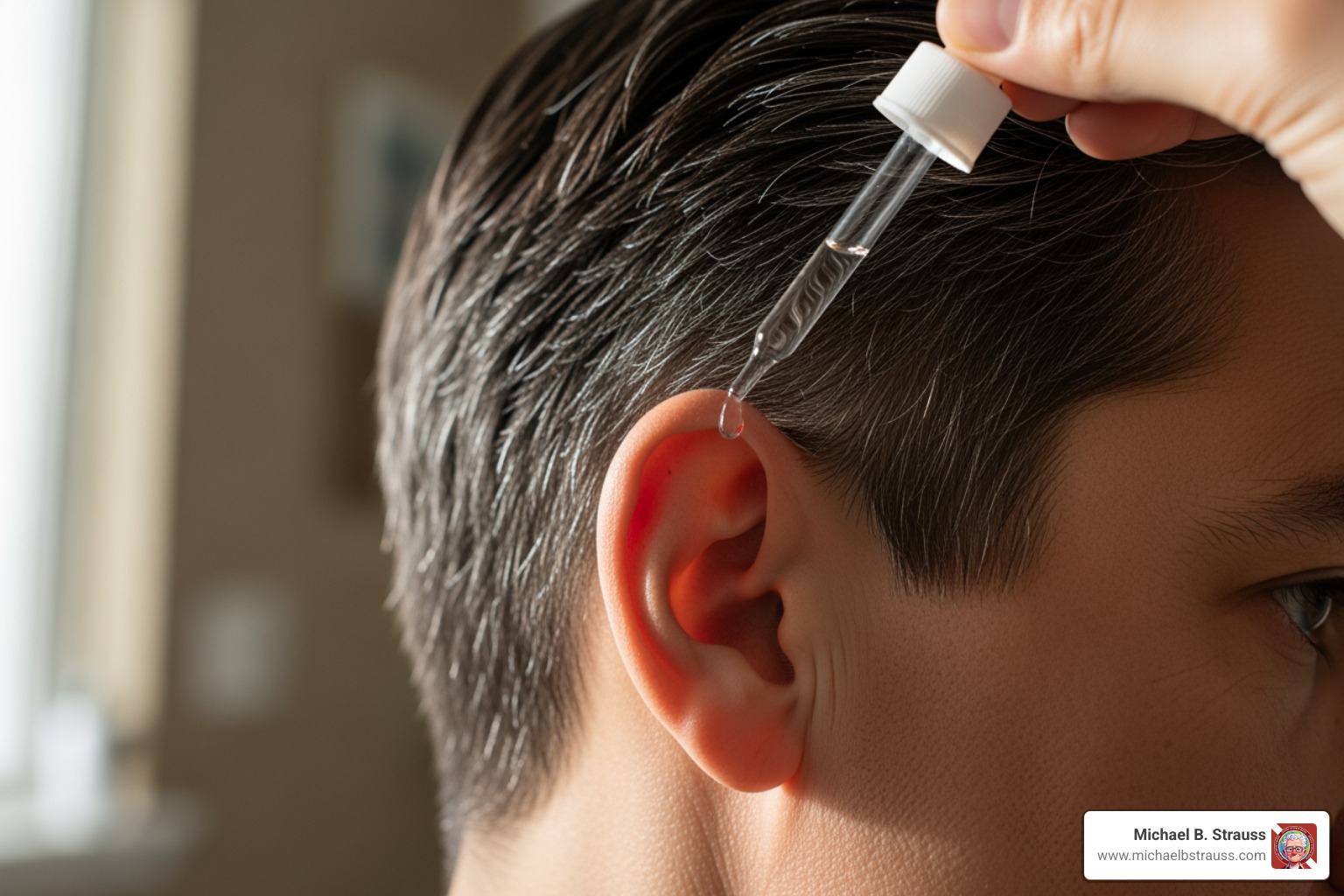
applying ear drops - ear drops for scuba divers

Timing Your Drops:

  • Before Diving: Use oil-based drops (olive oil, tea tree oil) to create a protective, water-repellent barrier. One application can last for hours.
  • After Diving: Use alcohol-based or acetic acid drops after your last dive of the day to dry the ear canal and restore its pH. This is critical on multi-day dive trips. Also use them after swimming, snorkeling, or showering.

Application Technique:

  1. Tilt your head so the ear is facing upward.
  2. Administer 4 to 5 drops into the ear canal.
  3. Keep your head tilted for 30-60 seconds to let the drops coat the canal.
  4. Tilt your head back and use a towel to absorb any runoff.

Avoid using cotton swabs, which can cause irritation or push wax deeper. Make this routine a habit, just like rinsing your gear.

Types of Ear Drops: Prevention vs. Treatment

It's vital to distinguish between preventative and treatment drops.

  • Prophylactic (Preventative) Drops: These are the over-the-counter drops for post-dive care. Containing ingredients like alcohol, acetic acid, or oils, their purpose is to prevent infections by keeping the ear canal dry and balanced.

  • Therapeutic (Treatment) Drops: These are prescription medications with antibiotics or steroids to treat an existing infection. They are not for prevention and should only be used under a doctor's supervision.

When to See a Doctor:Stop using preventative drops and seek professional medical help if you experience:

  • Persistent ear pain
  • Discharge from the ear
  • Muffled or reduced hearing
  • Ringing in the ears (tinnitus)
  • Dizziness

These symptoms may indicate an active infection or a ruptured eardrum. Never use preventative drops to treat a suspected infection; that is a job for medical professionals.

Safety, Alternatives, and Expert Recommendations

diver talking to doctor - ear drops for scuba divers

Your ear health is absolutely paramount for safe and enjoyable diving. While ear drops for scuba divers are incredibly helpful tools, understand their limitations, potential risks, and when it's time to put down the bottle and pick up the phone to call a doctor.

Risks, Side Effects, and When to Avoid Using Ear Drops for Scuba Divers

While generally safe, preventative ear drops have risks. The most critical rule is: never put drops into an ear if you suspect a ruptured eardrum. Doing so can push harmful substances into the middle ear, causing severe infection, vertigo, or hearing damage.

Symptoms of a suspected ruptured eardrum include sudden pain, hearing loss, tinnitus (ringing), and discharge. If you experience these, stop diving and see a doctor immediately.

Also, avoid using drops and consult a physician if you already have ear pain, discharge, or dizziness, as these may signal an active infection requiring medical treatment.

Other potential side effects include:

  • Skin irritation: Some ingredients, especially alcohol, can cause redness or itching. Discontinue use if this occurs.
  • Excessive drying: Alcohol-based drops can sometimes dry out the ear canal, leading to cracks that invite infection.

Do not use ear drops if you have ear ventilation tubes, as diving with them is generally not recommended. When in doubt, consult a medical professional.

Alternatives: DIY Solutions and Other Ear Care Methods

Besides commercial ear drops for scuba divers, other methods can keep your ears healthy.

  • Homemade Remedy: A popular and effective DIY solution is a 50/50 mixture of white vinegar and rubbing alcohol. The alcohol dries the ear, while the vinegar restores its acidic pH. Apply a few drops after diving, just as you would with commercial drops.
  • Hair Dryer: Use a hair dryer on a cool setting held a few inches from your ear to gently dry the ear canal.

A Note on Earplugs: Standard, solid earplugs are unsafe for diving. They create an air space that cannot be equalized, risking external ear barotrauma. While some vented plugs exist, caution is advised due to a lack of independent testing. It's safer to rely on proper equalization and ear drops.

This table compares your options:

FeatureAlcohol-based CommercialAcetic Acid-based CommercialOil-based CommercialDIY (Vinegar + Alcohol)
Primary FunctionDrying, moisturizingAcidifying, antibacterialWater-repellent, natural biocideDrying, acidifying, antibacterial
When to UseAfter diving/water exposureAfter diving/water exposureBefore diving/water exposureAfter diving/water exposure
ProsFast drying, prevents irritationRestores natural pH, strong antibacterialCreates barrier, natural, long-lastingCost-effective, readily available, effective
ConsCan cause excessive drying if no glycerinCan be irritating if too concentratedMay feel oily, less immediate dryingCan be irritating if eardrum compromised

The best method depends on your sensitivity and diving habits. Consistency is the most important part of any ear care routine.

Conclusion: Prioritizing Your Ear Health for a Lifetime of Diving

The most important key takeaway for using ear drops for scuba divers is simple: prevention is key. Neglecting ear health can lead to painful infections that ruin a dive trip. Make post-dive ear care as routine as checking your gear.

Equally important is to listen to your body. Persistent pain, discomfort, or other symptoms are signals to stop diving and seek medical advice. Don't let a minor issue become a major problem.

Dr. Michael B. Strauss, an expert in diving safety, emphasizes understanding the body's response to the underwater environment. Proper ear care is a critical part of responsible diving, ensuring you can enjoy the sport for years to come. Protect your ears—they are your passport to the underwater world.

To learn more about the science of safe diving, get your copy of Dr. Strauss's book, Diving Science Revisited, available here.

DISCLAIMER: Articles are for "EDUCATIONAL PURPOSES ONLY", not to be considered advice or recommendations.

Download Full PDF
Tags:

Why Ear Health is Critical for Divers

Ear drops for scuba divers are essential for preventing ear problems that can ruin a dive trip. Here's a quick guide:

Best Types of Ear Drops for Divers:

  • Alcohol-based drops: Use after diving to dry ears and prevent swimmer's ear.
  • Acetic acid drops: Restore pH balance and prevent bacterial growth.
  • Oil-based drops: Use before diving to create a protective barrier.

When to Use Them:

  1. After each dive to dry water from ear canals.
  2. During multi-day dive trips as a preventative measure.
  3. After showering or surface swimming.

An ear infection can quickly end a diving holiday. The issue often starts with water trapped in the ear canal, creating a breeding ground for bacteria and fungi. Combined with the pressure changes of diving, this can lead to serious discomfort.

Your ears are not designed for rapid pressure shifts. Water exposure alters the natural pH balance that protects the ear canal from infection. Ear drops for scuba divers work by drying moisture, restoring the ear's acidic environment, and sometimes lubricating the skin to prevent cracking. Proper ear care is preventative and can be the difference between a fantastic trip and one spent on the boat.

infographic showing common ear problems for scuba divers including swimmer's ear (otitis externa) with water trapped in ear canal leading to bacterial infection, and barotrauma from pressure changes causing pain and potential eardrum damage, plus prevention methods using ear drops after diving - ear drops for scuba divers infographic pillar-3-steps

Ear drops for scuba divers terms simplified:

Common Ear Problems: From Swimmer's Ear to Barotrauma

Divers are susceptible to several ear issues due to pressure changes and water exposure.

The most common is Otitis Externa, or Swimmer's Ear. This painful infection of the outer ear canal happens when trapped water creates a moist environment ideal for bacterial or fungal infections. Improper cleaning can strip away protective earwax, increasing vulnerability.

Pressure changes during descent and ascent can cause barotrauma—an injury from pressure differences between your ears and the water. This can range from discomfort to a ruptured eardrum. While proper equalization is key, a healthy ear canal is the first line of defense.

Middle-ear infections can also cause swelling in the Eustachian tubes, making equalization difficult and leading to pain or muffled hearing. Fortunately, most of these problems are preventable with good ear care.

How Ear Drops Work: Prevention and Relief

The mechanism of action for ear drops for scuba divers is straightforward, focusing on drying the ear canal and restoring pH balance.

After a dive, lingering water can make the ear canal less acidic, creating a welcoming environment for bacteria and fungi. Ear drops with drying agents wick away this moisture. At the same time, they work on restoring the ear canal's acidic environment. A low pH is the ear's natural defense, and these drops create an unfriendly environment for bacterial or fungal colonization.

This makes them ideal for prophylactic use (prevention), especially on multi-day dive trips with constant water exposure. Some ear drops for scuba divers also contain ingredients for lubricating the skin. This prevents the ear canal from becoming overly dry or cracked from repeated wetting and drying, which could create an entry point for infection. By counteracting the effects of water exposure, these drops keep your ears healthy and ready for your next dive.

A Practical Guide to Ear Drops for Scuba Divers

generic ear drop bottles - ear drops for scuba divers

Choosing from the many ear drops for scuba divers can feel overwhelming. The secret isn't just buying any drops; it's understanding the ingredients and using them correctly. Like maintaining dive gear, using the right tool at the right time makes all the difference.

Key Ingredients and Their Functions

Understanding the key ingredients in ear drops helps you choose the right product for your needs.

  • Isopropyl Alcohol: A powerful drying agent that quickly evaporates trapped water from the ear canal.
  • Anhydrous Glycerin: Often paired with alcohol, it acts as a lubricant to prevent the ear canal skin from becoming too dry or irritated.
  • Acetic Acid: Essentially vinegar, this acidifying agent lowers the ear's pH, creating an acidic environment where bacteria and fungi cannot thrive. It's highly effective for preventing swimmer's ear.
  • Boric Acid: Works similarly to acetic acid to help maintain an acidic environment.
  • Olive Oil: Used before diving, it creates a water-resistant barrier in the ear canal to prevent water from getting trapped.
  • Tea Tree Oil: A natural biocide with anti-fungal and anti-bacterial properties. When combined with olive oil, it offers both a barrier and an active defense against infection.
  • Aluminum Acetate & Sodium Acetate: These are astringents that help reduce swelling and inflammation.

Knowing these ingredients helps you select the best drops for your diving style. For multi-day trips, drying and acidifying drops are ideal for post-dive care. For occasional dives, an oil-based barrier might be sufficient.

How to Properly Use Ear Drops for Diving

Using ear drops correctly is as important as choosing the right ones. Timing and technique are everything.

applying ear drops - ear drops for scuba divers

Timing Your Drops:

  • Before Diving: Use oil-based drops (olive oil, tea tree oil) to create a protective, water-repellent barrier. One application can last for hours.
  • After Diving: Use alcohol-based or acetic acid drops after your last dive of the day to dry the ear canal and restore its pH. This is critical on multi-day dive trips. Also use them after swimming, snorkeling, or showering.

Application Technique:

  1. Tilt your head so the ear is facing upward.
  2. Administer 4 to 5 drops into the ear canal.
  3. Keep your head tilted for 30-60 seconds to let the drops coat the canal.
  4. Tilt your head back and use a towel to absorb any runoff.

Avoid using cotton swabs, which can cause irritation or push wax deeper. Make this routine a habit, just like rinsing your gear.

Types of Ear Drops: Prevention vs. Treatment

It's vital to distinguish between preventative and treatment drops.

  • Prophylactic (Preventative) Drops: These are the over-the-counter drops for post-dive care. Containing ingredients like alcohol, acetic acid, or oils, their purpose is to prevent infections by keeping the ear canal dry and balanced.

  • Therapeutic (Treatment) Drops: These are prescription medications with antibiotics or steroids to treat an existing infection. They are not for prevention and should only be used under a doctor's supervision.

When to See a Doctor:Stop using preventative drops and seek professional medical help if you experience:

  • Persistent ear pain
  • Discharge from the ear
  • Muffled or reduced hearing
  • Ringing in the ears (tinnitus)
  • Dizziness

These symptoms may indicate an active infection or a ruptured eardrum. Never use preventative drops to treat a suspected infection; that is a job for medical professionals.

Safety, Alternatives, and Expert Recommendations

diver talking to doctor - ear drops for scuba divers

Your ear health is absolutely paramount for safe and enjoyable diving. While ear drops for scuba divers are incredibly helpful tools, understand their limitations, potential risks, and when it's time to put down the bottle and pick up the phone to call a doctor.

Risks, Side Effects, and When to Avoid Using Ear Drops for Scuba Divers

While generally safe, preventative ear drops have risks. The most critical rule is: never put drops into an ear if you suspect a ruptured eardrum. Doing so can push harmful substances into the middle ear, causing severe infection, vertigo, or hearing damage.

Symptoms of a suspected ruptured eardrum include sudden pain, hearing loss, tinnitus (ringing), and discharge. If you experience these, stop diving and see a doctor immediately.

Also, avoid using drops and consult a physician if you already have ear pain, discharge, or dizziness, as these may signal an active infection requiring medical treatment.

Other potential side effects include:

  • Skin irritation: Some ingredients, especially alcohol, can cause redness or itching. Discontinue use if this occurs.
  • Excessive drying: Alcohol-based drops can sometimes dry out the ear canal, leading to cracks that invite infection.

Do not use ear drops if you have ear ventilation tubes, as diving with them is generally not recommended. When in doubt, consult a medical professional.

Alternatives: DIY Solutions and Other Ear Care Methods

Besides commercial ear drops for scuba divers, other methods can keep your ears healthy.

  • Homemade Remedy: A popular and effective DIY solution is a 50/50 mixture of white vinegar and rubbing alcohol. The alcohol dries the ear, while the vinegar restores its acidic pH. Apply a few drops after diving, just as you would with commercial drops.
  • Hair Dryer: Use a hair dryer on a cool setting held a few inches from your ear to gently dry the ear canal.

A Note on Earplugs: Standard, solid earplugs are unsafe for diving. They create an air space that cannot be equalized, risking external ear barotrauma. While some vented plugs exist, caution is advised due to a lack of independent testing. It's safer to rely on proper equalization and ear drops.

This table compares your options:

FeatureAlcohol-based CommercialAcetic Acid-based CommercialOil-based CommercialDIY (Vinegar + Alcohol)
Primary FunctionDrying, moisturizingAcidifying, antibacterialWater-repellent, natural biocideDrying, acidifying, antibacterial
When to UseAfter diving/water exposureAfter diving/water exposureBefore diving/water exposureAfter diving/water exposure
ProsFast drying, prevents irritationRestores natural pH, strong antibacterialCreates barrier, natural, long-lastingCost-effective, readily available, effective
ConsCan cause excessive drying if no glycerinCan be irritating if too concentratedMay feel oily, less immediate dryingCan be irritating if eardrum compromised

The best method depends on your sensitivity and diving habits. Consistency is the most important part of any ear care routine.

Conclusion: Prioritizing Your Ear Health for a Lifetime of Diving

The most important key takeaway for using ear drops for scuba divers is simple: prevention is key. Neglecting ear health can lead to painful infections that ruin a dive trip. Make post-dive ear care as routine as checking your gear.

Equally important is to listen to your body. Persistent pain, discomfort, or other symptoms are signals to stop diving and seek medical advice. Don't let a minor issue become a major problem.

Dr. Michael B. Strauss, an expert in diving safety, emphasizes understanding the body's response to the underwater environment. Proper ear care is a critical part of responsible diving, ensuring you can enjoy the sport for years to come. Protect your ears—they are your passport to the underwater world.

To learn more about the science of safe diving, get your copy of Dr. Strauss's book, Diving Science Revisited, available here.

DISCLAIMER: Articles are for "EDUCATIONAL PURPOSES ONLY", not to be considered advice or recommendations.