Read story

Why Your Ears Need Your Attention Underwater
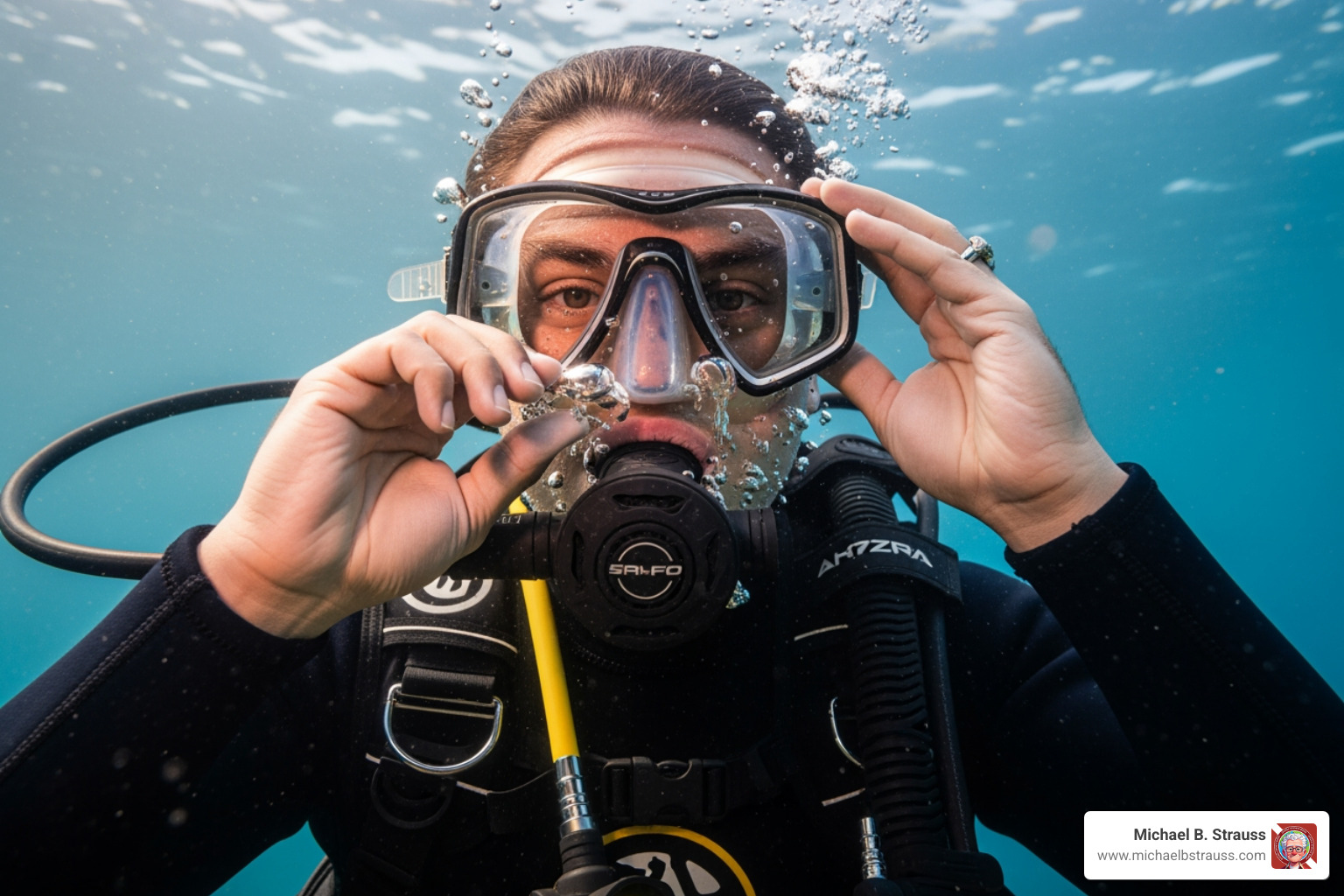
scuba diver equalizing underwater - ear equalization techniques

Ear equalization techniques are methods divers use to balance the pressure in their middle ears with the surrounding water pressure. Without proper equalization, you risk painful injuries like barotrauma or even a ruptured eardrum.

The human ear wasn't designed for the rapid pressure changes of diving. As you descend, water pressure increases, compressing the air space in your middle ear. If you don't add air to this space via your Eustachian tubes, the pressure difference can cause pain in just a few feet of water and can lead to eardrum rupture at depths beyond 10 feet.

Middle ear barotrauma is the most common pressure-related injury for divers. Most equalization problems stem from poor technique or timing, not anatomical issues. Learning several methods protects your hearing, prevents injury, and can save a dive that might otherwise be aborted.
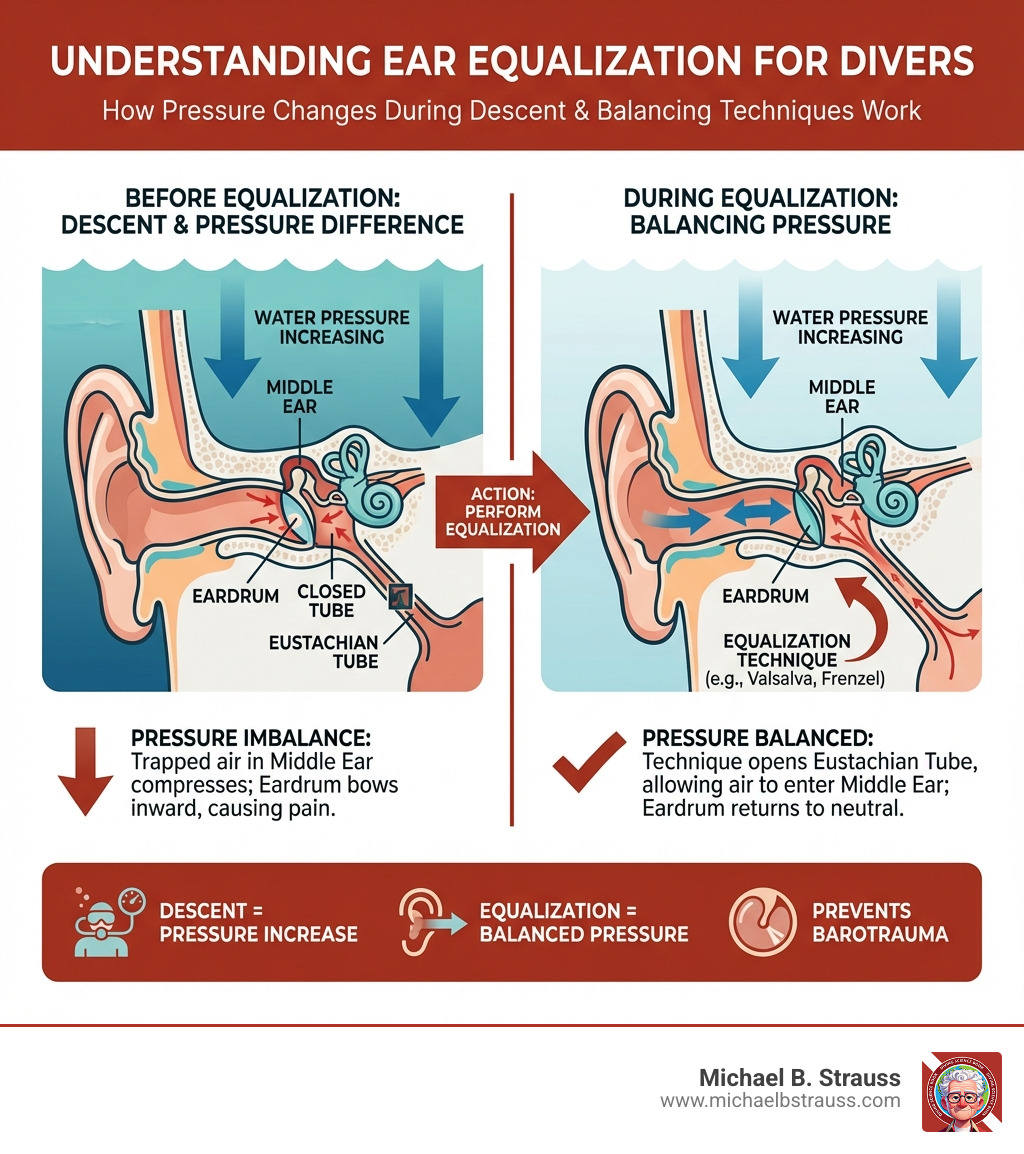
Detailed infographic showing ear anatomy with middle ear, Eustachian tube, and eardrum labeled, plus arrows indicating pressure changes during descent and how equalization opens the Eustachian tubes to balance pressure - ear equalization techniques infographic

Common ear equalization techniques vocab:

Mastering Essential Ear Equalization Techniques

Diver descending feet-first along a line, demonstrating safe descent posture. - ear equalization techniques

This section covers the core methods and best practices for keeping your ears safe and comfortable during every dive.

Understanding the 'Squeeze': The Science of Ear Pressure

Our middle ears are air-filled spaces connected to our throats by the Eustachian tubes. According to Boyle's Law, as we descend, the increasing water pressure compresses the air in our middle ears. If we don't actively add air through the Eustachian tubes, this pressure imbalance—the "squeeze"—stretches the eardrum inward.

This can cause pain in as little as a few feet of descent. By 10 feet, the pressure difference is significant enough to rupture the eardrum in most divers. The most common injury is middle ear barotrauma, which involves pain, inflammation, and fluid in the middle ear.

A more serious risk is inner ear barotrauma, which can cause permanent hearing loss or vertigo. This can happen if you equalize too forcefully, damaging delicate inner ear structures. Understanding the science behind these pressure changes, as explored in Diving Science, is fundamental to safe diving.

The Most Common Ear Equalization Techniques Explained

All effective ear equalization techniques aim to open your Eustachian tubes to allow air into the middle ear. Learning several methods allows you to find what works best for you.

  • Valsalva Maneuver: Pinch your nose and gently blow. This is the most common method but can cause injury if done too forcefully. It doesn't use muscles to open the tubes, so it may fail if they are already locked by pressure.
  • Frenzel Maneuver: Pinch your nose, close the back of your throat, and use your tongue to push air upward by making a 'K' sound. This is gentler and more controlled than Valsalva, making it a favorite of experienced divers and freedivers.
  • Toynbee Maneuver: Pinch your nose and swallow. Swallowing naturally pulls the Eustachian tubes open.
  • Lowry Technique: A combination of Valsalva and Toynbee. Pinch your nose, blow gently, and swallow at the same time.
  • Edmonds Technique: While performing a Valsalva, tense your throat and push your jaw forward and down to help open the tubes.
  • Voluntary Tubal Opening (VTO/BTV): A hands-free method where you tense your soft palate and throat muscles, similar to the start of a yawn, to open the tubes. This requires practice but allows for continuous equalization.
TechniqueEaseEffectivenessKey Risks & Notes
ValsalvaEasyGoodHigh risk of inner ear injury if forced. May not work if tubes are locked.
FrenzelModerateVery GoodSafer than Valsalva; requires more coordination. Preferred for freediving.
ToynbeeEasyModerateVery safe; may not be strong enough for rapid descents.
LowryModerateGoodCombines Valsalva and Toynbee; effective when others fail.
EdmondsModerateGoodAdds jaw movement to Valsalva for better tube opening.
VTO/BTVDifficultVery GoodHands-free and very gentle once mastered. Requires significant practice.

More information on equalization methods is available on Dr. Michael B. Strauss’s website, where we dig deeper into safe diving practices.

Best Practices for Descent and Ascent

Knowing when and how to use ear equalization techniques is as important as the techniques themselves.
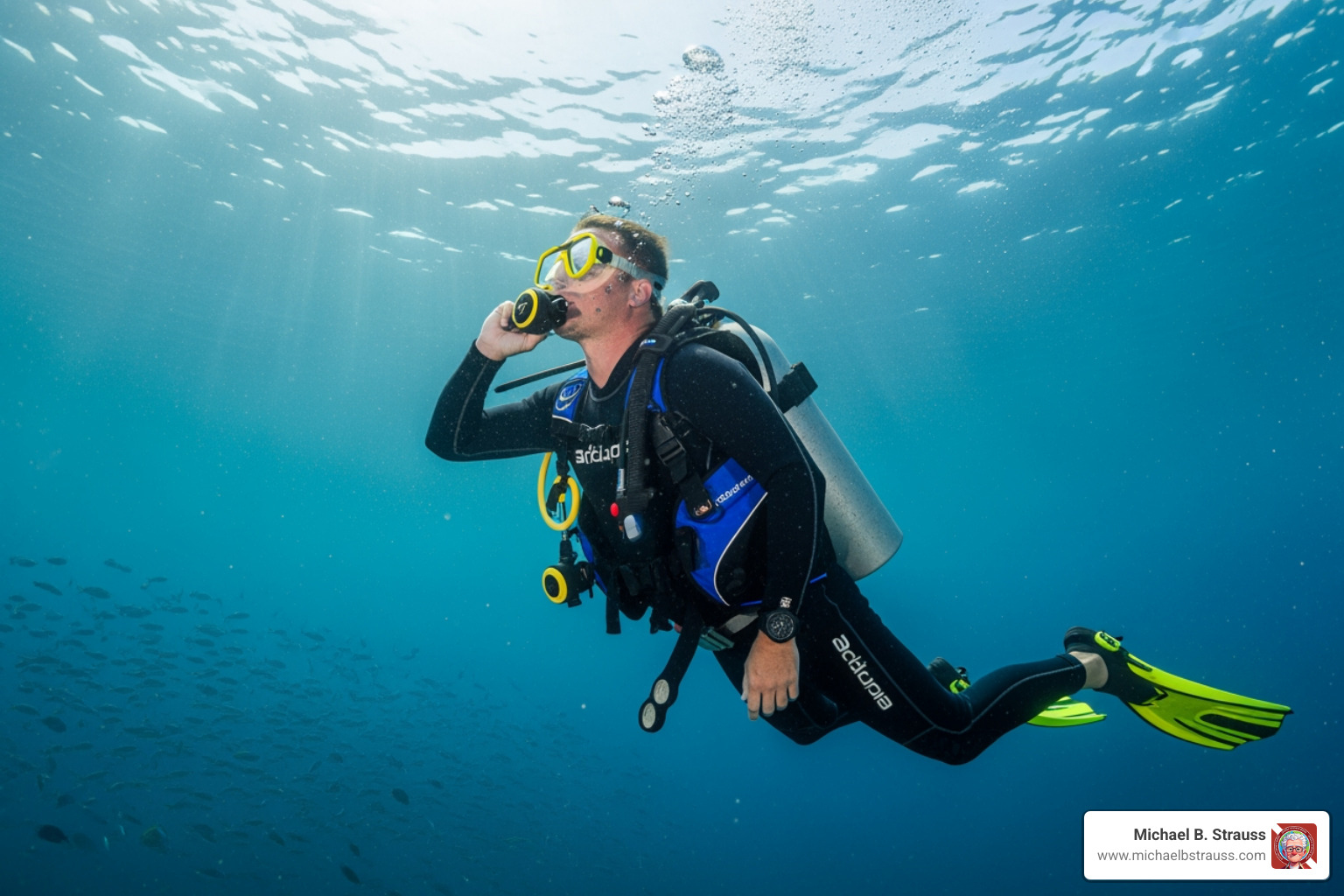
Diver looking up while equalizing, showing proper technique. - ear equalization techniques

  • Equalize Early and Often: Start before you feel pressure and continue every few feet on descent. Waiting too long can cause the tubes to "lock" shut.
  • Descend Feet-First: This position makes it easier for air to travel up into the Eustachian tubes.
  • Use a Descent Line: A line helps you control your descent speed, preventing you from going down too fast to keep up with equalization.
  • Look Up: Tilting your head back can help open the Eustachian tubes.
  • Never Push Through Pain: If you feel pain, stop. Ascend a few feet until the pressure is relieved, then try to equalize again. If one ear is difficult, tilt that ear toward the surface.
  • Manage Reverse Block on Ascent: During ascent, expanding air in the middle ear should vent on its own. If it becomes trapped (a "reverse block"), you'll feel pressure or pain. If this happens, slow down or descend a few feet to give the air time to escape, then continue your ascent slowly.
  • Abort the Dive if Necessary: If you cannot equalize, you cannot dive. It is a non-negotiable safety rule. End the dive to prevent serious injury.

Improving Your Skills: Practice and Preparation

Like any skill, mastering ear equalization techniques improves with preparation and practice.

  • Practice on Land: You can practice most techniques (Valsalva, Frenzel, Toynbee, etc.) anywhere. You should hear or feel a "click" or "pop" in your ears when you succeed.
  • Check Before You Dive: Gently equalize on the surface before you descend. If you can't do it easily on land, you won't be able to do it underwater.
  • Stay Relaxed: Tension makes equalization harder. Use slow, deep breaths to stay calm.
  • Wiggle Your Jaw and Swallow: These simple actions can help open the Eustachian tubes and can be combined with other techniques.
  • Stay Hydrated and Eat Smart: Good hydration is key. Avoid alcohol, tobacco, and mucus-producing foods like dairy before a dive, as they can make equalization more difficult.

Special Considerations for All Divers

Different situations call for different approaches to ear equalization techniques.

  • Freediving vs. Scuba: Freedivers must conserve air, making air-efficient techniques like the Frenzel and VTO/BTV preferable to the Valsalva maneuver. Hands-free equalization is also a major advantage for freedivers and scuba divers using cameras.
  • Diving with Congestion: Do not dive with a cold or allergies. Congestion can make equalization impossible and lead to a squeeze on descent or a painful "reverse block" on ascent. Decongestants are not a safe solution, as they can wear off mid-dive.
  • When to See a Doctor: If you consistently struggle to equalize, or if you experience pain, hearing loss, ringing, or vertigo after a dive, consult an ENT specialist, ideally one familiar with diving medicine.

Understanding pressure's effects is key to overall dive safety, including Decompression Science and knowing Why and at What Sites Decompression Sickness Can Occur.

The Benefits of Mastering Multiple Techniques

Learning several ear equalization techniques transforms your diving experience. The primary benefit is improved safety and comfort, as you eliminate the risk of barotrauma and can focus on the dive instead of your ears. Having multiple methods in your toolkit allows you to adapt when one technique isn't working, potentially saving a dive that you would otherwise have to abort. This adaptability builds confidence and makes you a more relaxed, controlled diver. Proper equalization protects your hearing for a lifetime of diving. This commitment to pressure management is also foundational to understanding broader safety topics like decompression sickness risks and prevention.

Conclusion: Dive Safer and Deeper with Proper Technique

Mastering ear equalization techniques is not just a basic skill; it's a lifelong commitment to your safety and the longevity of your diving career. By learning various methods, from the Valsalva to the Frenzel, you can ensure every dive is comfortable and injury-free.

Remember the golden rules: equalize early and often, never push through pain, and abort a dive if you cannot equalize. Your ability to adapt your technique will improve your confidence and enjoyment underwater.

Dr. Michael B. Strauss, a renowned expert in diving safety, offers invaluable insights in his comprehensive book, Diving Science Revisited. To deepen your understanding of safe practices and invest in your diving education, you can purchase the book here: https://www.bestpub.com/view-all-products/product/diving-science-revisited/category_pathway-48.html.

DISCLAIMER: Articles are for "EDUCATIONAL PURPOSES ONLY", not to be considered advice or recommendations.

Download Full PDF
Tags:

Why Your Ears Need Your Attention Underwater

scuba diver equalizing underwater - ear equalization techniques

Ear equalization techniques are methods divers use to balance the pressure in their middle ears with the surrounding water pressure. Without proper equalization, you risk painful injuries like barotrauma or even a ruptured eardrum.

The human ear wasn't designed for the rapid pressure changes of diving. As you descend, water pressure increases, compressing the air space in your middle ear. If you don't add air to this space via your Eustachian tubes, the pressure difference can cause pain in just a few feet of water and can lead to eardrum rupture at depths beyond 10 feet.

Middle ear barotrauma is the most common pressure-related injury for divers. Most equalization problems stem from poor technique or timing, not anatomical issues. Learning several methods protects your hearing, prevents injury, and can save a dive that might otherwise be aborted.

Detailed infographic showing ear anatomy with middle ear, Eustachian tube, and eardrum labeled, plus arrows indicating pressure changes during descent and how equalization opens the Eustachian tubes to balance pressure - ear equalization techniques infographic

Common ear equalization techniques vocab:

Mastering Essential Ear Equalization Techniques

Diver descending feet-first along a line, demonstrating safe descent posture. - ear equalization techniques

This section covers the core methods and best practices for keeping your ears safe and comfortable during every dive.

Understanding the 'Squeeze': The Science of Ear Pressure

Our middle ears are air-filled spaces connected to our throats by the Eustachian tubes. According to Boyle's Law, as we descend, the increasing water pressure compresses the air in our middle ears. If we don't actively add air through the Eustachian tubes, this pressure imbalance—the "squeeze"—stretches the eardrum inward.

This can cause pain in as little as a few feet of descent. By 10 feet, the pressure difference is significant enough to rupture the eardrum in most divers. The most common injury is middle ear barotrauma, which involves pain, inflammation, and fluid in the middle ear.

A more serious risk is inner ear barotrauma, which can cause permanent hearing loss or vertigo. This can happen if you equalize too forcefully, damaging delicate inner ear structures. Understanding the science behind these pressure changes, as explored in Diving Science, is fundamental to safe diving.

The Most Common Ear Equalization Techniques Explained

All effective ear equalization techniques aim to open your Eustachian tubes to allow air into the middle ear. Learning several methods allows you to find what works best for you.

  • Valsalva Maneuver: Pinch your nose and gently blow. This is the most common method but can cause injury if done too forcefully. It doesn't use muscles to open the tubes, so it may fail if they are already locked by pressure.
  • Frenzel Maneuver: Pinch your nose, close the back of your throat, and use your tongue to push air upward by making a 'K' sound. This is gentler and more controlled than Valsalva, making it a favorite of experienced divers and freedivers.
  • Toynbee Maneuver: Pinch your nose and swallow. Swallowing naturally pulls the Eustachian tubes open.
  • Lowry Technique: A combination of Valsalva and Toynbee. Pinch your nose, blow gently, and swallow at the same time.
  • Edmonds Technique: While performing a Valsalva, tense your throat and push your jaw forward and down to help open the tubes.
  • Voluntary Tubal Opening (VTO/BTV): A hands-free method where you tense your soft palate and throat muscles, similar to the start of a yawn, to open the tubes. This requires practice but allows for continuous equalization.
TechniqueEaseEffectivenessKey Risks & Notes
ValsalvaEasyGoodHigh risk of inner ear injury if forced. May not work if tubes are locked.
FrenzelModerateVery GoodSafer than Valsalva; requires more coordination. Preferred for freediving.
ToynbeeEasyModerateVery safe; may not be strong enough for rapid descents.
LowryModerateGoodCombines Valsalva and Toynbee; effective when others fail.
EdmondsModerateGoodAdds jaw movement to Valsalva for better tube opening.
VTO/BTVDifficultVery GoodHands-free and very gentle once mastered. Requires significant practice.

More information on equalization methods is available on Dr. Michael B. Strauss’s website, where we dig deeper into safe diving practices.

Best Practices for Descent and Ascent

Knowing when and how to use ear equalization techniques is as important as the techniques themselves.

Diver looking up while equalizing, showing proper technique. - ear equalization techniques

  • Equalize Early and Often: Start before you feel pressure and continue every few feet on descent. Waiting too long can cause the tubes to "lock" shut.
  • Descend Feet-First: This position makes it easier for air to travel up into the Eustachian tubes.
  • Use a Descent Line: A line helps you control your descent speed, preventing you from going down too fast to keep up with equalization.
  • Look Up: Tilting your head back can help open the Eustachian tubes.
  • Never Push Through Pain: If you feel pain, stop. Ascend a few feet until the pressure is relieved, then try to equalize again. If one ear is difficult, tilt that ear toward the surface.
  • Manage Reverse Block on Ascent: During ascent, expanding air in the middle ear should vent on its own. If it becomes trapped (a "reverse block"), you'll feel pressure or pain. If this happens, slow down or descend a few feet to give the air time to escape, then continue your ascent slowly.
  • Abort the Dive if Necessary: If you cannot equalize, you cannot dive. It is a non-negotiable safety rule. End the dive to prevent serious injury.

Improving Your Skills: Practice and Preparation

Like any skill, mastering ear equalization techniques improves with preparation and practice.

  • Practice on Land: You can practice most techniques (Valsalva, Frenzel, Toynbee, etc.) anywhere. You should hear or feel a "click" or "pop" in your ears when you succeed.
  • Check Before You Dive: Gently equalize on the surface before you descend. If you can't do it easily on land, you won't be able to do it underwater.
  • Stay Relaxed: Tension makes equalization harder. Use slow, deep breaths to stay calm.
  • Wiggle Your Jaw and Swallow: These simple actions can help open the Eustachian tubes and can be combined with other techniques.
  • Stay Hydrated and Eat Smart: Good hydration is key. Avoid alcohol, tobacco, and mucus-producing foods like dairy before a dive, as they can make equalization more difficult.

Special Considerations for All Divers

Different situations call for different approaches to ear equalization techniques.

  • Freediving vs. Scuba: Freedivers must conserve air, making air-efficient techniques like the Frenzel and VTO/BTV preferable to the Valsalva maneuver. Hands-free equalization is also a major advantage for freedivers and scuba divers using cameras.
  • Diving with Congestion: Do not dive with a cold or allergies. Congestion can make equalization impossible and lead to a squeeze on descent or a painful "reverse block" on ascent. Decongestants are not a safe solution, as they can wear off mid-dive.
  • When to See a Doctor: If you consistently struggle to equalize, or if you experience pain, hearing loss, ringing, or vertigo after a dive, consult an ENT specialist, ideally one familiar with diving medicine.

Understanding pressure's effects is key to overall dive safety, including Decompression Science and knowing Why and at What Sites Decompression Sickness Can Occur.

The Benefits of Mastering Multiple Techniques

Learning several ear equalization techniques transforms your diving experience. The primary benefit is improved safety and comfort, as you eliminate the risk of barotrauma and can focus on the dive instead of your ears. Having multiple methods in your toolkit allows you to adapt when one technique isn't working, potentially saving a dive that you would otherwise have to abort. This adaptability builds confidence and makes you a more relaxed, controlled diver. Proper equalization protects your hearing for a lifetime of diving. This commitment to pressure management is also foundational to understanding broader safety topics like decompression sickness risks and prevention.

Conclusion: Dive Safer and Deeper with Proper Technique

Mastering ear equalization techniques is not just a basic skill; it's a lifelong commitment to your safety and the longevity of your diving career. By learning various methods, from the Valsalva to the Frenzel, you can ensure every dive is comfortable and injury-free.

Remember the golden rules: equalize early and often, never push through pain, and abort a dive if you cannot equalize. Your ability to adapt your technique will improve your confidence and enjoyment underwater.

Dr. Michael B. Strauss, a renowned expert in diving safety, offers invaluable insights in his comprehensive book, Diving Science Revisited. To deepen your understanding of safe practices and invest in your diving education, you can purchase the book here: https://www.bestpub.com/view-all-products/product/diving-science-revisited/category_pathway-48.html.

DISCLAIMER: Articles are for "EDUCATIONAL PURPOSES ONLY", not to be considered advice or recommendations.