Dive Deeper into the World of Freediving
A free diving book can transform your underwater experience, whether you're just starting out or pushing toward new depths. These books offer crucial knowledge on physiology, breathing techniques, mental training, and safety protocols that you can't always pick up in hands-on sessions.
Top Free Diving Books You Should Know:
- Manual of Freediving by Umberto Pelizzari - The comprehensive guide covering techniques, physiology, and safety (often called the "freediving bible")
- Deep by James Nestor - Explores the science behind freediving and humanity's connection to the ocean
- One Breath by Emma Farrell - A modern classic blending memoir, history, and practical techniques
- Breatheology by Stig Severinsen - Focuses on breath control and mental training for performance
- Longer and Deeper by Jaap Verbaas - Offers dry-land exercises and cross-training methods
As James Nestor describes in his book Deep, the ocean is "the last truly quiet place on Earth" where "all the stress, noise, and distractions of life are left at the surface." This captures why so many divers turn to books—not just to improve technique, but to deepen their understanding of this extraordinary sport.
Reading about freediving does more than teach you how to hold your breath longer. It reveals the physiological changes your body undergoes underwater, helps you develop mental clarity under pressure, and reinforces critical safety practices. Books also connect you to the global freediving community through shared stories and proven methods developed by world champions and researchers.
The right book can prepare you for your first dive to 10 meters, help you understand the mammalian dive reflex that protects your organs at depth, or inspire you with tales of legendary divers who pushed human limits. Whether you're interested in the technical details of equalization, the mental training aspects, or the philosophical connection between humans and the sea, there's a freediving book for your journey.
Find more about free diving book:
The Ultimate Free Diving Book List for Every Diver
Freediving is a journey that combines physical prowess with mental fortitude, a dance with the ocean that demands respect, knowledge, and continuous learning. As we explore the depths, both literally and figuratively, a good free diving book can be an invaluable companion. They don't just instruct; they inspire, inform, and transform our understanding of this ancient human endeavor. From foundational techniques to advanced physiological insights and the profound mental game, we've curated a list of essential reads that cater to every stage of your freediving adventure.
Your First Free Diving Book: Foundational Guides for Beginners
For those just dipping their toes into the silent world of freediving, a solid foundation is paramount. These books serve as your initial instructors, laying out the essential techniques, safety protocols, and physiological basics that will guide your early dives. They answer the crucial question: What are the best freediving books for beginners and what makes them suitable?
Our top recommendation for beginners is undoubtedly "Manual of Freediving" by Umberto Pelizzari and Stefano Tovaglieri. This remarkable free diving book is often referred to as the 'bible' by freedivers, and for good reason. It provides practical freediving knowledge from Umberto Pelizzari, one of the best to ever do it, holding 16 world records and being the first man to break the 150-meter depth barrier. The book's comprehensive nature makes it perfect for newcomers. It covers the basics of breath-hold diving, human physiology underwater, and fundamental techniques in a clear, accessible manner.
What makes it so suitable for beginners? It includes a history of freediving, detailed drawings of underwater exercises, finning techniques, and selected Yoga postures designed to improve lung capacity. The latest 4th edition, completely rewritten, also incorporates the newest innovations for safety and enjoyment, ensuring you learn proper techniques from the very start. With over 30,000 copies sold in Italy alone and translations into eight languages, its widespread acceptance speaks volumes about its quality and impact. This free diving book truly sets the standard for how to approach the sport safely and effectively.
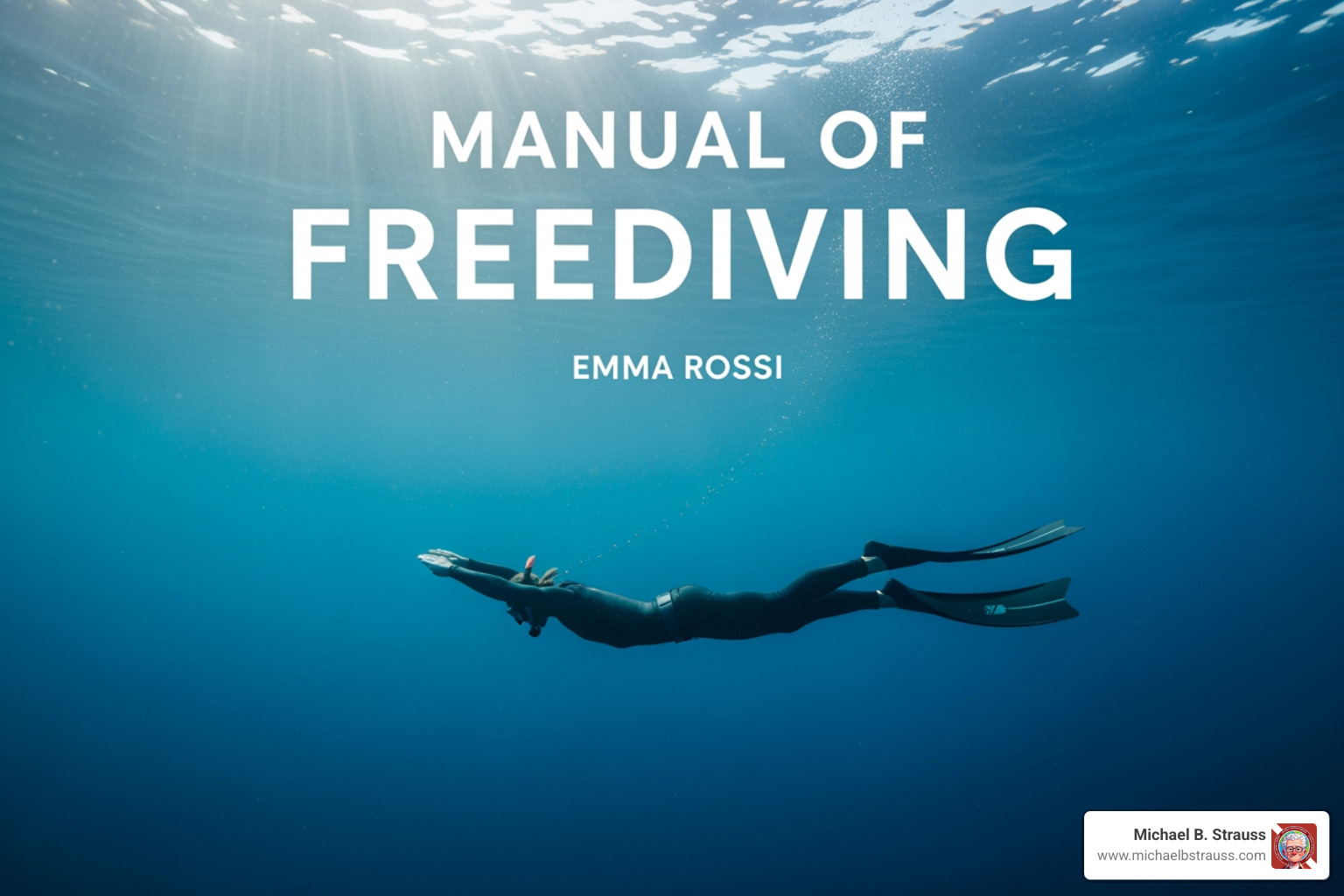
Another modern classic that resonates with many beginners is "One Breath" by Emma Farrell. Described as a must-have for anyone who loves the underwater world, this free diving book offers a unique blend of memoir, history, and philosophy. Emma Farrell, a world-class teacher of the sport, shares her personal journey through competitive freediving, including successes and heartbreaks. This narrative approach makes the sport incredibly accessible, showing that freediving is not just for elite athletes but for anyone willing to accept its challenges.
"One Breath" introduces beginners to the techniques and physiology of freediving through a compelling story, revealing how the art of 'true breathing' can alter one's world. It's an inspiring read that can motivate you to achieve what might initially seem impossible. The stunning photographs by Frederic Buyle, a freediver himself, further immerse you in the beauty and tranquility of the underwater field, making it an engaging and informative first free diving book.
Advanced Science and Human Potential
Once you've grasped the fundamentals, your curiosity about the deeper scientific and physiological aspects of freediving will inevitably grow. For advanced divers, or those simply fascinated by the limits of human potential, specific books dig into the intricate science and the profound connection between humans and the ocean. These books address: Which freediving books are recommended for advanced divers and why? and Are there any notable books that explore the connection between humans and the ocean through the lens of freediving?
"Deep: Freediving, Renegade Science, and What the Ocean Tells Us about Ourselves" by James Nestor is a groundbreaking free diving book that we highly recommend. Nestor's work was shortlisted for the PEN/ESPN award for literary sports writing. This book is not a manual for technique, but rather a captivating journey into the science and philosophy of freediving.
Nestor follows "clans of extreme athletes, adventurers, and scientists as they plumb the limits of the ocean’s depths," exploring the mammalian dive reflex and how it transforms humans into efficient deep-sea-diving animals. Understanding this physiological adaptation, which you can read more about in our article on Mammalian Divers, can significantly improve an advanced diver's practice by providing deeper insight into the body's incredible capabilities. The book also touches upon concepts related to pressure and the body, offering a narrative exploration that complements our understanding of Decompression Science. "Deep" contributes to our understanding of freediving by framing it as a lens through which to explore humanity's deep, ancestral connection to the ocean, revealing lost human abilities and the ocean as a final frontier.
For advanced divers looking to refine their physical conditioning, especially those who might be landlocked, "Longer and Deeper: Cross Training for Freediving and Spearfishing" by Jaap Verbaas is an excellent resource. This free diving book offers an easy-to-read guide to freedive training, with a particular focus on exercises that can be performed on dry land. It's perfect for those seeking to improve their physical capabilities, improve lung capacity, and build endurance outside of the water.
Verbaas's book provides efficient exercises and training schedules, helping advanced divers integrate comprehensive cross-training into their routine. This directly improves a diver's practice by providing structured training methods that target specific freediving muscles and improve overall fitness, crucial for pushing personal limits safely.
Mastering the Mental Game: A Crucial Free Diving Book Category
Freediving isn't just about physical prowess; it's profoundly a mental sport. The ability to remain calm, control your breath, and manage stress under pressure is paramount. This category of free diving book focuses on the mental training aspects, answering: Are there specific books that focus on the mental training aspects of freediving? and How can reading about freediving physiology and psychology improve a diver's practice?
"Breatheology" by Stig Severinsen is a powerful free diving book for anyone looking to master their breath. Stig Severinsen, a Danish freediver and world champion, has compiled an incredible set of tools and techniques derived from three sports. His approach combines breath control, yoga, physiology research, and sports psychology, offering a holistic program for optimal breathing. We were super impressed with his work after training with Stig in 2019!
Reading "Breatheology" can significantly improve a diver's practice by providing advanced breathwork techniques that improve breath-hold time, increase relaxation, and sharpen mental focus. It helps divers understand the intricate connection between breath, body, and mind, which is crucial for managing the physiological and psychological demands of deep diving.
Complementing this is "Oxygen Advantage" by Patrick McKeown. This unique breathwork training program emphasizes optimal breathing as a foundational tool for health, well-being, and performance. The book focuses on CO2 training for optimal breathing habits, a concept that has many applications for freediving. By understanding and implementing McKeown's techniques, divers can improve their oxygen efficiency, reduce breathlessness, and improve their overall physical and mental state.
"Oxygen Advantage" directly improves a diver's practice by optimizing breathing patterns, which can lead to longer breath-holds, improved recovery, and greater comfort underwater. It's a key free diving book for those serious about their breath control.
Beyond specific breathing techniques, the broader aspects of mental fortitude are covered in books like "Just Breathe" by Dan Brulé. Brulé, a world-renowned pioneer in Breathwork, teaches us to reduce stress and anxiety, increase productivity, detox our body, balance our health, and find the path to greater mindfulness. While not exclusively a free diving book, its principles are directly applicable to the sport. The ability to control one's mind and body through breath is a cornerstone of freediving, making this a valuable read for developing mental resilience.
Furthermore, "Letting Go" by Dr. David R. Hawkins reinforces many of the lessons we learn in freediving, such as surrender and acceptance to overcome mental blocks. This free diving book helps divers steer the psychological challenges of depth and pressure, fostering a mindset that accepts rather than resists the underwater environment. Similarly, "Blue Mind" by Dr. Wallace J. Nichols digs into the remarkable effects of water on our health and well-being, combining neuroscience with compelling personal stories. It helps us understand the profound psychological benefits of being in or near water, enhancing our appreciation and connection to the ocean.
Inspiring Narratives and Historical Dives
Sometimes, the best way to learn and grow is through the stories of others. Inspiring narratives and historical accounts offer a unique perspective on the human spirit and our enduring connection to the ocean. These books answer: What are some inspiring stories or historical accounts of freediving found in books? and What are some of the most influential authors or figures in the freediving book community?
"Last of the Blue Water Hunters" by Carlos Eyles is a compelling free diving book that takes us on a personal journey. Eyles became deeply connected to the ocean world as a child growing up in Hawaii. His book describes the natural progression from a spearfisher to an underwater photographer, offering a glimpse into a life lived intimately with the sea. It's a narrative that explores the human-ocean connection through direct experience and a deep respect for marine life. We can certainly relate to a profound connection to the water, as explored in our own article on Water Serendipity: My Aquatic Savoir-Faire.
Another captivating narrative is "King of Sling" by Sheri Daye. This free diving book is a biography of South Florida’s legendary spearfisherman, Art Pinder. The book describes what it was like being a pioneer in the early days of South Florida spearfishing, detailing Pinder's journey from starting with homemade diving gear to becoming a celebrated figure. It provides a historical account of freediving's adventurous roots, showcasing the grit and passion of those who first explored the underwater world for sustenance and sport.
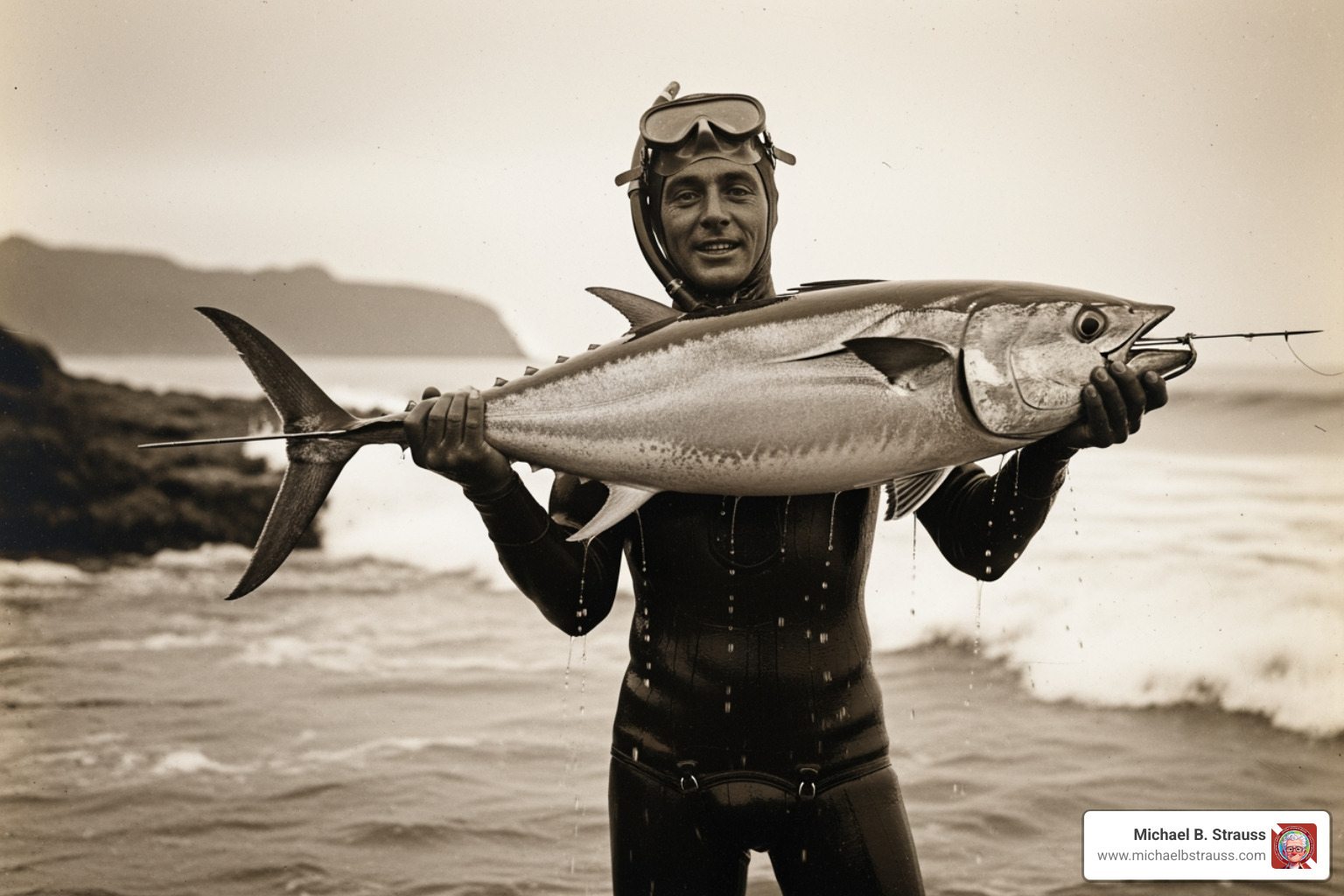
These stories, along with the detailed accounts in "Deep" of ancient cultures' deep-diving abilities and the personal memoirs of competitive freedivers like Emma Farrell, highlight the rich mix of freediving history and the influential figures who have shaped it. They remind us that freediving is not a new sport, but a reawakening of an ancient human connection to the aquatic field.
The key themes and topics covered in popular freediving literature are vast and interconnected: from the rigorous science of human physiology under pressure to the profound mental discipline required, and from the inspiring tales of pioneers to the philosophical reflections on our place in the ocean. These books collectively play a vital role in promoting safety and proper techniques by disseminating expert knowledge and fostering a culture of respect for both the diver and the environment.
Conclusion: Continue Your Underwater Education
As we've explored, freediving literature is as deep and expansive as the ocean itself. Each free diving book on our list offers a unique lens through which to view this incredible sport, providing guidance, inspiration, and essential knowledge. Whether you're a beginner seeking foundational techniques, an advanced diver delving into scientific intricacies, or simply someone captivated by the human-ocean connection, there's a book waiting to deepen your understanding and improve your practice.
Continuous learning is a universal principle, especially in any activity involving the underwater world. The insights gained from these books contribute not only to your freediving skills but also to a broader understanding of underwater safety and physiology. While this guide focuses on freediving, understanding the science of being underwater is crucial for any diver, regardless of their chosen discipline. The principles of pressure, gas laws, and human physiology apply across the board.
For those eager to further their knowledge on the comprehensive science behind diving, get your copy of Diving Science Revisited here: https://www.bestpub.com/view-all-products/product/diving-science-revisited/category_pathway-48.html
DISCLAIMER: Articles are for "EDUCATIONAL PURPOSES ONLY", not to be considered advice or recommendations.


