Why Underwater Communication is a Critical Diving Skill
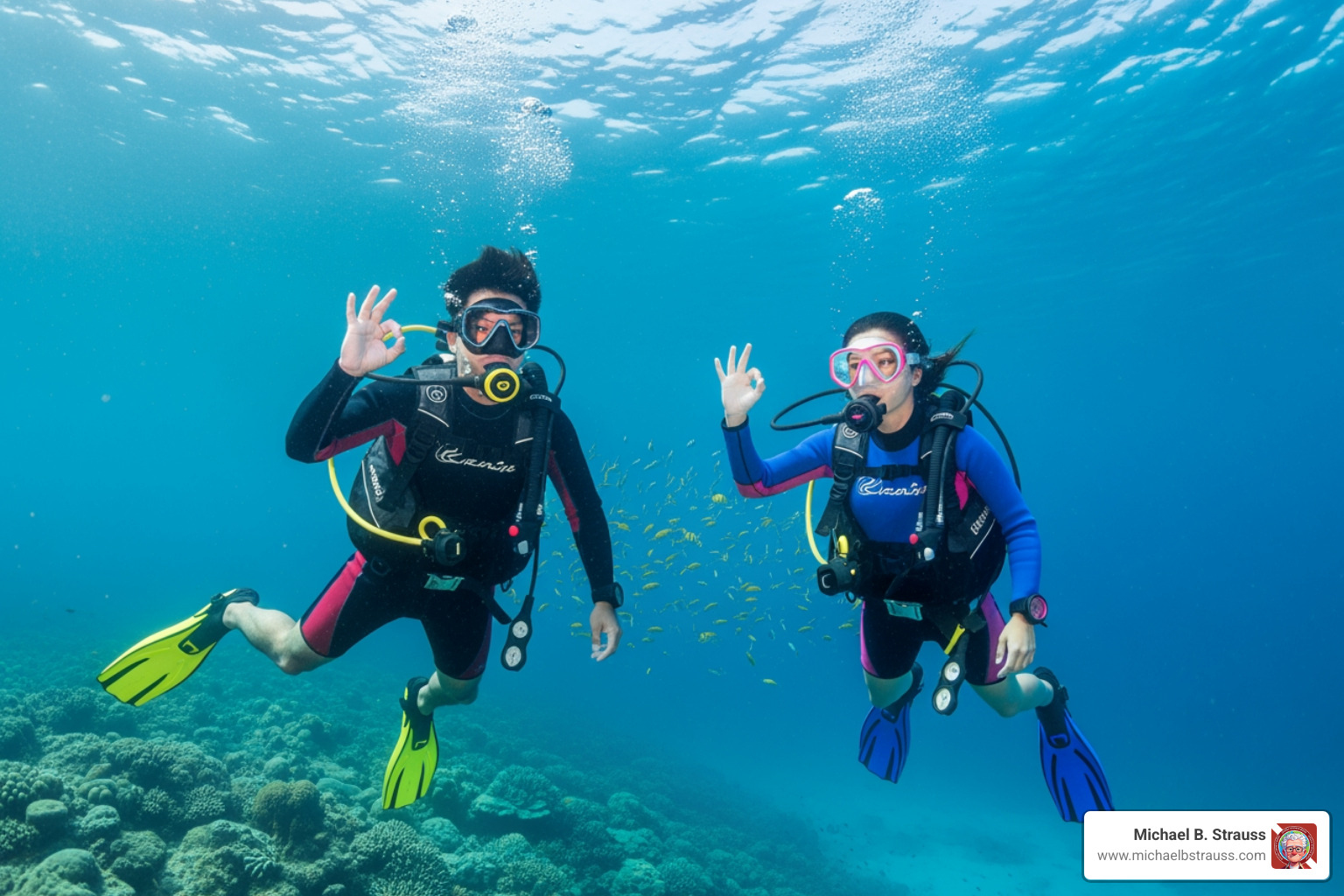
How do scuba divers communicate underwater? Scuba divers primarily use three types of communication:
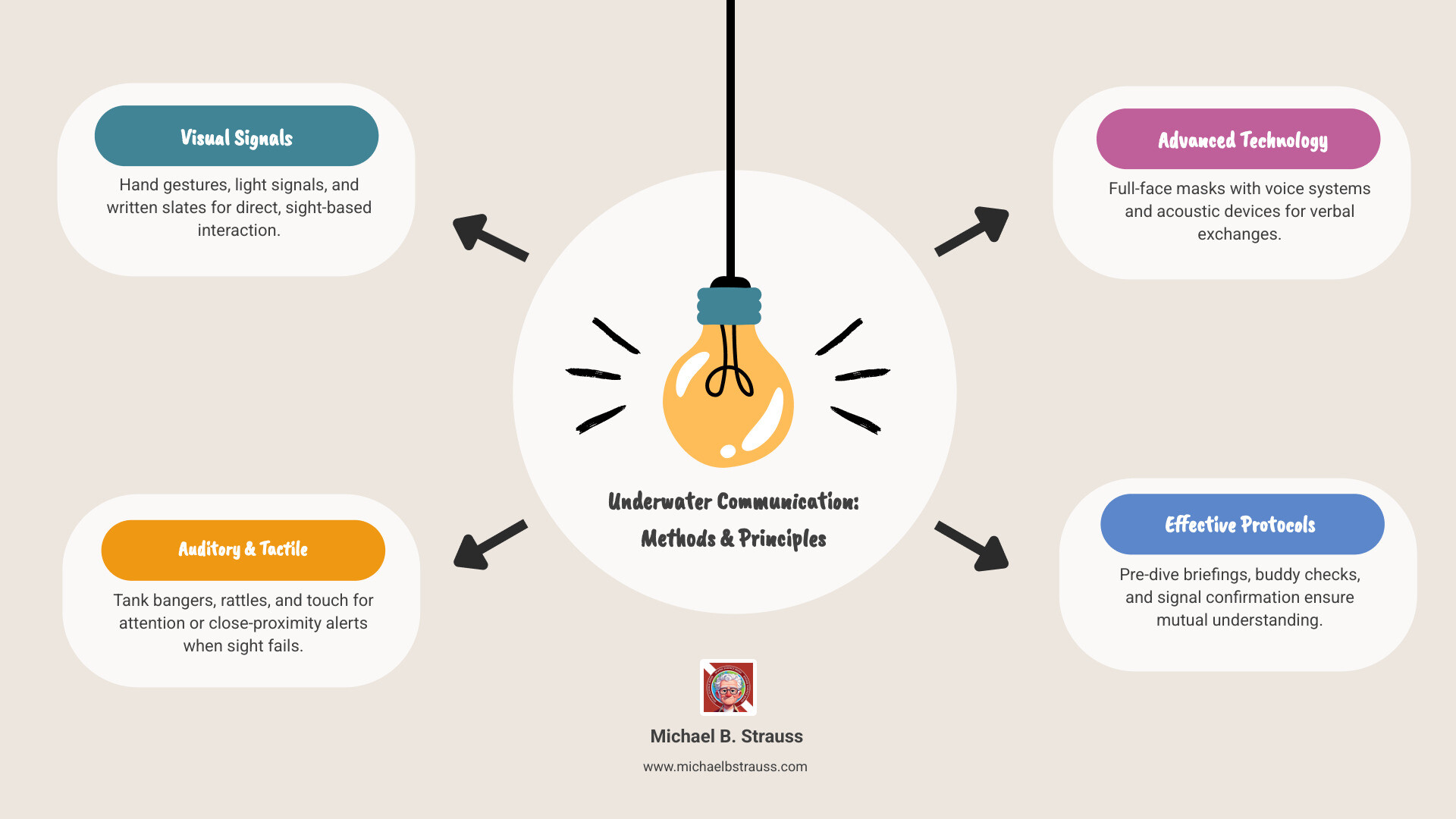
- Visual signals - Hand signals, light signals, and written messages on dive slates
- Auditory and tactile signals - Tank bangers, rattles, touch contact, and rope signals
- Advanced technology - Full-face masks with integrated voice communication systems and through-water acoustic devices
Communication underwater isn't just convenient—it's essential for survival. When you descend, the physical properties of water change everything. Sound waves behave differently, making normal speech impossible, and visibility can drop to near zero. Your dive buddy might be just a few feet away but unreachable without clear signals.
The "silent world" demands that divers share critical information: Are you okay? Do you need to ascend? Is your air running low? These are potentially life-saving exchanges that every diver must master.
The buddy system only works when buddies can actually communicate. Hand signals are the foundation of recreational diving, but they have limits. What happens when your buddy isn't looking, or you're diving at night, in a cave, or in murky water?
That's why understanding all communication methods transforms good divers into safe divers. Whether you're a recreational diver or a medical professional interested in diving medicine, mastering underwater communication protects you and your dive team.
Simple how do scuba divers communicate underwater word guide:
The underwater environment makes traditional communication difficult. Sound transmission is challenging for human vocal cords, and visibility can be limited, making it impossible to simply shout to your buddy or rely on sight alone. This is why effective underwater communication is the backbone of the buddy system. Being able to clearly signal that you are low on air, experiencing a problem, or need to ascend is not just a convenience—it's a critical safety skill. Mastering these diverse techniques is essential for preventing emergencies and ensuring a safe, enjoyable dive.
How Do Scuba Divers Communicate Underwater? A Look at 3 Key Methods
To overcome the inherent challenges of the underwater world, divers have developed and adopted a variety of ingenious communication methods. These fall broadly into three categories: visual, auditory/tactile, and advanced technological systems. Each method has its strengths and limitations, making a comprehensive understanding of all three vital for diverse diving situations.
Visual Communication: The Foundation of Diver Interaction
Visual signals are arguably the most fundamental and widely used methods for how do scuba divers communicate underwater. They rely on sight, making them effective in clear water and during daylight hours, and are typically the first methods taught to new divers.
Hand Signals
Hand signals are the primary method of underwater communication for recreational scuba divers. They are simple, effective, and universally taught in introductory diving courses. Even professional divers use hand signals, often as a secondary method, because of their reliability and simplicity.
While many signals are universal, regional variations can exist. A pre-dive briefing is crucial to review all signals, especially with a new partner. To ensure clarity, agree that your buddy will repeat the signal back to confirm they understand the message. This simple protocol reduces misinterpretation.
The Recreational Scuba Training Council (RSTC) has developed a "Minimum Course Content for Common Hand Signals for Scuba Diving" to promote standardization. You can find more details in their guidelines: "Minimum Course Content for Common Hand Signals for Scuba Diving".
Here are 10 essential scuba hand signals that every diver should know:
- OK (Question/Answer): Form a circle with your thumb and index finger, extending the other three fingers. This is used to ask "Are you OK?" or to confirm "I am OK."
- Problem/Something is Wrong: Rock your flat hand back and forth, palm down. Then, point to the source of the problem.
- Ascend/Go Up: Make a thumbs-up gesture. Unlike on land, this means "go up," not "good."
- Descend/Go Down: Make a thumbs-down gesture. This means "go down."
- Stop: Extend your open hand with your palm facing your buddy, like a stop sign.
- Low on Air/Half Air: Make a clenched fist and repeatedly tap your chest.
- Look: Point to your eyes, then in the direction you want your buddy to look.
- Danger/Caution: Make a clenched fist and point towards the hazard.
- Cold: Cross your arms over your chest and shiver.
- Safety Stop: Hold a flat hand horizontally at arm's length, indicating a level stop. Often combined with three fingers for "three minutes" and five fingers for "five meters/feet."
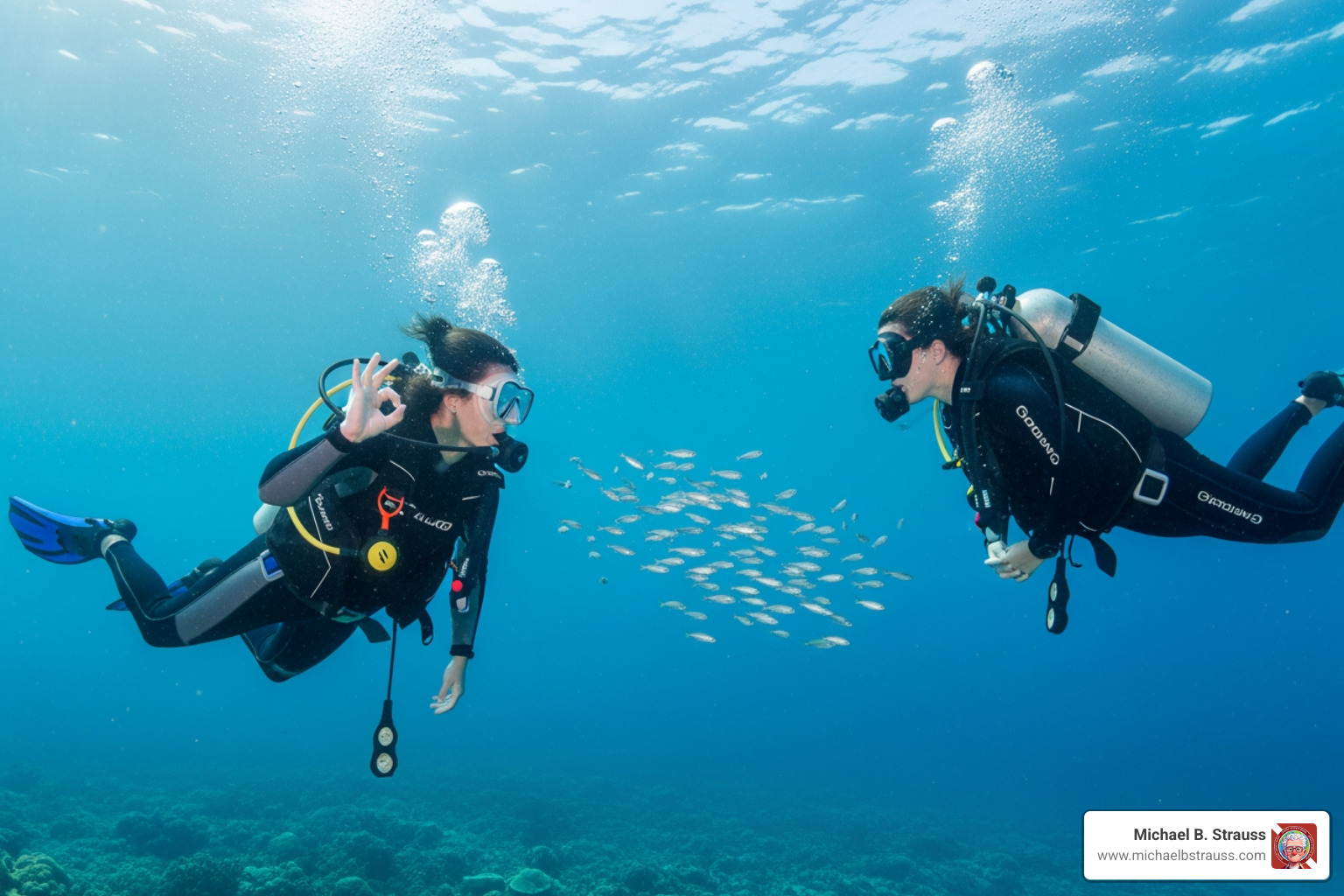
We also use hand signals for conveying numbers, especially for indicating remaining air pressure or dive time. Numbers one through five are signaled by extending the corresponding number of fingers. For six through nine, we turn the hand sideways and extend the fingers. Zero can be signaled with the "OK" sign, but without the "flare" of the other fingers. More advanced signals might include a closed fist for 50 (e.g., 500 psi) or a T-shape for 100 (e.g., 1000 psi). Advanced divers use specific finger signals to indicate precise air pressure remaining in their tanks, from 1 to 9, and 0.
Light Signals
Light signals become indispensable when visibility is low, such as during night dives, in murky water, or inside wrecks and caves. In fact, light signals are the main form of communication in cave diving, where ambient light is often non-existent.
A dive light can be used to:
- Get attention: A rapid, sweeping motion of your light beam across your buddy's field of vision can alert them.
- Signal "OK": A circular motion with your light beam means "OK."
- Illuminate hand signals: Illuminate your signaling hand with your light, holding it away from your body to make it visible at night. This makes the gesture clear without dazzling your buddy.
Written Communication
For more complex messages that can't be conveyed through simple hand signals, written communication comes into play.
- Dive Slates: These are small, waterproof boards that divers can write on with a pencil. They are excellent for conveying detailed instructions, asking specific questions, or making observations. Dive slates are essential when hand signals won't convey enough information.
- Wetnotes: Similar to slates, wetnotes are waterproof notebooks made of special paper that can be written on underwater. They offer a larger, continuous writing surface, which is great for logging observations or detailed communication.
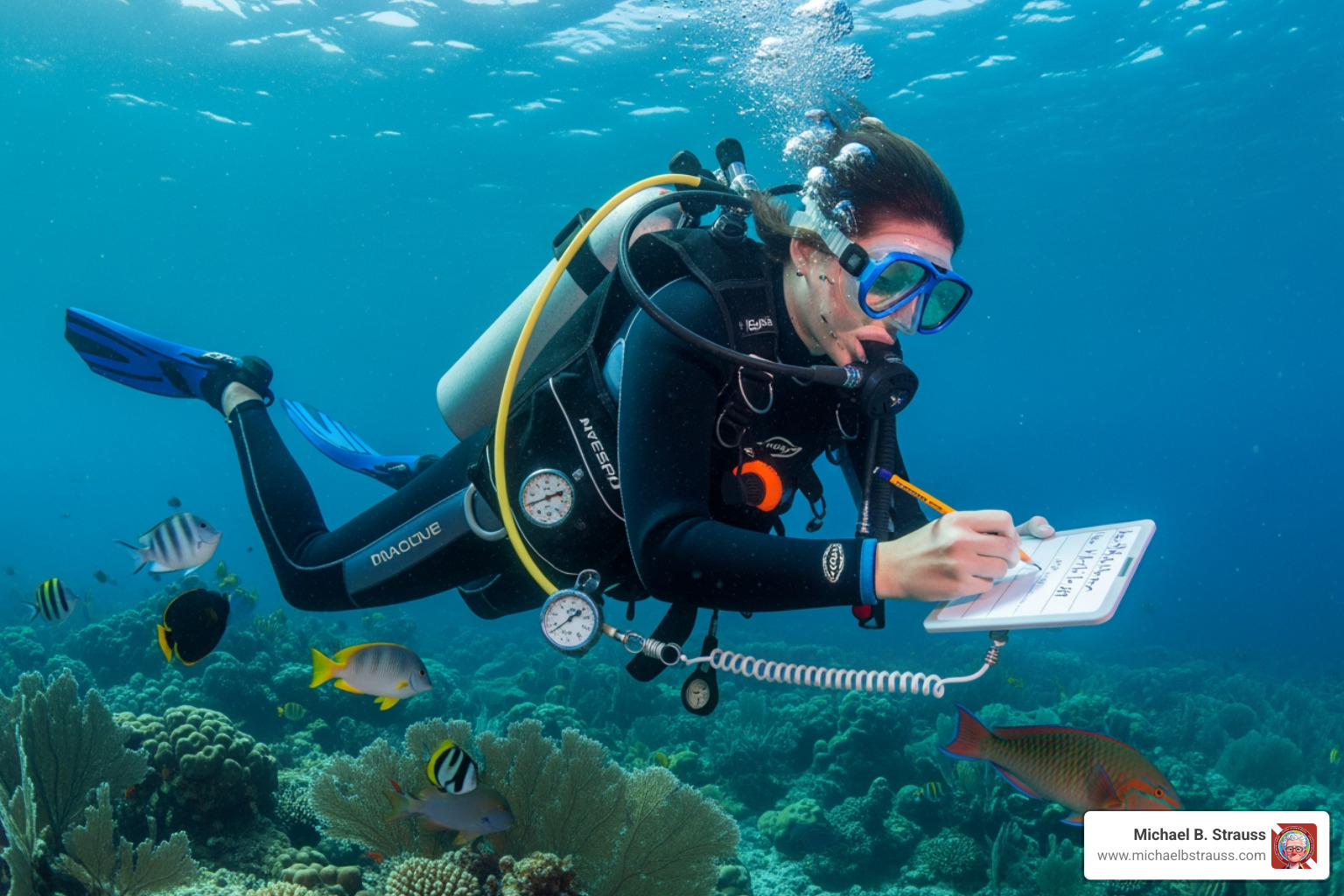
When using dive slates or wetnotes, we need to ensure they are accessible and easy to use. While wrist-mounted slates offer streamlining, they can be challenging for others to read. The goal is always clarity.
Auditory and Tactile Signals: Getting Attention When Sight Fails
Sometimes, visual communication isn't enough. When our buddy isn't looking, or in extremely poor visibility, we need other ways to get their attention or convey a message. This is where auditory and tactile signals become vital.
Sound-Making Devices
Sound-making devices are primarily used to get a buddy's attention or to signal the surface. These include:
- Tank bangers: Small hammer-like devices that strike the air cylinder, producing a sharp, loud sound.
- Shakers/Rattles: Devices containing small beads or balls that create a rattling sound when shaken.
- Audible alerts: Some dive computers or inflator hoses have integrated audible alarms.
Every diver should carry an audible signaling device. These are affordable and easy to use but have limitations. Because sound direction is hard to pinpoint underwater, they are excellent for getting attention but not for precise communication.
On the surface, sound-making devices can be incredibly effective. Air horns, for example, can reach up to 1 or 2 kilometers away, making them useful for attracting attention from a boat, especially in drift dives or if you've surfaced away from the main group.
Touch Signals
In situations of zero visibility, such as silty cave environments or extremely dark conditions, touch signals become the primary method of communication between buddies. This form of tactile communication relies on a pre-arranged sequence of touches or squeezes on different parts of the body. Cave divers, for instance, often develop complex "touch languages" to steer and communicate vital information when they literally cannot see their hand in front of their face. In low visibility, we must rely on physical contact and standardized protocols for communication.
Rope and Line Signals
Rope and line signals are more specialized methods, often used in technical diving, commercial diving, or in overhead environments like caves or under ice. These signals involve a series of pulls or tugs on a line connected to a buddy or a surface tender. Each sequence of pulls has a specific meaning, acting like a form of underwater Morse code.
In commercial diving, for instance, rope signals serve as a crucial backup to primary hard-wired communication. Different organizations have unique pull-signal languages, sometimes using bells. These methods are essential for safety where other signals fail, especially in demanding technical dives where clear communication is critical.
Advanced Technology: How Do Scuba Divers Communicate Underwater Verbally?
While visual, auditory, and tactile methods are the bedrock of underwater communication, technological advancements have opened up new possibilities, especially for verbal communication.
Full-Face Masks with Integrated Communication Units
Full-face masks with integrated communication units enable verbal communication. These masks encase the entire face with a built-in microphone and speaker, allowing divers to speak without removing a regulator.
Voice communication is generally the most useful format underwater, as visual forms are more affected by visibility, and written communication and signing are relatively slow. Rebreather divers, who don't have a traditional open-circuit regulator, often have the luxury of near-normal speech underwater with such systems.
These advanced systems are particularly prevalent in:
- Professional diving: Hard-wired (cable) voice communications are still the primary method for surface-supplied diving. A tether connects the diver to the surface, allowing continuous, clear communication with a supervisor who monitors their progress and well-being.
- Technical diving: As technical diving often involves complex dive plans, longer decompression obligations, and potentially hazardous environments, clear communication is paramount. Dive computers play a critical role in managing Decompression Science, but verbal communication adds another layer of safety and coordination.
Through-Water Communication Systems
Beyond wired systems, through-water communication technologies allow for more freedom of movement. These systems transmit voice or data through the water itself, typically using acoustic signals.
- Acoustic systems: These devices convert spoken words into ultrasonic signals, which are then transmitted through the water. A receiver unit on another diver or at the surface converts these ultrasonic signals back into audible speech. These systems often operate on a push-to-talk (PTT) basis to conserve battery life, transmitting only when the diver presses a button to speak. Some more advanced systems can be voice-activated (VOX), allowing for hands-free communication, though this requires divers to establish a cadence to avoid talking over each other.
- Optical systems: Although less common for verbal communication, optical systems use light (usually blue-green lasers) to transmit data or even video over short distances. Water absorbs light rapidly, so these systems are generally limited to very clear water and shorter ranges.
While incredibly useful, advanced communication technologies come with their own set of limitations and challenges:
- Cost: These systems can be significantly more expensive than basic visual or auditory aids, making them less common for average recreational divers.
- Specialized training: Operating and troubleshooting these devices requires additional training.
- Reliability: Environmental factors like water temperature, salinity, and turbidity can affect signal quality and range.
- Equipment integration: They often require full-face masks, which some divers may not be accustomed to or prefer.
Despite these challenges, the development of technologies like ultrasonic wearables and even smartphone apps that use acoustic signals to send messages underwater is continually pushing the boundaries of how we can communicate beneath the waves.
Mastering Communication for Safer Dives
We've explored the diverse methods for how do scuba divers communicate underwater, each suited for different conditions. The primary methods are:
- Visual: Hand signals, light signals, and written slates, fundamental for most recreational dives.
- Auditory/Tactile: Sound-making devices, touch signals, and rope signals, crucial when visibility is poor or attention is needed.
- Technological: Full-face masks and acoustic systems that offer verbal communication, enhancing coordination and safety, especially in professional and technical diving.
Mastering these techniques requires continuous practice until they become muscle memory, allowing for instinctive and clear communication.
Crucially, always confirm signals with your buddy before every dive, discussing any regional or custom signals. The signal-and-response protocol—where your buddy signals back the message to confirm understanding—is a simple yet powerful way to prevent miscommunication. This ensures that, whether we're signaling "OK" or "I have a problem," the message is received and understood.
Maintaining situational awareness, constantly checking on your buddy, and being prepared to communicate effectively are hallmarks of a responsible diver. As Dr. Michael B. Strauss, a renowned expert in diving safety, emphasizes in his comprehensive diving books, prioritizing safety is paramount. By mastering these communication techniques, every diver can contribute to a safer and more enjoyable underwater adventure, a core principle of Diving Science.
To learn more, purchase your copy of Diving Science Revisited here.
DISCLAIMER: Articles are for "EDUCATIONAL PURPOSES ONLY", not to be considered advice or recommendations.


