Why Your Fitness to Dive Matters
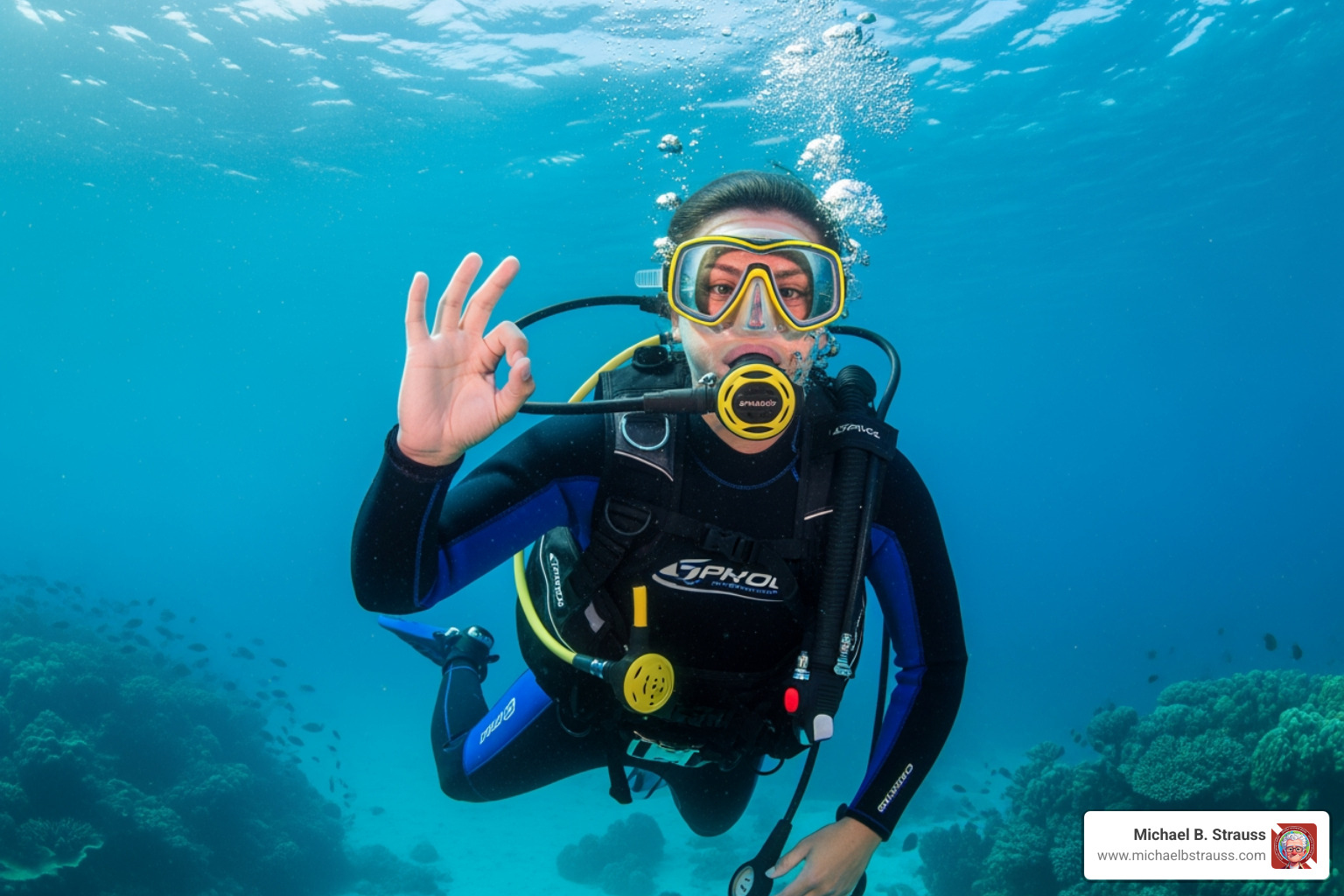
How long does a diving medical last? The answer depends on your diving type and age:
- Recreational divers: Typically complete an annual self-declaration, with physician evaluation required if health concerns arise. Divers over 45 should undergo re-assessment at least every 5 years.
- Commercial divers: Maximum 12 months validity, with more frequent examinations as determined by the examining physician.
- Scientific divers: Within 5 years for those under 40, within 3 years for those over 40, and within 2 years for those over 60.
Understanding your medical's validity isn't just about compliance—it's about ensuring your safety underwater. Your medical clearance is a critical safeguard against the unique physiological risks of diving.
The validity period varies based on your type of diving, age, and health status. Regulations from bodies like the Health and Safety Executive (HSE) and the American Academy of Underwater Sciences (AAUS) emphasize that your certification must be current and appropriate for your diving.
Any major injury, illness, or change in your health can shorten your certificate's validity, requiring immediate re-evaluation. Research shows about one-third of recreational diving fatalities involve a cardiac event, highlighting the importance of these assessments.
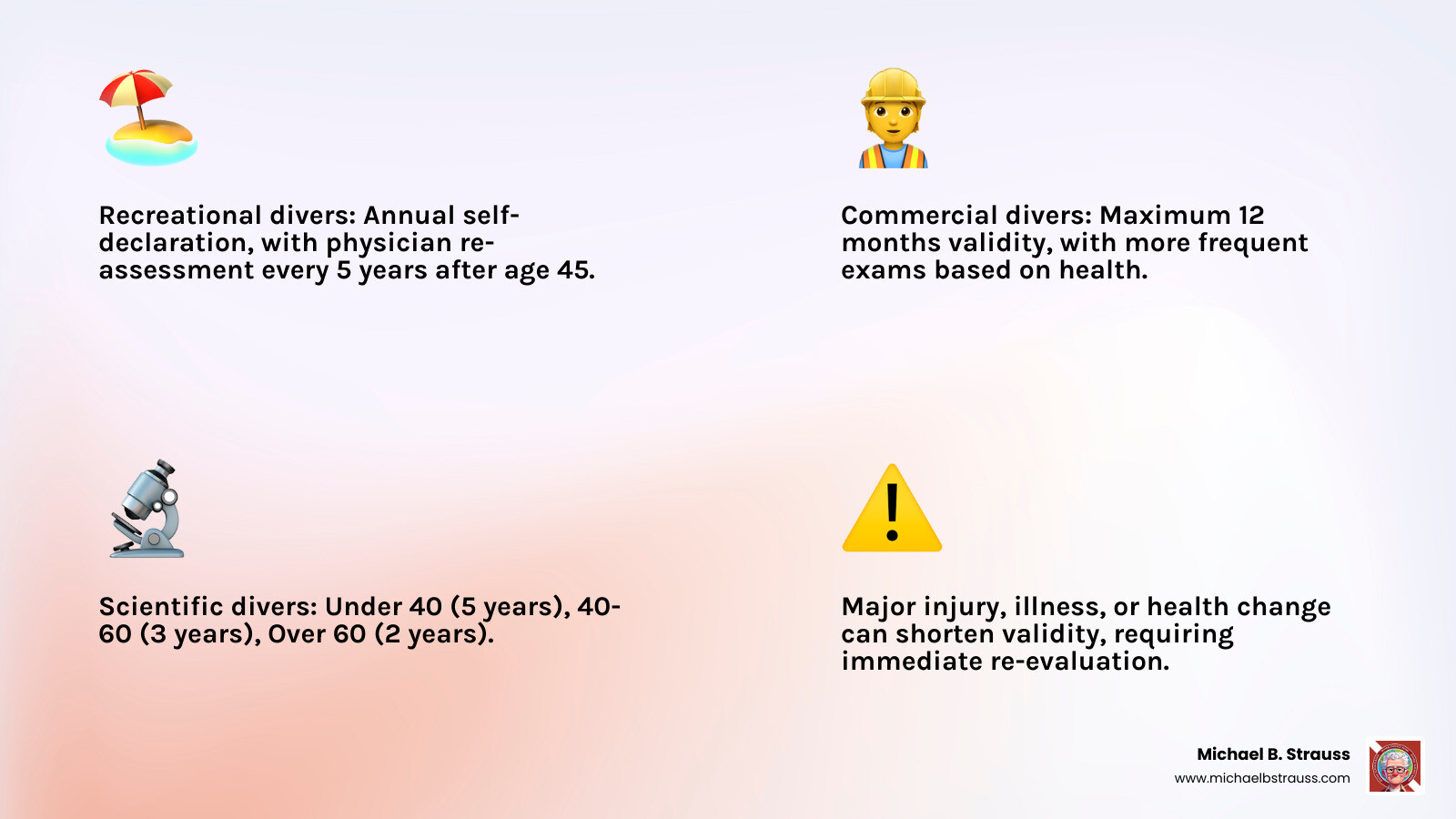
Quick look at how long does a diving medical last:
How Long Does a Diving Medical Last? A Breakdown by Diver Type
The answer to how long does a diving medical last isn't simple; it depends on your diving type and health profile. Let's break it down by diver type.
For Recreational Divers, how long does a diving medical last?
For recreational divers, the process often begins with a self-declaration questionnaire. Major recreational diving organizations use these forms to ask about your medical history and current health. For instance, some clubs require members to complete a self-declaration form upon joining and annually at renewal. This is a vital initial screening.
The core principle here is honesty. If you answer 'yes' to any question on the form, you'll typically need a physician's evaluation. This could range from a phone call with a Medical Referee (as practiced by the UK Diving Medical Committee, UKDMC) to a more comprehensive appointment, depending on the condition. This process is for your safety, ensuring any condition that could pose an underwater risk is properly assessed.
Age also plays a significant role. The South Pacific Underwater Medical Society (SPUMS) recommends that divers over 45 have regular assessments at no longer than five-yearly intervals. This emphasis on cardiovascular and pulmonary fitness is crucial as we age, given that cardiac events contribute to a notable percentage of diving fatalities. Even if you consistently answer 'no' on your annual self-declaration, considering a medical exam for peace of mind as you get older is a wise move.
A doctor's clearance is always more important than a waiver form for dive safety. Your physician, especially one familiar with diving medicine, can provide the most accurate assessment based on your unique health profile. For a comprehensive guide, you can refer to A guide to the Diver Medical Participant Questionnaire.
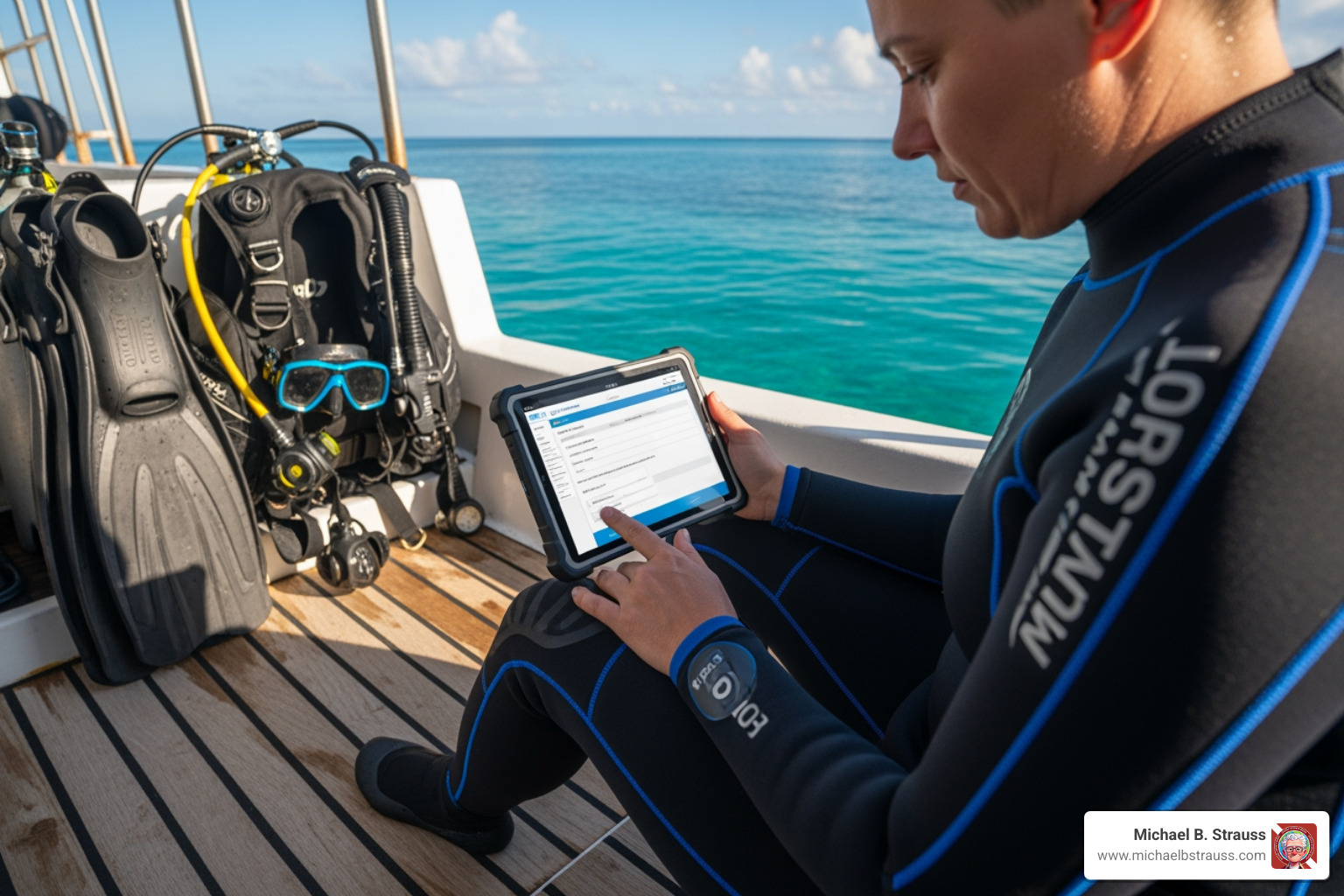
For Commercial & Scientific Divers: Stricter Annual and Periodic Rules
For commercial and scientific diving, medical certificate regulations are stricter, reflecting the demanding nature of these activities. Here, the validity period is shorter and more formalized.
For commercial divers, the medical certificate is typically valid for a maximum of 12 months. This is a common standard, often mandated by regulatory bodies like the UK's Health and Safety Executive (HSE), which requires all divers at work to have a valid certificate of fitness from an Approved Medical Examiner of Divers (AMED). A shorter validity may apply if the physician identifies health factors that warrant more frequent review. You can find more information on HSE guidance on medical fitness to dive.
Scientific divers, under organizations like the American Academy of Underwater Sciences (AAUS), also face specific requirements beyond recreational diving. The validity period for a diving physical shortens significantly with age:
- For scientific divers under the age of 40, a physical is required within the preceding 5 years.
- For those over the age of 40, this period reduces to 3 years.
- For scientific divers over the age of 60, a diving physical is required every 2 years.
These age-based adjustments highlight the increased medical scrutiny for older divers, as diving's physiological demands can be more challenging with age. Maintaining active status as a scientific diver also involves other requirements, like logging a minimum number of dives per year and keeping emergency care training current. To learn more about these rigorous standards, we recommend exploring More about the American Academy of Underwater Sciences.

What Can Shorten the Validity of Your Dive Medical?
Even with a current certificate, several factors can shorten its validity, requiring an immediate re-evaluation. A dive medical is a snapshot of your health; any significant change requires a new assessment.
Common reasons for an unscheduled re-evaluation include:
- Change in Health Status: A new diagnosis, new symptoms, or a significant change in fitness can trigger a new assessment.
- Major Injury or Illness: A significant injury, such as a broken bone or concussion, or an illness affecting your respiratory, cardiovascular, or neurological systems, requires medical clearance before returning to diving. This includes infections like COVID-19. For instance, HSE guidelines suggest a minimum of 7 days recovery for asymptomatic or mild COVID-19, but a return-to-work assessment by an AMED is required for moderate or severe symptoms.
- Post-Surgery Clearance: Any surgical procedure warrants a medical review. The healing process, potential complications, and anesthesia can all impact your fitness to dive.
- New Prescription Medications: Starting new medications, especially those that might affect your alertness, balance, or respiratory/cardiovascular function, means you should consult a diving medical professional.
- Pregnancy: Diving during pregnancy is not recommended, and medical clearance would be suspended during this period.
- Physician's Discretion: A Dive Medical Examiner (DME) may, at their discretion, issue a certificate with a shorter validity if they identify concerns that warrant closer monitoring. They will inform you of this at your consultation.
Re-evaluation after any such event is critical. Diving places unique stresses on the body, and what might be a minor issue on land could become a serious hazard underwater. We encourage you to be proactive and seek medical advice if you experience any health changes. This ensures your continued safety and that of your dive buddies. For more insights on this topic, consider reading Learn about managing medical problems in diving.
Your Dive Medical Exam: Process, Costs, and Final Preparations
Understanding the validity of your dive medical is just one piece of the puzzle. We also need to consider the examination process itself, how to find a qualified doctor, and what to expect regarding cost and preparation.
What to Expect During the Examination and How Much Does It Cost?
The diving medical examination is a specialized assessment designed to ensure your body can safely handle the unique pressures and physiological demands of the underwater environment. It's not your typical annual physical, and it must be performed by a trained Dive Medical Examiner (DME) or an Approved Medical Examiner of Divers (AMED), who often have specific training in hyperbaric medicine.
When you schedule an appointment, expect a thorough review of your medical history, including any past illnesses, injuries, surgeries, or medications. The physical exam will typically cover several key areas:
- Ear, Nose, and Throat Check: To ensure healthy sinuses and eustachian tubes, which are critical for equalization.
- Lung Function Test (Spirometry): To assess your respiratory health and rule out conditions like asthma or other lung diseases that could lead to air trapping.
- Cardiovascular Assessment: This often includes blood pressure measurement and, depending on age and risk factors, may involve an electrocardiogram (ECG) or even a stress ECG to evaluate heart health.
- General Physical Examination: Including assessment of body mass index (BMI), vision, and hearing. Some exams may also include a rapid finger prick glucose test or urine dipstick.
The cost of a diving medical examination can vary significantly depending on your location, the type of diving (recreational vs. commercial), and the extent of tests required. While we can't provide specific pricing, it's generally understood that these specialized medicals are an out-of-pocket expense. In our experience, most medical aids or insurance providers do not reimburse claims for dive medicals, as they are often considered elective rather than due to illness. It's always a good idea to check with your provider beforehand.
To ensure a smooth process, we advise bringing the following to your appointment:
- Photo ID (e.g., driver's license or passport).
- Any relevant medical reports or test results, especially for pre-existing conditions or recent treatments. Ensure these are typed and in English if possible.
- Your eyeglasses or contact lenses if you wear them.
- Comfortable clothing and running shoes if a stress ECG is anticipated.
The goal is not to "pass" a medical, but to ensure your continued health and safety in the water.
How long does a diving medical last if I have a chronic condition?
This is a particularly important question, as the presence of a chronic medical condition directly impacts how long does a diving medical last and how frequently you'll need re-evaluation. While standard validity periods exist, chronic conditions often necessitate a more individualized and frequent assessment schedule.
For divers with chronic conditions such as diabetes, asthma, or heart conditions, the validity of a medical certificate may be significantly shorter than for a perfectly healthy individual. It's not uncommon for a Dive Medical Examiner (DME) to recommend annual reviews, or even more frequent check-ups, to monitor the stability of the condition and its potential impact on diving fitness. For example, SPUMS guidelines suggest that divers with chronic medical conditions may require assessment at regular intervals as appropriate, and those with controlled asthma who are cleared for diving should have an annual review of their diving fitness. Similarly, divers with diabetes require annual surveillance of their health and diabetic control.
The key here is the doctor's recommendation and their assessment of the risk. A DME specialized in diving medicine will consider:
- The specific nature and severity of your condition.
- How well it is managed and controlled.
- Any medications you are taking and their potential side effects underwater.
- Your overall health and fitness level.
They will conduct a thorough risk assessment, weighing the potential hazards against your ability to safely mitigate them. For some conditions, such as certain heart conditions or uncontrolled diabetes, diving may be an absolute contraindication. For others, like well-controlled asthma or stable diabetes, diving may be possible with specific precautions and more frequent medical oversight.
We cannot stress enough the importance of transparently discussing any chronic conditions with your DME. They are your best resource for determining a safe diving schedule and understanding the true duration of your medical clearance. Their expertise ensures that you can continue to enjoy diving responsibly, even with health challenges. Understanding the physiological changes involved in diving can also help you appreciate why these evaluations are so critical; we encourage you to dig into Understanding Decompression Science for more background.
Preparing for Your Dive and Furthering Your Knowledge
Once you have your dive medical sorted, we still have a few practical tips to ensure a smooth and safe diving experience. Your medical clearance is a crucial document, and managing it effectively can prevent last-minute headaches.
First, let's address the practicalities of carrying your medical clearance. While a physical copy is always ideal, we highly recommend creating digital copies of your medical forms. Scan them to PDF and store them securely in cloud storage (like Google Drive or Dropbox) or directly on your smartphone. This way, if you ever find yourself in a situation where you've forgotten the physical form, you have a readily accessible backup. Many dive operators are increasingly accepting digital copies, but it's always wise to confirm their policy beforehand.
What happens if a diver forgets their medical clearance form but has a doctor's approval? This is a common scenario that can lead to frustration. Dive operators often have strict liability policies, and without the physical or an accepted digital copy of your medical clearance, they may be unable to allow you to dive. Even if you know you're medically approved, the absence of documentation can be a barrier. Our advice is always to have your documentation ready. It's far better to be over-prepared than to miss out on a dive.
The role of a diving medicine specialist extends beyond just issuing certificates. These experts, like Dr. Michael B. Strauss, are invaluable resources for continuing education and understanding the complex interplay between human physiology and the underwater environment. Their insights help shape the safety standards that protect us all.
To ensure every dive is safe and enjoyable, experts like Dr. Michael B. Strauss provide essential insights in comprehensive books for scuba divers. These resources offer deeper dives into topics like pressure effects, hyperbaric medicine, and recognizing potential medical issues. We firmly believe that continuous learning is a hallmark of a responsible diver. By staying informed and proactive about your health and diving practices, you contribute to a safer and more enjoyable experience for everyone underwater. To expand your knowledge, get your copy of Diving Science Revisited by visiting this link.
DISCLAIMER: Articles are for "EDUCATIONAL PURPOSES ONLY", not to be considered advice or recommendations.


