Why Understanding How to Prevent the Bends is Critical for Every Diver
How to prevent the bends starts with understanding that decompression sickness is not a mystery—it's a preventable diving injury. The average occurrence is around three cases per 10,000 dives, and with proper techniques, you can significantly reduce your risk.
Quick Answer: Essential Steps to Prevent the Bends
- Ascend slowly at no more than 30 feet (9 meters) per minute
- Perform safety stops at 15-20 feet (5-6 meters) for 3-5 minutes
- Use dive computers or tables to stay within no-decompression limits
- Stay properly hydrated before and after diving
- Avoid alcohol for at least 24 hours before diving
- Wait 12-24 hours before flying after your last dive
- Plan your dives carefully and account for depth, time, and surface intervals
- Maintain physical fitness to support nitrogen elimination
The thrill of exploring underwater worlds should never be overshadowed by the risk of decompression sickness. The good news is that the bends are largely preventable when you follow established safety protocols.
Decompression sickness occurs when dissolved nitrogen in your body tissues forms bubbles during ascent—similar to opening a carbonated drink too quickly. These bubbles can cause symptoms ranging from joint pain to serious neurological complications. Symptoms typically appear between 15 minutes and 12 hours after a dive, but can take up to 36 hours to manifest.
The biggest pressure difference occurs in the final 33 feet (10 meters) of your ascent. This is why your last moments underwater are the most critical for preventing bubble formation. Understanding why the bends happen and how to prevent them transforms diving from a risky activity into a safe, enjoyable pursuit.
Understanding Decompression Sickness (The Bends)
To effectively understand how to prevent bends, we must first grasp what decompression sickness (DCS) is. Often called "the bends," DCS is a serious condition that can affect anyone exposed to rapid pressure changes, though it is most commonly associated with scuba diving.
What Causes the Bends and What are the Symptoms?
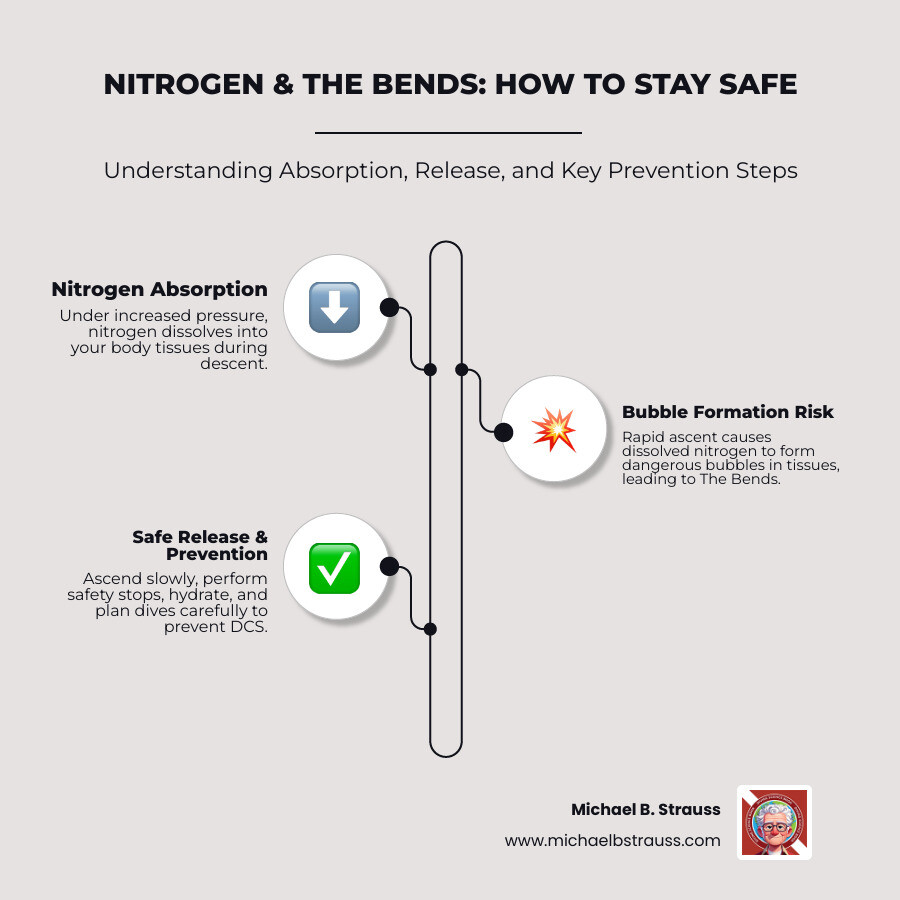
Decompression sickness occurs when dissolved gases, primarily nitrogen, form bubbles in tissues and the bloodstream during a rapid ascent. Think of a sealed can of soda: when opened quickly, the sudden pressure drop causes bubbles to form. Our bodies behave similarly with nitrogen during a dive.
As we descend, the increased water pressure causes nitrogen from the air we breathe to dissolve into our tissues (Henry's Law). The deeper and longer the dive, the more nitrogen is absorbed. If we ascend too quickly, the ambient pressure drops faster than our bodies can safely exhale the nitrogen. Instead, it forms bubbles, leading to DCS. While most common in scuba divers, DCS can also affect astronauts, caisson workers, and people in unpressurized aircraft at high altitudes.
The symptoms of DCS vary widely and are categorized into two types:
Type 1 DCS (Mild): Usually involves pain and skin issues.
- Joint Pain: A deep, aching pain, commonly in the elbows, shoulders, and knees. This is the origin of the term "the bends."
- Limb Pain: A general ache in the arms or legs.
- Skin Manifestations: Itchiness, rashes, or mottled skin.
- Fatigue: Unusual or excessive tiredness.
Type 2 DCS (Severe): Affects vital systems and is much more serious.
- Neurological Symptoms: Dizziness, vertigo, confusion, vision problems, speech difficulties, muscle weakness, or paralysis.
- Respiratory Symptoms: Known as "the chokes," these are rare but involve severe difficulty breathing and chest pain.
- Circulatory Symptoms: In extreme cases, bubbles can affect the heart.
Symptoms usually appear between 15 minutes and 12 hours post-dive, but can take up to 36 hours to manifest. This delay can lead divers to dismiss early signs as simple fatigue or muscle soreness. For more in-depth information, you can refer to Scientific research on Decompression Sickness.
Risks and Treatment for Decompression Sickness
Ignoring DCS symptoms can lead to severe, irreversible consequences, including chronic pain, permanent neurological damage, paralysis, or even death. The risks are significant if nitrogen bubbles reach critical areas like the brain or spinal cord.
Fortunately, most divers recover fully with prompt treatment. First aid for suspected DCS is immediate administration of 100% oxygen, which helps shrink nitrogen bubbles and speed their elimination. Even if symptoms improve with oxygen, professional medical evaluation is mandatory.
The definitive treatment is recompression therapy in a hyperbaric chamber. This process increases the ambient pressure, shrinking the bubbles and allowing the nitrogen to dissolve back into the blood. The patient then undergoes a slow, controlled decompression, allowing the gas to be exhaled safely.
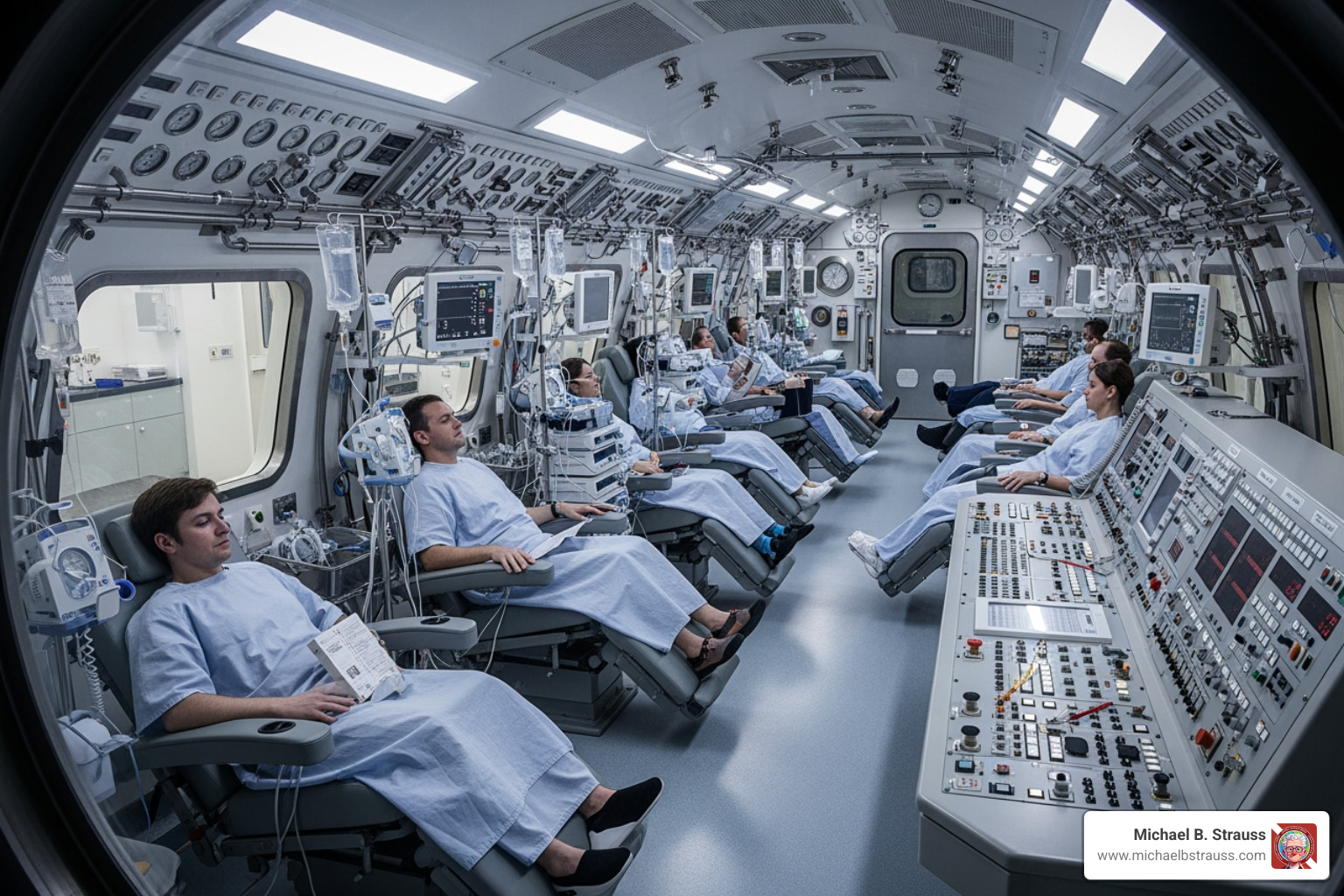
Seeking immediate medical help for any suspected case of DCS is paramount. The science behind decompression highlights the critical nature of timely intervention. Dive accident insurance is highly recommended, as hyperbaric treatments can be costly. For more information, consult resources from a leading dive safety organization.
Your Ultimate Guide on How to Prevent the Bends
Now that we understand the gravity of decompression sickness, let's focus on the actionable steps to reduce our risk. Preventing the bends is about managing nitrogen in our bodies through careful planning and adherence to safety protocols.
Master Your Ascent and Safety Stops
Controlling your ascent rate is one of the most critical aspects of how to prevent bends. The largest pressure change occurs in the final 33 feet (10 meters) to the surface, making a slow ascent essential for safe nitrogen off-gassing.
- Recommended Ascent Rate: Ascend slowly, no faster than 30 feet (9 meters) per minute. Many dive computers recommend an even slower rate. Always follow the most conservative guideline.
- Using Dive Computers and Tables: Modern dive computers are invaluable tools that monitor depth, time, and nitrogen loading in real-time. They provide no-decompression limits (NDLs) and ascent rates. Before computers, divers used dive tables, which remain a valuable planning tool and backup.
- The Importance of Safety Stops: A safety stop is a 3-5 minute pause at a shallow depth, typically 15-20 feet (5-6 meters), before surfacing. This pause provides a crucial window for dissolved nitrogen to escape your tissues safely, adding a buffer against bubble formation.
- Buoyancy Control: A slow, controlled ascent and a stable safety stop require excellent buoyancy control. Mastering this skill prevents a rapid, uncontrolled ascent to the surface. Advanced buoyancy courses can help you refine this technique.
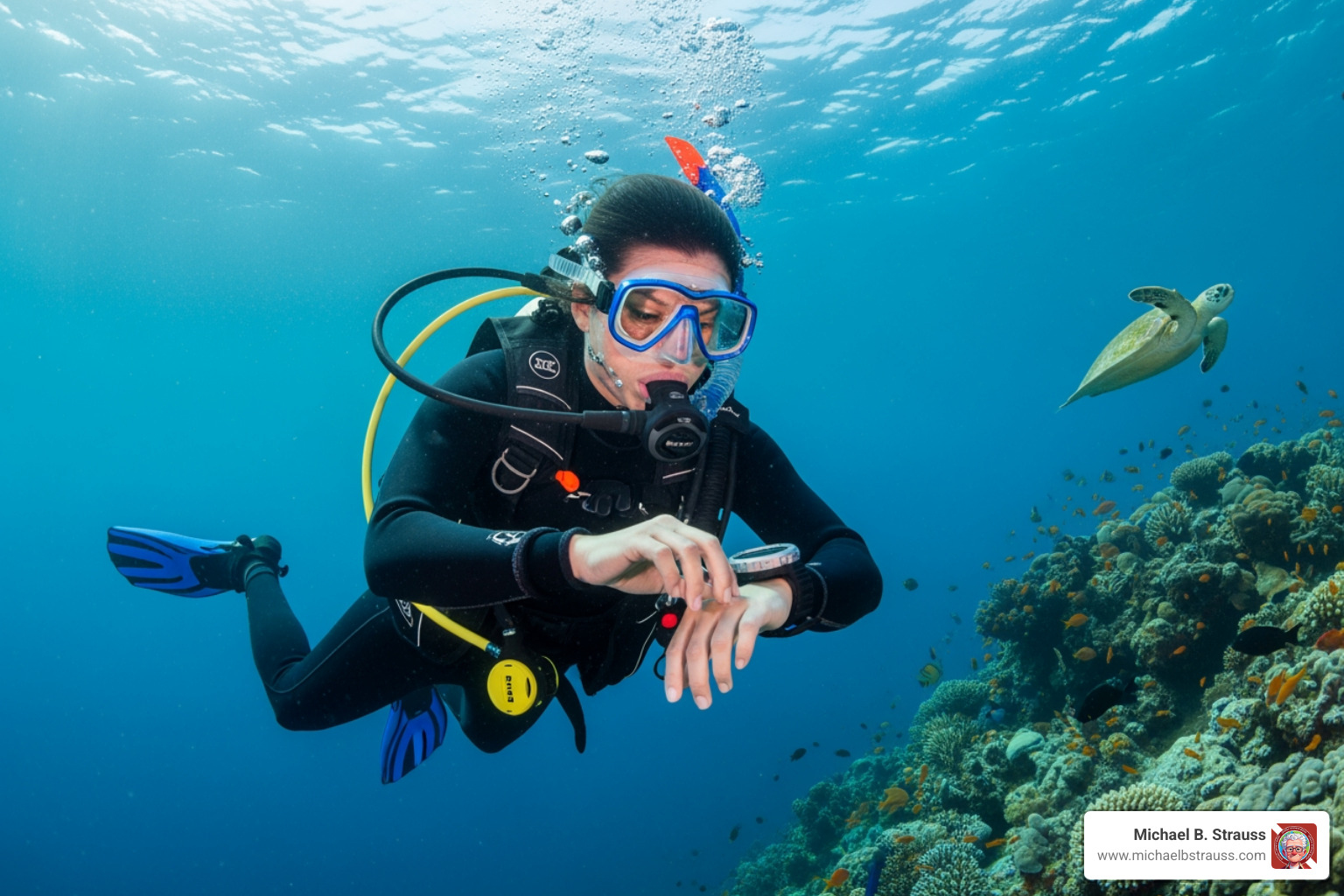
By mastering your ascent and performing safety stops, you give your body time to manage nitrogen off-gassing, significantly reducing DCS risk. Understanding specific dive sites and their unique considerations is also an important part of dive planning.
Key Dive Planning Steps for How to Prevent the Bends
Effective dive planning is your first line of defense. As the saying goes, "Plan your dive and dive your plan."
- Proper Dive Planning: Before diving, know the site, maximum depth, planned bottom time, and potential hazards.
- Diving Within Your Limits: Always dive within the limits of your training and comfort level. Your open water diver course teaches you how to use planning tools to determine safe depth and time limits.
- Depth and Time Management: Adhere to the no-decompression limits provided by your dive computer or tables. Avoid "saw-tooth" profiles (frequent ascents and descents); instead, descend to your maximum depth early and then gradually ascend.
- Adequate Surface Intervals: When making multiple dives, sufficient surface intervals are crucial. These breaks allow your body to off-gas residual nitrogen from previous dives.
- Using Enriched Air Nitrox: For many recreational divers, using enriched air nitrox is an excellent way to reduce DCS risk. Nitrox has a lower percentage of nitrogen than standard air, meaning your body absorbs less of it, which extends no-decompression limits and adds a safety margin.
Here is a list of essential pre-dive safety checks that contribute to how to prevent bends:
- Check your gear for proper function.
- Verify your gas supply.
- Review the dive plan with your buddy.
- Perform a thorough buddy check.
- Monitor water and weather conditions.
Lifestyle Factors and How to Prevent the Bends
Your choices before and after diving also play a significant role in how to prevent bends.
Staying Hydrated: Dehydration is a major risk factor for DCS. Good hydration supports blood circulation, which is essential for efficient nitrogen elimination. Drink plenty of water before and after dives.
Avoiding Alcohol: Alcohol is a diuretic that causes dehydration and impairs judgment. Avoid alcohol for at least 24 hours before diving and immediately after.
- Post-Dive Activity: Strenuous exercise or hot showers immediately after a dive can accelerate nitrogen release, potentially causing bubble formation. It's best to rest and allow your body to return to normal slowly.
- Waiting Before Flying: Flying after diving exposes you to reduced cabin pressure, similar to a rapid ascent. This can trigger DCS if your body still has residual nitrogen. The recommended waiting periods are:
- At least 12 hours after a single no-decompression dive.
- At least 18-24 hours after multiple dives or dives requiring decompression stops.
Here's a quick guide to recommended pre-flight surface intervals:
| Dive Type | Recommended Waiting Period Before Flying |
|---|---|
| Single No-Decompression Dive | 12 hours |
| Multiple Dives | 18-24 hours |
| Decompression Dives | 18-24 hours or longer (consult experts) |
- Maintaining a Healthy Weight and Fitness: Nitrogen is more soluble in fat, so individuals with higher body fat may retain more nitrogen. Maintaining a healthy weight can help reduce your risk, as shown by research on Maintaining a healthy weight and its impact on caisson disease. Good physical fitness also supports efficient nitrogen elimination.
Conclusion: Dive Safely and Confidently
Scuba diving offers incredible opportunities to explore the underwater world. While the risk of decompression sickness is real, it is largely preventable. By understanding the science and diligently applying proven prevention strategies, we can ensure diving remains a safe and rewarding activity.
The low average occurrence of DCS—around three cases per 10,000 dives—is a testament to the effectiveness of modern safety protocols. Every diver has a personal responsibility to adhere to these guidelines for their own safety and that of their buddies.
Key Takeaways for Preventing the Bends
Let's recap the most critical strategies for safe diving:
- Plan Your Dive and Dive Your Plan: Thorough pre-dive planning is the foundation of safe diving.
- Ascend Slowly: Adhere to recommended ascent rates, no faster than 30 feet (9 meters) per minute.
- Perform Safety Stops: Always include a 3-5 minute safety stop at 15-20 feet (5-6 meters).
- Stay Hydrated: Drink plenty of water before and after dives to support healthy circulation.
- Avoid Alcohol and Strenuous Activity Post-Dive: Give your body time to off-gas nitrogen safely.
- Wait Before Flying: Respect the recommended surface intervals before air travel.
- Prioritize Training and Continuous Education: Your initial certification provides essential knowledge, but continuous learning through advanced courses, such as those on enriched air nitrox or emergency oxygen administration, further improves your safety and confidence. Exploring advanced training will expand your diving knowledge.
By integrating these practices, we not only learn how to prevent bends but also foster a culture of safety and responsibility in our sport. Dive safely, dive confidently, and continue to explore the wonders beneath the waves. For those eager to dig deeper into the scientific principles underpinning safe diving, we highly recommend the book Diving Science Revisited.
DISCLAIMER: Articles are for "EDUCATIONAL PURPOSES ONLY", not to be considered advice or recommendations.


