Why Ocean Conservation Art Matters More Than Ever
Ocean conservation art is a powerful movement that transforms plastic debris, scientific data, and environmental urgency into compelling visual experiences that drive real change for our oceans.
Key aspects of ocean conservation art include:
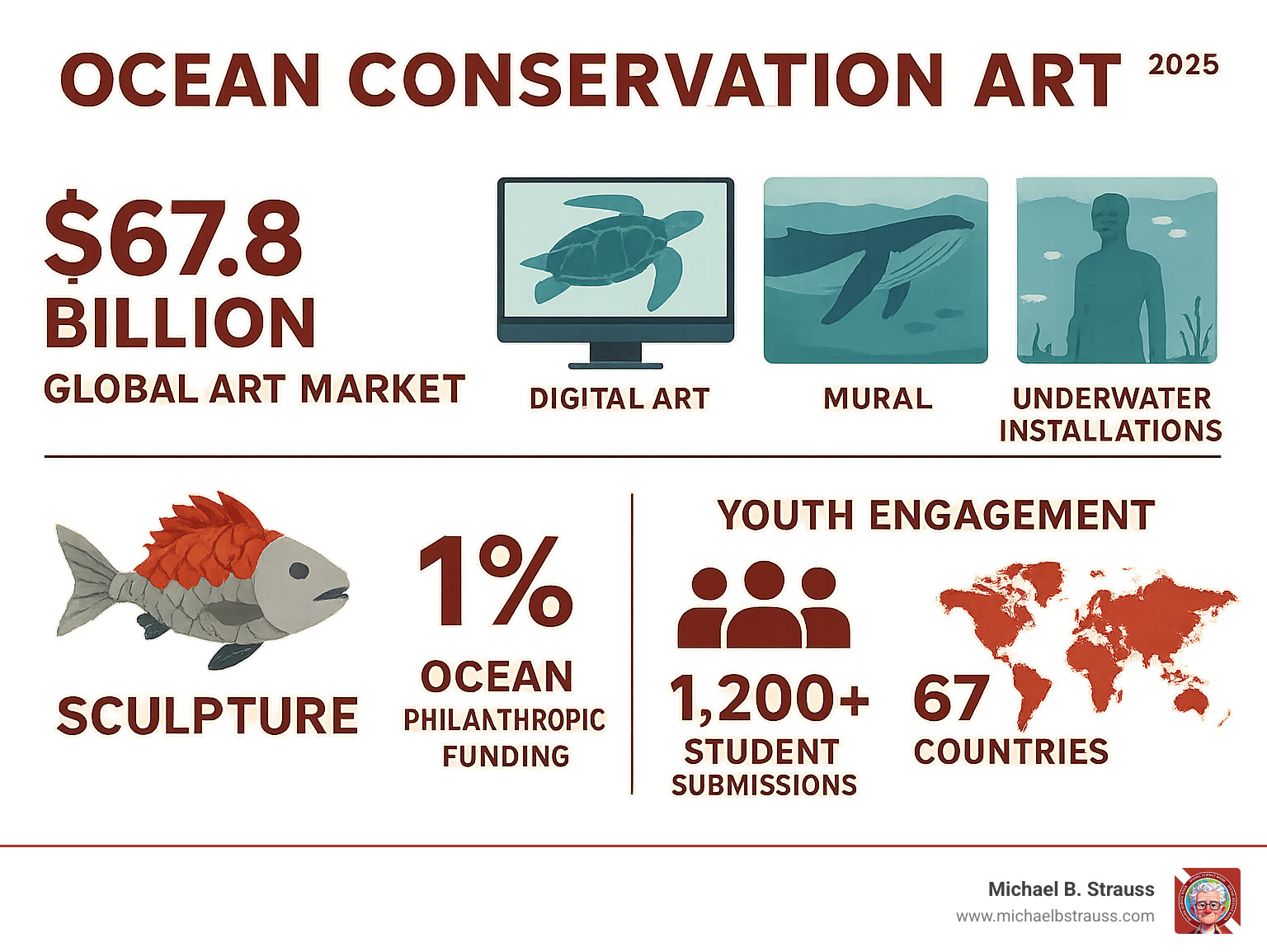
- Medium diversity - sculptures, murals, digital art, underwater installations, and performance pieces
- Material change - turning beach plastic and debris into meaningful artwork
- Youth engagement - global student competitions fostering future ocean advocates
- Scientific collaboration - artists partnering with marine researchers to translate complex data
- Policy influence - leveraging art's emotional impact to drive conservation legislation
- Philanthropic potential - channeling the $67.8 billion art market toward ocean protection
Time and time again, scientists have warned us of the ocean's decline. Yet humanity continues to knowingly worsen its devastation. When facts are hard to face, art steps in to help us see the bigger picture.
The numbers tell a stark story. While the global art market reached $67.8 billion in 2022, the ocean receives only 1% of all philanthropic funding. This massive gap represents both a crisis and an opportunity.
Ocean conservation art bridges this divide by awakening empathy where data alone fails. Organizations like PangeaSeed Foundation and Washed Ashore prove that art can transform 60,000 pounds of beach debris into sculptures that spark conversations. Meanwhile, over 1,200 students from 67 countries are using creative expression to tell their climate stories through competitions like the Science Without Borders Challenge.
The movement spans every artistic medium. From Jason deCaires Taylor's underwater sculptures to Dragon76's street art murals, artists are creating immersive experiences that make abstract ocean threats tangible and personal.
The Fusion of Art and Advocacy: How Ocean Conservation Art Drives Change
We often find ourselves pondering how to effectively communicate the urgency of ocean conservation to a wider audience, especially when scientific data, however vital, can sometimes feel overwhelming or abstract. This is where the magic of ocean conservation art steps in. Art possesses a unique ability to transcend logical barriers, awakening new depths of empathy and understanding that raw facts alone might struggle to convey. It allows us to process implications we might never experience firsthand, making the unseen visible and the distant near.
The role of sensory experience is paramount in this process. Our human experience is deeply rooted in our senses, and art, by its very nature, is sensorial. Whether it's the visual impact of a vibrant mural, the tactile presence of a sculpture crafted from discarded plastic, or the immersive soundscape of an underwater installation, art engages us on a profoundly emotional level. This sensory engagement fosters a connection with the ocean that bypasses mere intellect, building empathy and a sense of shared responsibility.
This approach is crucial as we steer a post-anthropocentric era—a time marked by dramatic ecological change where humanity must reframe its relationship with the natural world. Recognizing the importance of our sensory experience, and the artistic expressions it inspires, is key to reorienting our collective mindset. It helps us shift from a view of the ocean as a resource to be exploited, to one of a living entity deserving of our care and respect. By integrating artistic endeavor into ocean activism, we can refine communication, produce more effective strategies, and encourage a deeper, more personal commitment to conservation.
From Data to Empathy: Art's Role in Communication
One of the most powerful aspects of ocean conservation art is its capacity to translate complex scientific data into relatable, emotionally resonant narratives. Scientists provide us with crucial information about ocean health, but art helps us feel it. This is beautifully exemplified by collaborations between artists and scientists, which are becoming increasingly vital in raising ocean literacy.
Consider the partnership between sculptor Mark Baugh-Sasaki and ocean scientist Mehr Kumar, both affiliated with the Stanford Doerr School of Sustainability. Their interactive installation, 'Sea of Dust,' explored human impact on the Southern Ocean, a critical region for absorbing atmospheric carbon. Instead of just presenting data on whaling's devastating effects, they created an experience. The artwork featured interactive sculptures filled with seawater and iron filings that oxidized over time, visually recording human interaction with natural elements. This artistic approach allowed them to explore profound questions: What does it mean to restore an ecosystem to 'pristine' when human activity is inevitable? How do science and art, as different ways of knowing the world, correspond? As Stanford professor Rob Jackson eloquently put it, "Hope is a muscle that you have to constantly exercise," and both art and science provide pathways for that hope.
These collaborations demonstrate that science and art are not mutually exclusive but complementary ways of understanding our world. The "poetry is in the correspondence between the two," as one expert noted. Art takes the broad abstractions of science and grounds them in granular, sensory experiences, making them accessible and compelling to a wider audience. To dig deeper into such fascinating discussions, we encourage you to watch the full discussion between Mark Baugh-Sasaki and Mehr Kumar. Just as we learn about the incredible adaptations of mammalian divers to their aquatic environments, art helps us adapt our understanding and emotional response to the ocean's plight.
Immersive Experiences: Different Mediums in Ocean Conservation Art
The beauty of ocean conservation art lies in its diverse array of mediums, each contributing uniquely to the conservation message and creating immersive experiences that deepen public understanding. These artistic expressions don't just inform; they invite us to step into the ocean's story.
Sculpture, for instance, offers a tangible, often monumental, presence that commands attention. Take the incredible work of Washed Ashore, an organization that transforms over 60,000 pounds of plastic debris collected from beaches into stunning, large-scale sculptures of marine animals. These vibrant, often poignant, creations serve as powerful visual reminders of the devastating impact of plastic pollution. When we stand before a giant sea turtle made entirely of discarded flip-flops and bottle caps, the abstract problem of ocean plastic becomes undeniably real and heartbreakingly beautiful. These installations travel, bringing the message of plastic pollution from the coast directly to communities, sparking conversations and inspiring action. Their "Art with Impact: Our Sculptures" gallery beautifully showcases this transformative power.
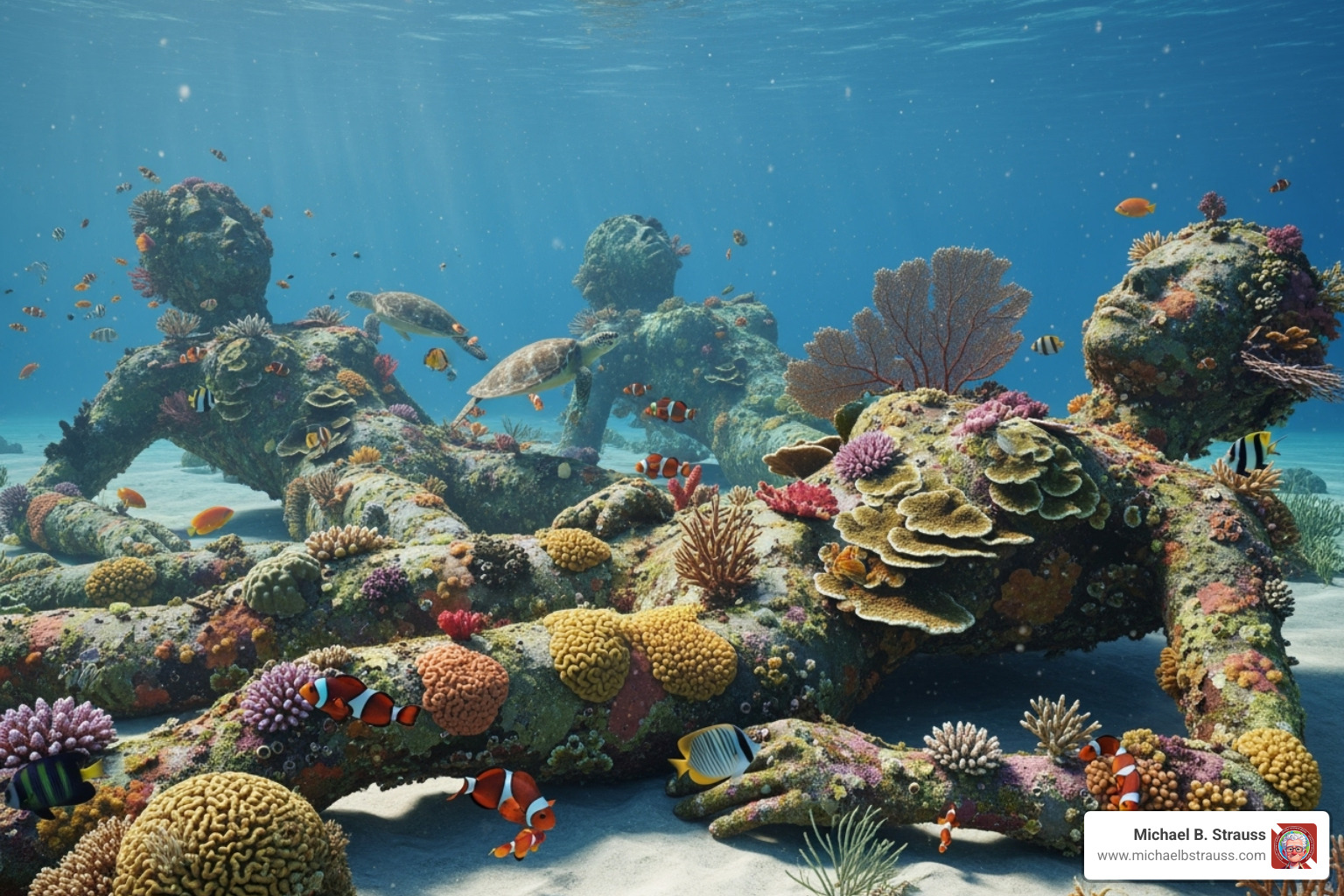
Then there are the breathtaking underwater installations, pioneered by artists like Jason deCaires Taylor. His submerged sculpture parks, acting as artificial reefs, merge art with ecology, creating living, evolving artworks that highlight both the fragility and resilience of marine ecosystems. These works offer divers and snorkelers an unparalleled immersive experience, fostering an intimate connection with the underwater world and its challenges. This deep dive into the ocean's wonders reminds us of our own profound connection to water, a sensation akin to the feeling of water serendipity: our aquatic savoir-faire.
Mural art and street art, exemplified by organizations like PangeaSeed Foundation, bring ocean conservation to urban landscapes. Artists like Dragon76, known for his dynamic street art and his "Protect Our Oceans" piece, use public walls as canvases to spread messages of ocean health. His art, which often explores the coexistence of opposites, conveys that protecting the ocean is a responsibility firmly in our hands. You can see more about his impactful work and the mission behind it on the PangeaSeed website and the Protect Our Oceans product page.
Digital art, performance art, and even dance also play a crucial role. They can create virtual immersive experiences, engage audiences in live, interactive storytelling, and convey complex emotional landscapes about the ocean's decline and the urgent need for action. Each medium, in its unique way, contributes to a holistic understanding, moving beyond simple facts to foster a profound, sensory, and unforgettable connection with our blue planet.
Inspiring the Next Wave: Youth in Ocean Conservation Art
The significance of youth involvement in ocean conservation art initiatives cannot be overstated; it's how we foster future advocates and ensure the longevity of conservation efforts. When young people engage creatively with environmental issues, they not only learn but also become powerful voices for change.
A prime example is the annual 'Science Without Borders® Challenge,' an international student art contest that promotes ocean conservation. In 2023, over 1,200 students from 67 countries submitted artwork, tackling the theme of 'The Sixth Extinction.' These young artists, aged 11-19, depicted everything from critically endangered vaquitas (with only around 10 left!) to the broad impacts of human activities like pollution, overfishing, and climate change.
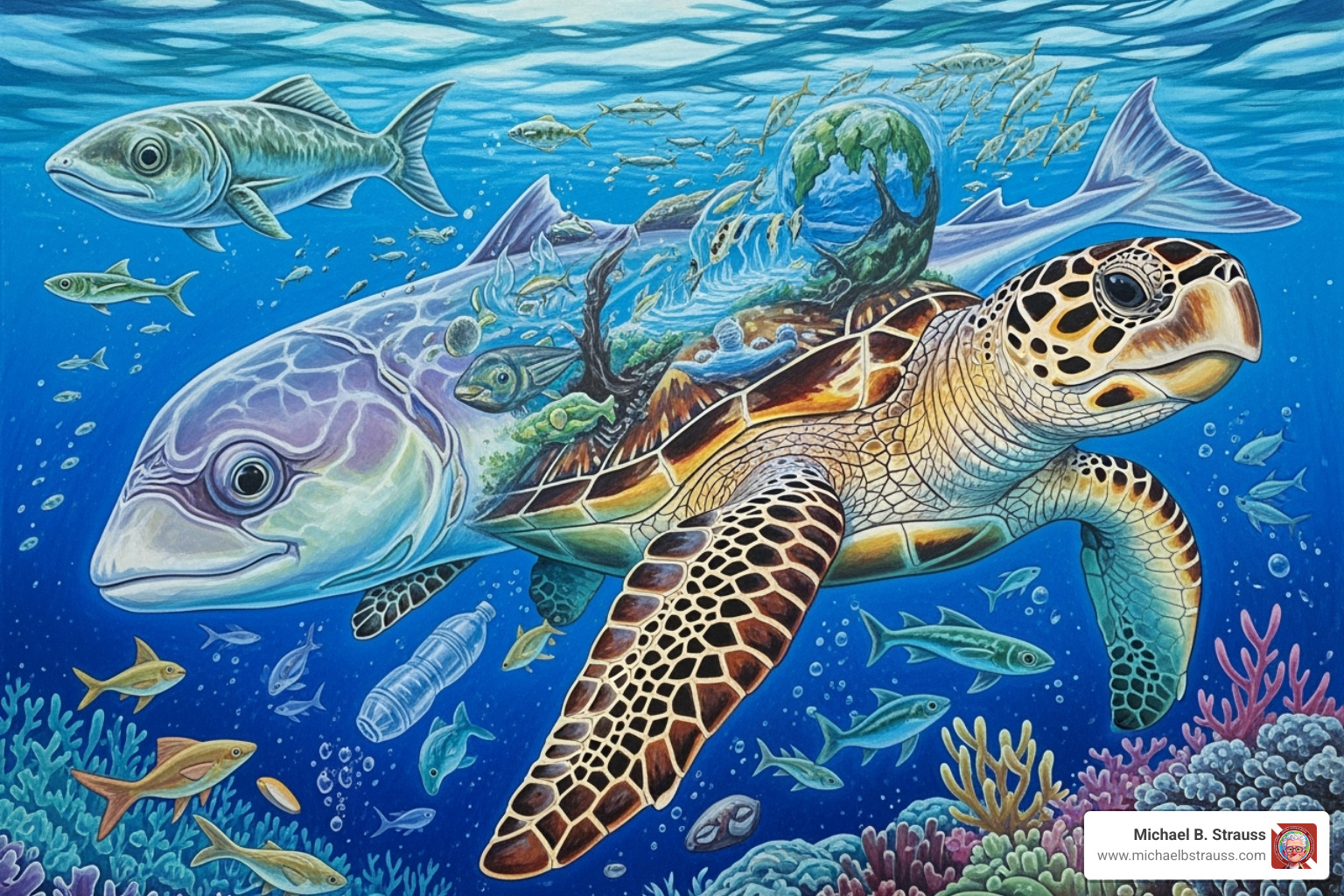
Boram Shim, one of the winners, created 'We Are Next,' an artwork that powerfully conveys the potential for human extinction if we continue to harm the environment. Her realization that human activities pose a greater danger to marine life than she initially thought, and her desire to channel this passion into her art, highlight the transformative power of these initiatives. Similarly, Yanjun Mao's 'The Sea Bears Witness to Everything,' featuring a hawksbill sea turtle, symbolizes the ocean's enduring witness to environmental changes. These personal stories, fueled by artistic expression, bridge the gap between scientific data and lived reality, making climate issues tangible and relatable. The Khaled bin Sultan Living Oceans Foundation, which hosts the challenge, states that these young individuals' artworks bring critical attention to the need for ocean protection and inspire action. You can learn more about their mission and the challenge at www.LOF.org.
Another impactful initiative is the Ocean Awareness Contest, which encourages teens to "Tell Your Climate Story" through various artistic mediums—visual art, poetry, film, and performance. By sharing their personal experiences with drought, floods, wildfires, or sea-level rise, young artists foster a deeper connection to climate issues. As Robin Wall Kimmerer wisely noted, "People can’t understand the world as a gift unless someone shows them how it’s a gift." These contests do precisely that, nurturing a global community of environmentally aware and artistically empowered youth.
The Ripple Effect: Art, Philanthropy, and Policy
Beyond raising awareness, ocean conservation art is increasingly leveraged to influence policy and drive tangible change in conservation efforts, often by tapping into the significant financial and philanthropic aspects of the art world. We've seen that while the global art market is a staggering $67.8 billion, the ocean receives a mere 1% of all philanthropic funding. This stark disparity underscores a massive opportunity for the art world to become a more significant force in ocean protection.
Art auctions and events are proving to be powerful mechanisms for channeling funds and attention. Oceanic Global's 'Evening for the Ocean' is a prime example. This event brought together art, science, and music, featuring immersive experiences and artworks from passionate artists. By showcasing pieces from renowned artists like Jason deCaires Taylor and Ben Von Wong in a silent auction, these events transform artistic appreciation into direct financial support for ocean initiatives. You can view the full auction gallery to see the range of artists and works that contributed. Such initiatives highlight how art can mobilize significant resources and generate momentum for the ocean's urgent needs, much like understanding the complex principles of decompression science helps divers manage risk.
Furthermore, art can directly inform and advocate for public policy. The ARTSail initiative, for instance, is a private sector endeavor that connects artists with climate activists, scientists, and marine experts to investigate climate change impacts on waterways. They create tangible artistic outcomes with direct climate advocacy value, working to move communities from mere awareness to concrete climate action through educational programs and outreach. This unique approach, offering artists access to ocean-going vessels and scientific practitioners, enables them to craft messages that can influence policy decisions, aligning with UN Sustainable Development Goals related to water, climate action, and life below water. More about their work can be found at www.artsail.info and through the UN's "Artists for Ocean Conservation" initiative.
By creating visually compelling and emotionally resonant works, artists can reframe complex environmental issues in ways that resonate with policymakers and the public alike. They can highlight the beauty at stake, the threats looming, and the solutions available, fostering a collective will for legislative action and increased funding.
Conclusion: Your Role in the Bigger Picture
Throughout our exploration of ocean conservation art, we've witnessed something truly remarkable: the power of creativity to transform abstract environmental threats into deeply personal experiences that move us to action. This isn't just about making pretty pictures or impressive sculptures. It's about bridging the gap between knowing and feeling, between understanding the science and caring enough to do something about it.
Art has proven itself as a mobilizing force unlike any other. When Washed Ashore transforms 60,000 pounds of beach plastic into a majestic sea turtle sculpture, or when young artists from 67 countries pour their hearts into climate stories, something magical happens. We stop seeing the ocean's decline as someone else's problem and start recognizing it as our shared responsibility.
Your individual actions matter more than you might think. Every time you support an ocean conservation artist, share their work on social media, or attend an art auction benefiting marine causes, you're adding your voice to a growing chorus. When you allow yourself to be moved by a powerful mural or an underwater installation, you're participating in a collective awakening that spans the globe.
This deeper connection to the ocean is something we can all cultivate, whether we've ever set foot in the water or not. Art creates pathways to understanding that don't require a diving certification or a marine biology degree. It invites us all into the conversation about our blue planet's future.
For those who have experienced the ocean through scuba diving, this connection runs even deeper. Understanding marine environments through direct experience adds another layer of appreciation for what ocean conservation art strives to protect. Deepening our understanding of diving science can foster an even greater appreciation for the delicate ecosystems that artists work so hard to champion.
The future of our oceans truly depends on this beautiful blend of scientific understanding, artistic inspiration, and collective action. Each of us has a role to play in this bigger picture, and every action—no matter how small—contributes to protecting our blue planet for generations to come.
To deepen your understanding of the science behind our underwater world, get your copy of Diving Science Revisited here: https://www.bestpub.com/view-all-products/product/diving-science-revisited/category_pathway-48.html
DISCLAIMER: Articles are for "EDUCATIONAL PURPOSES ONLY", not to be considered advice or recommendations.


