Why Checklists are Non-Negotiable for Diver Safety
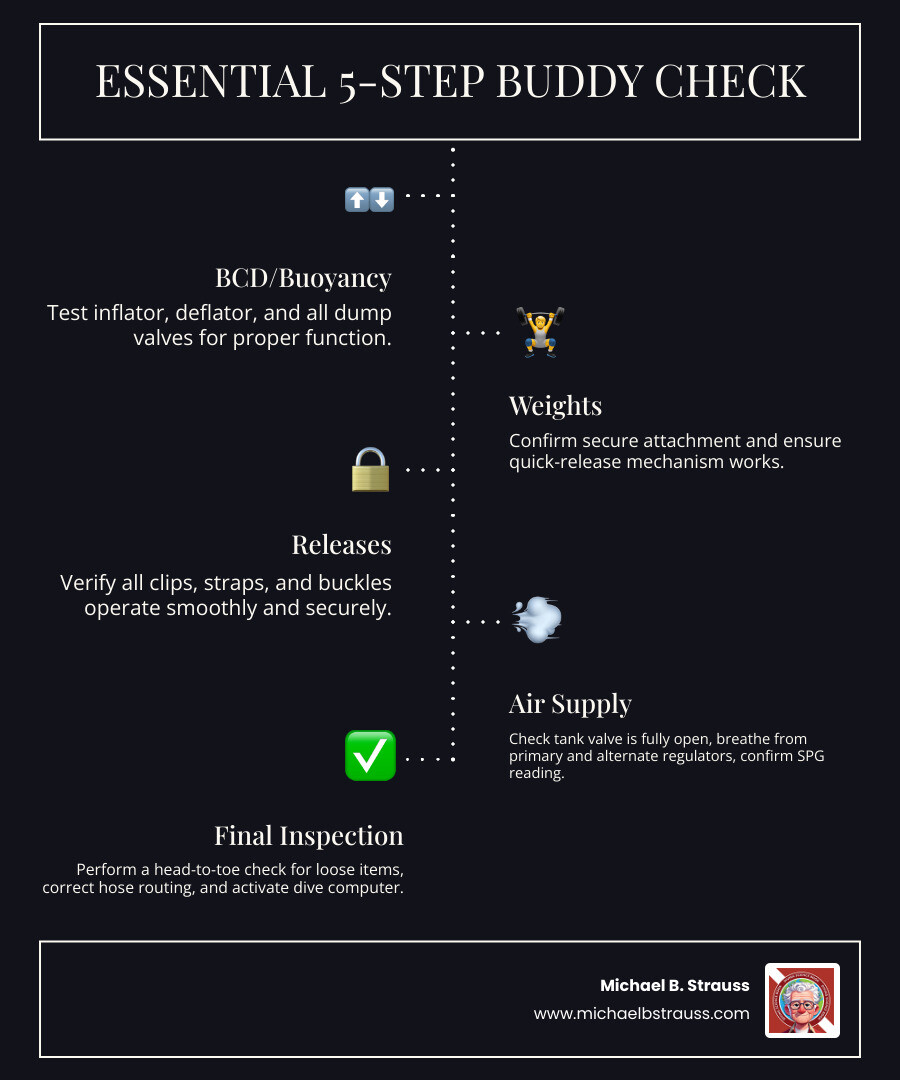
A pre dive equipment checklist is a systematic verification process performed before every dive to ensure all gear is functional, properly assembled, and safe to use. Here's a simple five-step buddy check that every diver should perform:
Essential Pre-Dive Equipment Checklist:
- BCD/Buoyancy - Test inflator, deflator, and all dump valves
- Weights - Confirm secure attachment and quick-release function
- Releases - Verify all clips, straps, and buckles operate correctly
- Air - Check tank valve is fully open, breathe from both regulators, confirm SPG reading
- Final Check - Complete head-to-toe inspection for loose items, proper hose routing, and dive computer activation
This check takes only 1-2 minutes but can prevent the majority of diving accidents.
Underwater is the last place you want to find a gear problem. According to leading dive safety organizations, many scuba accidents are preventable with a proper pre-dive check. These incidents often stem not from rare equipment failures, but from simple human error. As divers gain experience, it's easy to fall into complacency or a "normalization of deviance"—cutting corners because nothing has gone wrong before. Diving with assumptions can be fatal.
A structured checklist combats these human factors by forcing you to verify rather than assume. It takes your brain out of "autopilot mode" and ensures every critical system is checked, every time. It's your first line of defense against preventable accidents, regardless of your experience level. Research shows that divers who consistently use checklists are significantly less likely to suffer incidents.
In the sections that follow, we'll walk you through a comprehensive pre dive equipment checklist system that covers everything from initial gear inspection through final buddy checks.
Know your pre dive equipment checklist terms:
Your Comprehensive Pre-Dive Equipment Checklist from Start to Finish
Before any dive, a pre dive equipment checklist is a critical safety procedure, not a formality. It ensures your life support system is flawless. Checklists are a hallmark of responsible diving, reducing errors and mitigating the complacency that can affect even seasoned divers. The process can be broken into three phases: Individual Gear Inspection, The Buddy Check, and Customizing for the Dive. Following these phases builds confidence and fosters a safer diving environment for everyone. To truly understand why these systematic checks matter, we can explore how they contribute to overall dive safety, as discussed in "Learn Why Checklists Matter in Diving."
Phase 1: Individual Gear Inspection and Assembly
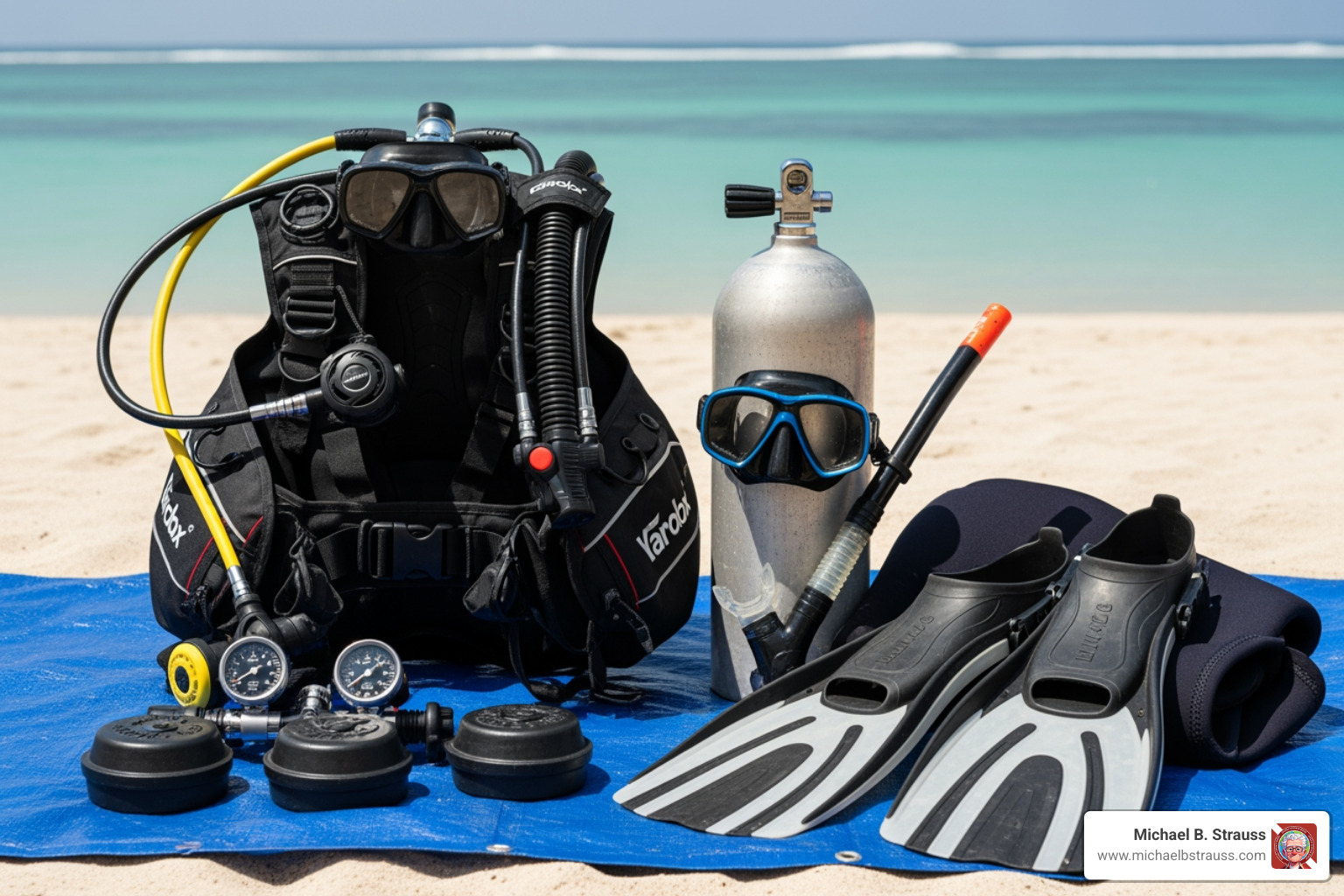
Your first responsibility is to your own gear. This phase is a meticulous inspection and assembly of all personal equipment to catch issues before they become problems underwater.
- Exposure Suit (Wetsuit/Drysuit): Inspect for tears, frayed seams, and smooth zippers. For drysuits, check seals and valves.
- Mask, Snorkel, and Fins: Check mask skirt and strap for damage. Inspect snorkel mouthpiece and keeper. Check fin straps and buckles for wear.
- Buoyancy Control Device (BCD): Visually check for damage. Test inflator, deflator, and all dump valves. Check that all straps and clips are secure. When assembling to the tank, ensure the BCD is even with the tank valve and securely fastened.
- Regulator Set: Inspect the first stage O-ring. Check that all hoses are free of cracks or kinks. Press purge buttons on second stages. Attach the first stage to the tank valve, then slowly open the valve all the way, turning it back a half turn. Check the pressure gauge (SPG) and test breathe from both the primary and alternate regulators, watching the SPG for any needle movement. Attach the low-pressure inflator hose to the BCD.
- Weights: Confirm you have the correct amount. If using a weight belt, ensure it's set for a right-hand release. For integrated weights, check that pockets are secure and the release mechanism works.
- Dive Computer: Turn it on and check the battery. Verify settings (e.g., air, Nitrox) match your dive plan.
- Accessories: Check lights, SMBs, reels, and knives. Ensure batteries are charged and all items are secure and accessible.
This individual check is the foundation of a safe dive, as discussed in "How To Improve Scuba Diving Safety with Checklists."
Phase 2: The Buddy System and Your Pre-Dive Equipment Checklist
After preparing your own gear, the buddy check provides a crucial second set of eyes. It's about familiarizing yourself with your buddy's equipment so you can assist in an emergency. This is an important accident prevention procedure new divers learn during their open water diver course. The most common mnemonic is BWRAF.
- B - BCD/Buoyancy: Check your buddy's BCD for proper fit. Test their inflator, deflator, and all dump valves. Your buddy does the same for you. This prevents uncontrolled ascents or descents.
- W - Weights: Confirm your buddy's weight system is secure but easily releasable. Know how to operate their release mechanism, whether it's a belt or integrated pockets. This is vital for managing buoyancy and emergencies.
- R - Releases: Check all of your buddy's clips and buckles (BCD shoulder, chest, waist, and tank straps). Ensure you know how to operate them in an emergency. We are not Mammalian Divers and rely on our gear, so releases must work!
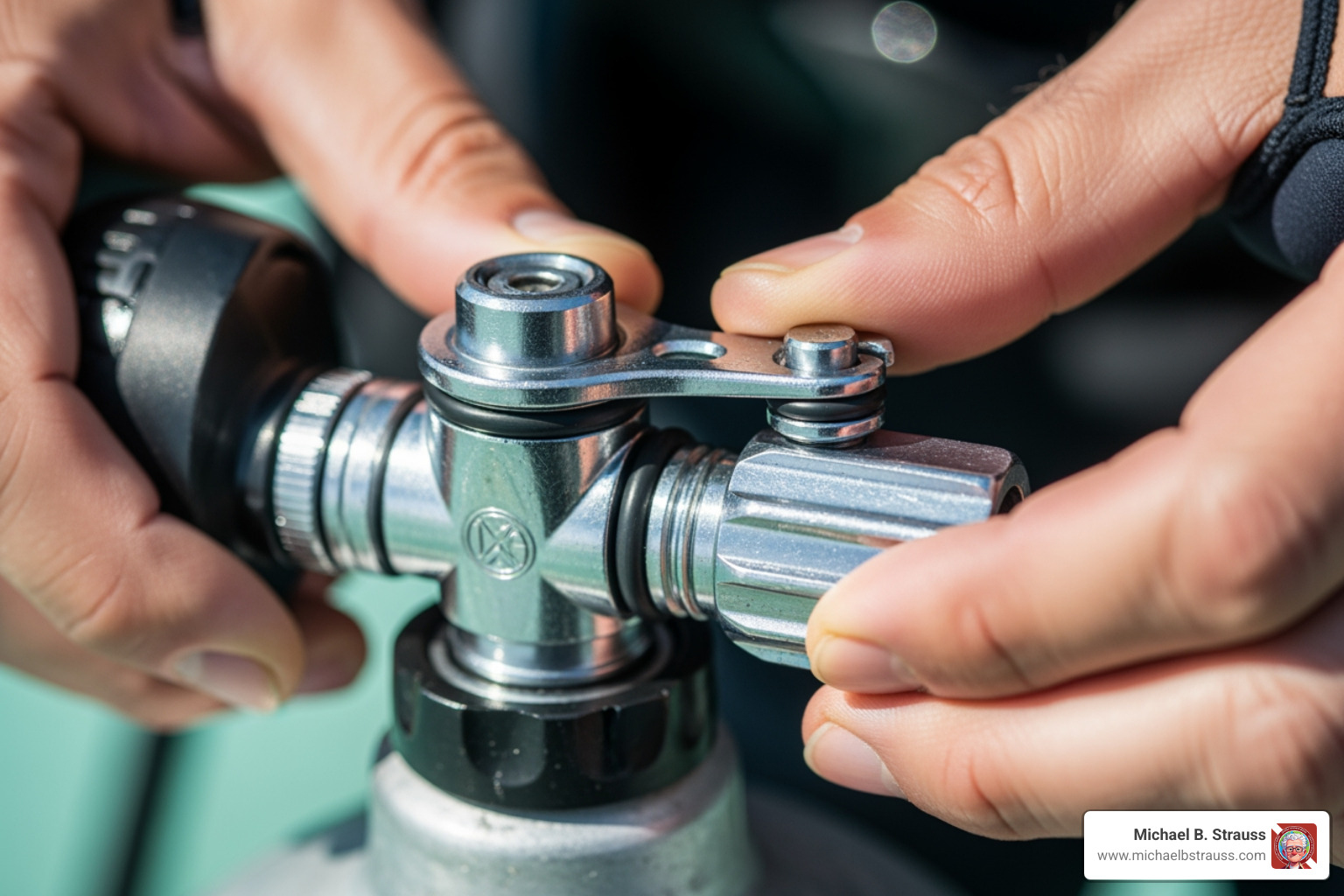
- A - Air: Confirm your buddy's tank valve is fully open. Have them breathe from their primary and alternate regulators while you watch their pressure gauge to ensure it remains stable. This verifies the air supply is on and functioning correctly.
- F - Final Check: Do a final head-to-toe sweep. Are all hoses clipped and streamlined? Is their dive computer on? Are mask and fins ready? This is the last chance to catch any overlooked items.
The buddy check is a non-negotiable safety rule that fosters teamwork and mutual responsibility.
Phase 3: Customizing Your Pre-Dive Checklist for Any Dive
Not all dives are the same, so your pre dive equipment checklist must adapt to the environment and dive type.
1. Based on Location and Conditions:
- Cold Water Diving: Your checklist expands. Dry suit divers must check inflator hoses and vent valves. Also consider thicker gloves, hoods, and cold-water rated regulators.
- Shore vs. Boat Dives: For shore dives, note entry/exit points. For boat dives, know your spot and how to secure gear.
2. Based on Dive Type:
- Wreck Diving: Add primary and backup lights, a reel, and a line cutter to your check. Ensure all gear is streamlined to prevent snagging.
- Night Diving: Redundant lighting is essential. Check primary and backup lights and their battery levels.
- Drift Diving: An SMB and reel are non-negotiable for signaling the boat.
3. Recreational vs. Technical Diving:
- Recreational Diving: The standard BWRAF check is generally sufficient, with minor additions for specific conditions.
- Technical Diving: This demands exhaustive, multi-stage checklists. Checks include verifying multiple tanks, gas mixes, and redundant systems. Rebreather diving requires its own highly specific checklist covering scrubbers, sensors, and electronics. The complexity underscores the critical need for meticulous checks.
A customizable checklist adds layers of safety custom to your specific adventure.
Avoiding Common Mistakes and Human Factors
Even with good intentions, divers make mistakes. Understanding these can improve safety.
- Rushing the Check: Excitement or being late can lead to skipped steps. A proper check only takes 1-2 minutes.
- Overconfidence/Complacency: Experience can create a false sense of security. Use a checklist every time, for every dive.
- The "You Good?" Syndrome: A casual question is not a substitute for a systematic check.
- Inconsistent Use: A checklist is only effective if used consistently.
- Restart if Interrupted: If you're distracted during a check, start that section over to ensure nothing is missed.
Using a physical, waterproof checklist can be very effective. Keep it concise, readable, and personalized to your gear. By addressing these human factors, we build a robust safety culture and avoid errors that could lead to serious issues, including decompression sickness. For more on this, see "Why and at What Sites Decompression Sickness Can Occur."
Beyond the Checklist: Cultivating a Lifelong Culture of Safety
A pre dive equipment checklist is a powerful tool, but it's part of a larger commitment to safety. A responsible diver cultivates a lifelong culture of vigilance, continuous learning, and meticulous equipment care.
Continuous Learning and Skill Refinement:Never stop learning. Advanced courses like rescue diver and emergency first response training build confidence and equip you with skills to manage emergencies and assist others.
Post-Dive Checks and Equipment Maintenance:Safety continues after the dive. Proper care ensures your gear is ready for the next adventure.
- Rinse: Thoroughly rinse all equipment with fresh water.
- Dry: Allow gear to dry completely in the shade to prevent mildew and degradation.
- Inspect: Check for any new damage or wear that occurred during the dive.
- Service: Follow manufacturer recommendations for annual or bi-annual professional servicing of regulators and BCDs.
Dive Logging:Updating your dive log reinforces learning, tracks experience, and helps you note equipment performance or any issues encountered. This practice contributes to your overall understanding of "Diving Science."
Connecting with Expertise:For those who wish to dig deeper into diving safety, the works of Dr. Michael B. Strauss offer invaluable insights. His comprehensive diving books are essential reads, covering topics from "Decompression Science" to the management of diving medical problems. Learning from experts empowers you to make more informed decisions.
A pre dive equipment checklist, combined with continuous education and proper maintenance, transforms you into a truly responsible and confident diver, ready to enjoy the underwater world with peace of mind.
Get your copy of Diving Science, Revisited here: https://www.bestpub.com/view-all-products/product/diving-science-revisited/category_pathway-48.html
DISCLAIMER: Articles are for "EDUCATIONAL PURPOSES ONLY", not to be considered advice or recommendations.


