Why Scuba Diving Coverage is Essential for Every Diver

Scuba diving coverage protects divers from the significant financial and medical risks of underwater accidents, which standard health insurance often excludes.
What scuba diving coverage includes:
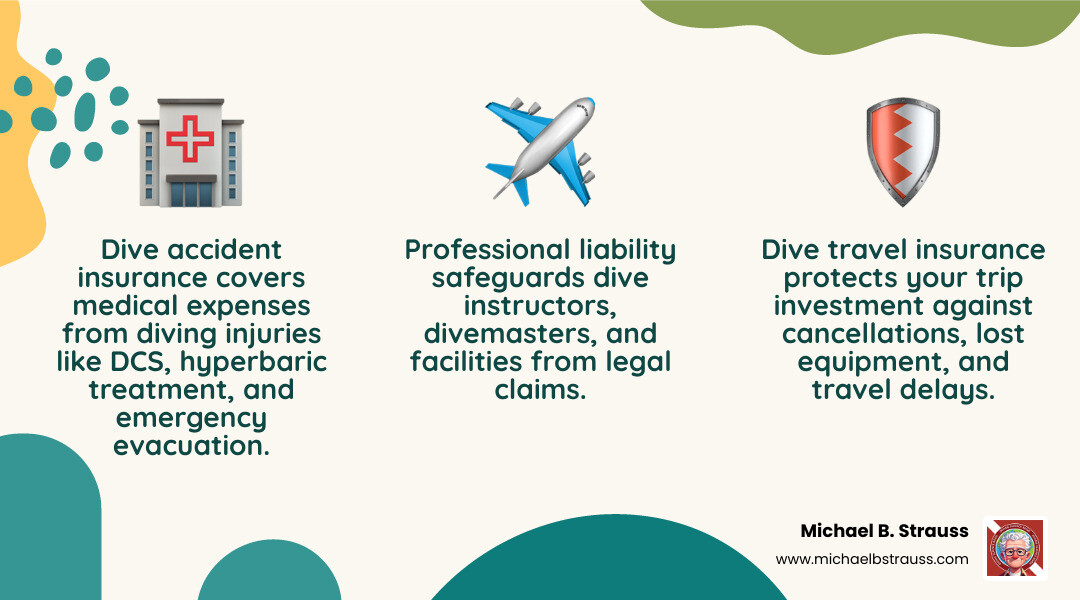
- Dive accident insurance - Covers medical expenses from diving injuries like decompression sickness, hyperbaric chamber treatment, and emergency evacuation.
- Dive travel insurance - Protects your trip investment with coverage for cancellations, lost equipment, and travel delays.
- Professional liability - Protects dive instructors, divemasters, and facilities from legal claims.
While diving is generally safe, accidents require specialized and costly care. A single hyperbaric chamber treatment can cost thousands, and emergency evacuations from remote locations can exceed $50,000. As noted by the CDC, dive-related injuries like decompression sickness and arterial gas embolism require urgent, specialized treatment that standard health plans rarely cover.
It's also a common misconception that membership in dive safety organizations automatically includes insurance. In reality, you must often purchase a separate dive accident policy, leaving many members unknowingly exposed.
Proper coverage allows recreational and professional divers alike to focus on the underwater experience without worrying about worst-case scenarios.
Find more about scuba diving coverage:
Understanding Your Scuba Diving Coverage Options
Venturing into the underwater world comes with unique risks, making scuba diving coverage as crucial as checking your gear. Understanding your options ensures comprehensive protection for any eventuality.
Scuba diving coverage generally falls into three categories: dive accident insurance, dive travel insurance, and professional liability insurance. Many divers combine these for complete protection.
Dive Accident vs. Dive Travel Coverage
While both are vital, these two primary forms of scuba diving coverage address different concerns.
Dive accident insurance is focused on medical costs from diving injuries. It covers conditions like decompression sickness (DCS) and barotrauma, which standard health insurance often excludes. Key benefits include coverage for hyperbaric chamber therapy, specialized physician charges, and emergency medical evacuation from remote dive sites. Some plans offer coverage for eligible accident medical expenses up to US$500,000.
Dive travel insurance protects your trip investment. It covers trip cancellation or interruption, lost or delayed baggage (including dive gear), travel delays, and general medical emergencies. While some policies include limited dive accident benefits, their main purpose is to safeguard the financial aspects of your trip.
Here's a quick comparison:
| Coverage Type | What It Covers |
|---|---|
| Dive Accident | Medical expenses from diving injuries, hyperbaric chamber treatment, emergency evacuation, and related physician/hospital charges. |
| Dive Travel | Trip cancellation/interruption, lost or delayed baggage, travel delays, and general, non-dive-related medical emergencies. |
What Your Scuba Diving Coverage Policy Should Include
A comprehensive scuba diving coverage policy should offer peace of mind by including these key benefits:
- Hyperbaric Chamber Therapy: Non-negotiable coverage for treating DCS or AGE in specialized, expensive facilities.
- Medical Evacuation: Covers emergency transport from remote locations to an appropriate medical facility. This must often be arranged by the insurer's emergency hotline to be covered.
- Search and Rescue: Provides coverage for the high costs of search operations in the rare event of a lost diver.
- Accidental Death & Dismemberment (AD&D): Offers a financial payout in the event of a fatal accident or loss of limb.
- Permanent & Total Disability: Provides financial support if a diving accident prevents you from returning to work.
- Lost or Damaged Diving Equipment: Covers your investment in dive gear if it's unintentionally lost or damaged.
- 24/7 Emergency Hotline: Gives you immediate access to experts in diving medicine during an emergency.
- Non-Diving Water Sports Coverage: Some plans extend protection to other water activities you may enjoy on your trip.
High-limit plans that pay up to US$500,000 for eligible medical expenses reflect the potential costs and the importance of adequate protection. For more insights on ensuring your diving safety, we encourage you to explore our diving safety resources.
Specialized Coverage for Dive Professionals and Facilities
Dive professionals and businesses require specialized scuba diving coverage to protect against unique liabilities and protect their livelihoods.
- Professional Liability Insurance: Essential for instructors and divemasters, this covers claims of negligence or errors in professional services. It helps pay for legal defense and judgments, with some plans offering limits of $1M per occurrence / $2M aggregate.
- Commercial General Liability (CGL): Protects dive shops, resorts, and charter boats against claims of bodily injury or property damage occurring on their premises or during operations (e.g., a slip-and-fall or boat accident).
- Dive Shop Coverage: This can include protection for inventory, the physical building, and business interruption losses.
- Legal Protection: Specialized policies cover staggering legal defense costs, settlements, and judgments, protecting professionals and businesses from financial ruin even if a claim is unfounded.
This custom approach to insurance is vital for protecting instructors, their students, and the integrity of their operations.
Choosing and Using Your Insurance Plan
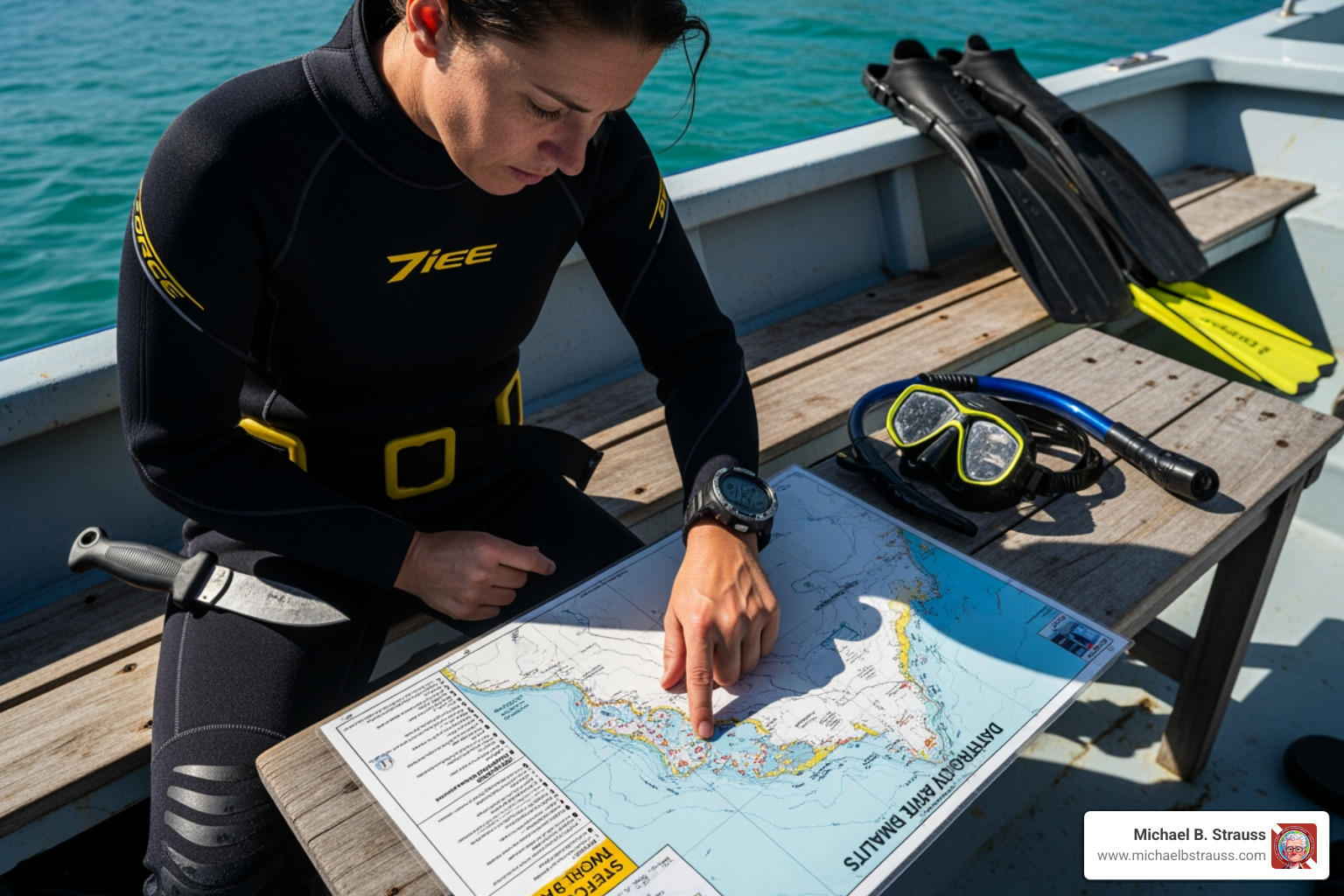
Financial preparation is as important as a gear check. Let's review how to choose a policy, what to watch out for, and what to do if you need to use it.
How to Choose the Right Scuba Diving Coverage
Your policy should match your diving habits. Consider these key factors:
- Nature of Your Trip: A remote liveaboard trip requires different coverage than local shore dives. International travel often demands more comprehensive medical evacuation.
- Type of Diving: Ensure your policy covers your activities, whether recreational, technical, or professional. Specialized diving like deep or cavern diving may require add-ons.
- Depth Limits: Policies have explicit depth limits (e.g., 30 or 40 meters). Exceeding them can void your coverage. Match the policy to your certification and dive plans.
- Geographic Coverage: Confirm your policy is valid where you plan to dive. Check for exclusions in certain countries.
- Pre-existing Medical Conditions: You must declare any pre-existing conditions. Coverage may be excluded, require a premium, or need a doctor's approval. For more on this, see the Evaluation and Management of Pain-Related Medical Problems of Diving.
- Age Restrictions: Some plans have different terms or premiums for older divers, while others may have specific age-related exclusions.
- Policy Wording: Always read the fine print. Understand the terms, benefits, and exclusions before you buy.
- Certification Requirements: You must be certified for the type of diving you do and operate within those limits. Learners must be supervised by a licensed instructor.
Common Exclusions and the Claims Process
Understanding what your scuba diving coverage doesn't cover is as important as knowing what it does. Familiarize yourself with common exclusions and the claims process to avoid surprises.
Common Exclusions to Be Aware Of:
- Exceeding Depth or Certification Limits: Diving deeper than your policy allows or outside your training level.
- Solo Diving: Diving alone is often excluded unless you are specifically certified and covered for it.
- Professional Work on a Recreational Plan: Using a recreational policy to cover an accident that occurs while working as a dive professional.
- Diving Under the Influence: Incidents related to alcohol or non-prescription drug use are not covered.
- Undeclared Medical Conditions: Failure to disclose pre-existing conditions can lead to a denied claim.
- High-Risk Activities: Technical diving, extreme freediving, or commercial diving are typically excluded from standard plans unless specifically endorsed.
- Geographic Exclusions: Diving in regions with travel advisories or specifically excluded by the policy.
The Claims Process:
If you need to make a claim, follow these steps to ensure a smooth process:
- Contact Emergency Services First: In an accident, call local EMS immediately. Once medical care is underway, contact your insurer's 24/7 emergency hotline.
- Gather Documentation: Collect all relevant details: incident reports, medical diagnoses, treatment receipts, and witness information. For gear claims, you'll need police or airline reports.
- Notify Your Provider Promptly: Adhere to the policy's time limit for reporting an incident.
- Understand Payment: For major incidents, your provider may pay the hospital or evacuation service directly. For smaller expenses, you may need to pay first and seek reimbursement.
- Follow Up: Keep detailed records of all communications and submitted documents, and follow up on your claim's status.
Your Pre-Dive Insurance Checklist
Before you take the plunge, run through this quick checklist to ensure your scuba diving coverage is ready to go:
- Verify Coverage: Confirm your policy is valid for your destination and covers your planned activities (e.g., depth, technical diving, liveaboard).
- Carry Proof of Insurance: Keep both digital and physical copies of your insurance card and policy information.
- Save Emergency Numbers: Program your insurer's 24/7 hotline and local emergency numbers into your phone.
- Inform a Contact: Share your policy details and emergency contacts with a family member or friend back home.
- Review Claims Process: Briefly review the steps for making a claim so you're prepared.
- Consult Expert Resources: Improve your knowledge by reviewing diving safety books by experts like Dr. Michael B. Strauss. His books offer a deeper understanding of dive medicine and safety protocols for all levels of divers.
For more expert insights on diving safety, explore our comprehensive resources.
To learn more, get your copy of 'Diving Science Revisited' today.
DISCLAIMER: Articles are for "EDUCATIONAL PURPOSES ONLY", not to be considered advice or recommendations.


