Read story

What You Need to Know Before Renting Scuba Gear

Scuba diving equipment rental

Scuba diving equipment rental is the fastest way to get underwater without committing to thousands of dollars in gear purchases.

Here's what most divers rent and what to expect:

Gear ItemTypically Included In Rental
Regulator + gaugesYes
BCD (buoyancy control device)Yes
Wetsuit or drysuitYes
Tank/cylinderYes
Mask, fins, snorkelOften included
Dive computerSometimes included
Weights + weight beltOften free with full kit

Quick answers for first-time renters:

  • You must show a valid certification card (C-card) to rent a regulator, BCD, or tank
  • Most shops offer daily, weekend, and weekly rates — weekly bundles give the best value
  • Reserve in advance, especially for popular weekends or specialized gear like drysuits
  • Return gear clean and tanks with pressure remaining to avoid extra fees
  • Local dive shops offer professional fitting, safety checks, and expert advice you won't get online

Renting makes sense whether you're testing the sport, traveling light, or diving a new environment where your own gear isn't the right fit. The catch? Not all rental experiences are equal. Gear quality, pricing structures, and shop policies vary a lot — and a poor fit or poorly maintained regulator can turn a great dive into a stressful one.

The good news: knowing what to look for puts you in control.
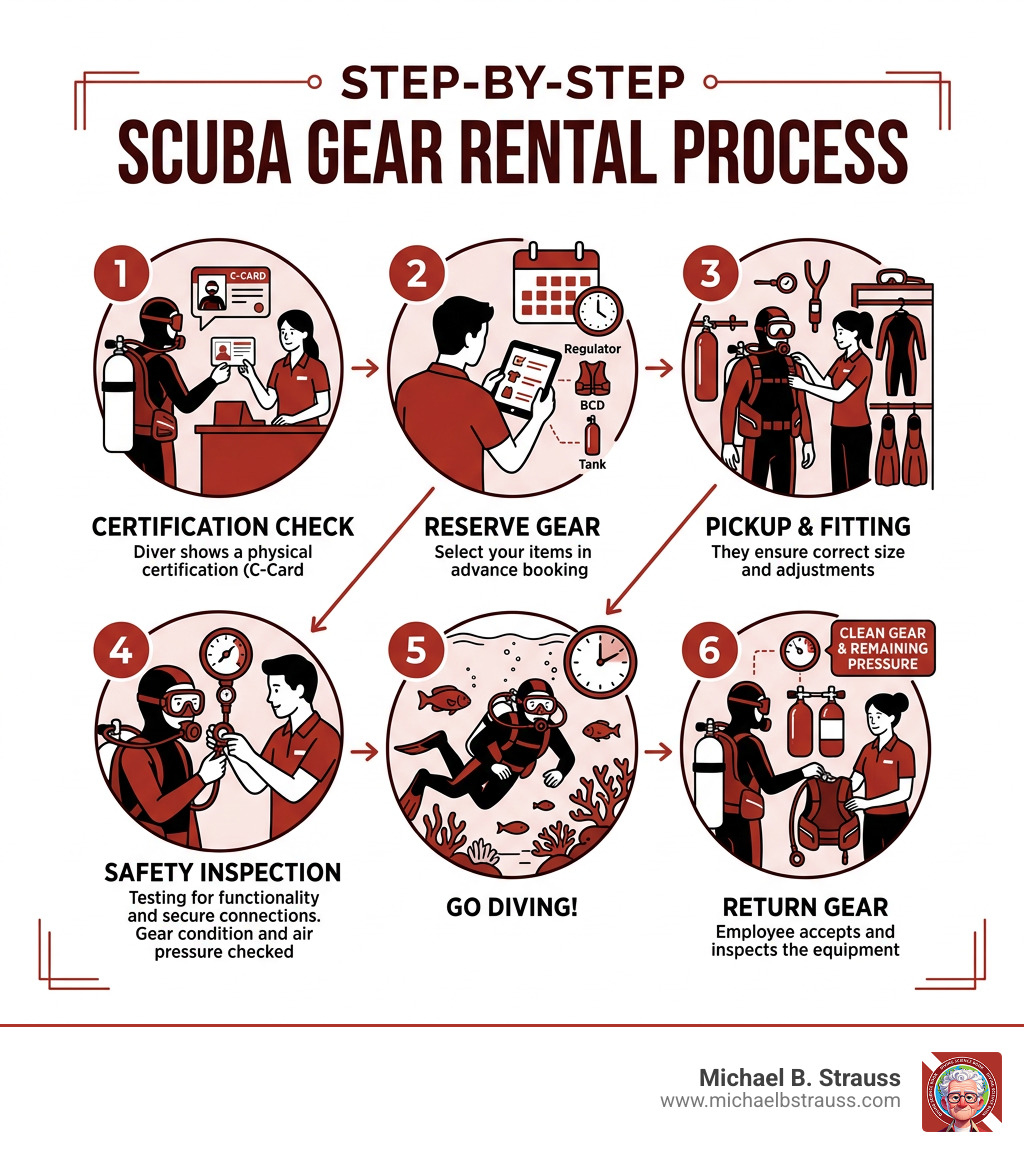
Step-by-step scuba gear rental process from certification check to return - Scuba diving equipment rental infographic

Basic Scuba diving equipment rental vocab:

When we walk into a dive shop, the wall of gear can be intimidating. However, understanding how shops structure their Scuba diving equipment rental programs helps us make the most cost-effective choices. Most professional shops offer tiered pricing. If we only need gear for a quick Saturday morning shore dive, a daily rate is our best friend. But if we are heading out for a long weekend at a nearby lake or coastal park, weekend specials usually cover us from Friday afternoon to Monday morning for a much better rate than paying for three individual days.

For those of us planning a full vacation, weekly discounts are the gold standard. We've found that renting for seven days often costs significantly less than the daily rate multiplied by seven. This is especially helpful when traveling to tropical destinations where we might want to dive every other day but keep the gear in our possession for convenience.
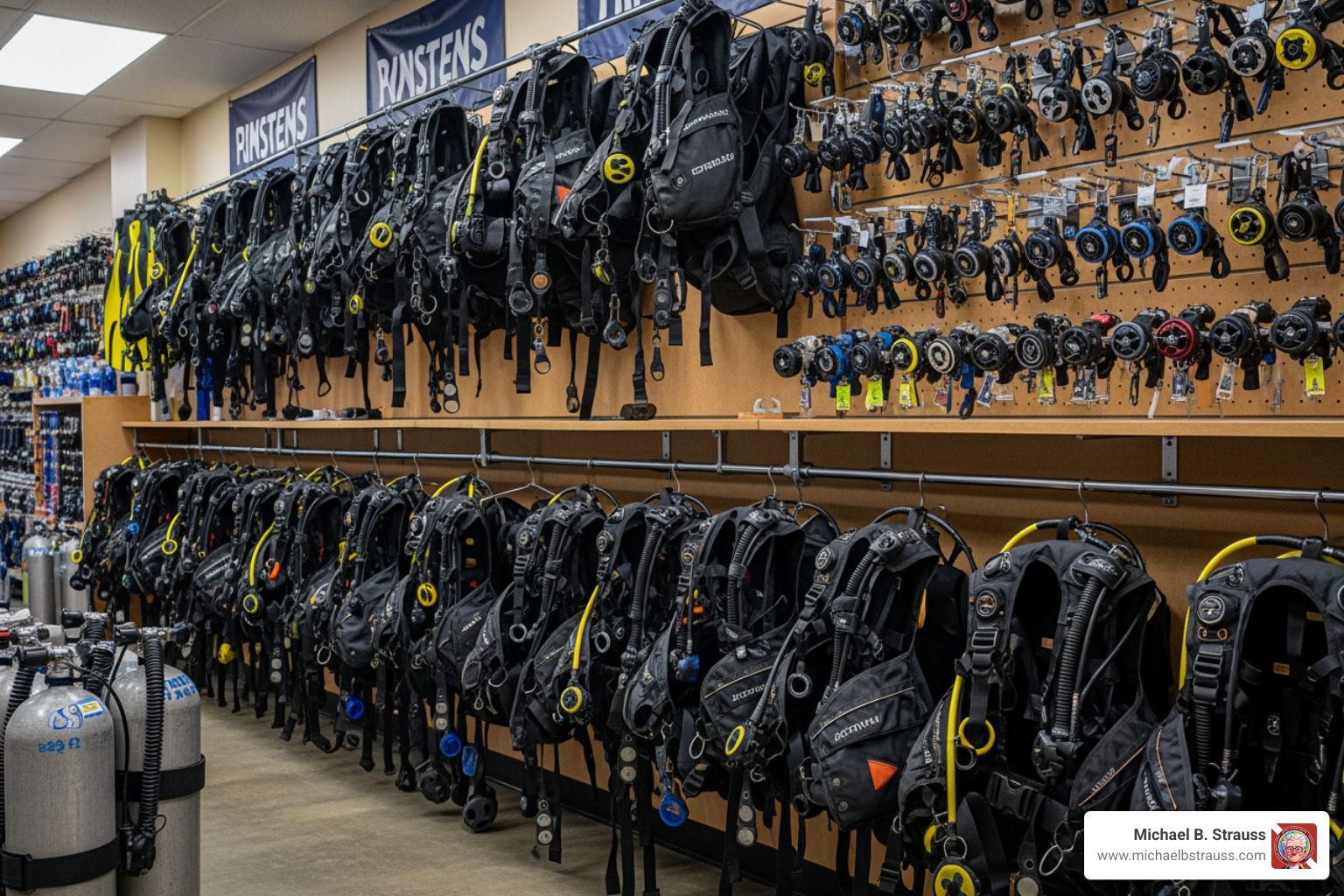
A professional dive shop rental fleet with organized BCDs and regulators - Scuba diving equipment rental

One thing we always look for is the age of the rental fleet. Reputable shops typically rotate their equipment every two years. This ensures that we are breathing through modern regulators and wearing BCDs with reliable inflator valves. High-quality brands like Scubapro, Aqualung, and Mares are common in rental fleets because they are "workhorses"—durable enough for heavy use but high-performing enough to keep us safe.

Essential Gear for Your Scuba Diving Equipment Rental

The "Big Three" of rental gear are the regulator set, the BCD, and the exposure suit.

  1. Regulators: These are the heart of our life support. A standard rental set includes the primary second stage, a backup "octopus" (usually bright yellow), a low-pressure inflator hose for your BCD, and a submersible pressure gauge (SPG). Many shops now include a basic dive computer as part of the regulator console, which is a huge safety upgrade over traditional depth gauges.
  2. BCDs (Buoyancy Control Devices): Most modern rental shops have moved toward weight-integrated BCDs. These allow us to ditch the uncomfortable lead-filled belts of the past and tuck our weights into secure pockets. We always check that the BCD has plenty of D-rings for our accessories and that the Velcro and buckles are in top shape.
  3. Exposure Suits: Whether it’s a 3mm shorty for the Caribbean or a thick 7mm full suit for temperate waters, getting the right fit is essential. A wetsuit that is too loose will let water circulate, making us cold, while one that is too tight can restrict our breathing.

If you already own some pieces but need to fill the gaps, you can always Rent Individual Pieces of Equipment to customize your kit.

Specialized Scuba Diving Equipment Rental for Different Environments

Not all dives are created equal, and neither is the gear. If we are diving in colder environments, such as the kelp forests of the Pacific or the quarries of the Midwest, we need more than just a standard kit.

  • Cold-Water Gear: This includes 7mm wetsuits, hoods, gloves, and boots. Some shops even offer drysuit rentals, though these usually require a specific drysuit certification or a checkout dive to ensure we know how to manage the air volume inside the suit.
  • Tropical Diving: In warmer waters, we might opt for a "tropical" package, which often uses lighter BCDs and thinner suits.
  • Tanks and Gas: While the standard Aluminum 80 is the most common tank, we sometimes prefer high-capacity steel tanks (like HP100s or HP120s) if we are heavy breathers or planning deeper dives. If we are Nitrox certified, we can rent cylinders filled with Enriched Air, though we must remember to bring our certification card and analyze the gas ourselves before leaving the shop.
  • Technical Gear: For those of us moving into advanced territory, some shops offer sidemount configurations, twin sets (doubles), or deco bottles.

For those planning a full day of exploration, it's often easiest to Rent a 2-Tank Rental Package so we have enough air for a morning and afternoon session without heading back to the shop.

Understanding Rental Packages and Bundled Savings

We are always fans of "The Package Deal." Most shops group gear into two main categories:

  • The Hard Package: This typically includes the regulator set, BCD, and tanks. It focuses on the mechanical components of diving.
  • The Soft Package: This covers the "personal" items like the wetsuit, mask, fins, boots, and snorkel.

Buying a full gear kit rental is almost always cheaper than renting each item à la carte. Additionally, many shops provide "perks" for full-package renters. For instance, we’ve seen shops offer free weight rentals and a weight belt if the total rental exceeds a certain amount. Some even include one free air fill per day for each tank rented.

Another benefit of renting a full kit is that the shop usually provides a gear bag. This makes transporting everything from the car to the boat much easier and helps keep the rental equipment separate from our personal items.

Best Practices for a Seamless Rental Experience

To ensure our dive trip goes smoothly, we need to treat the rental process with the same respect we give the dive itself. This starts with the fitting session. We never just "guess" our size. We take the time to try on the BCD over the wetsuit we plan to wear. We check that the regulator's mouthpiece isn't chewed up and that the hoses don't show any signs of cracking.

Renting from a local dive shop rather than a generic resort kiosk often gives us access to better maintenance protocols. Local shops rely on repeat customers, so they are highly motivated to keep their gear in peak condition. They also provide expert knowledge on local dive sites, which can be invaluable.

Certification Requirements and Reservation Timing

Safety is the priority in the diving community. Therefore, no reputable shop will let us walk out the door with a regulator, BCD, or tank without seeing our C-card. We always keep a digital copy on our phones, but having the physical card is a good backup. If we are renting specialized gear like Nitrox tanks or a drysuit, we must show the specific certification for those items as well.

Timing is also key. If we are planning to dive on a holiday weekend, we don't wait until Friday afternoon to call. We’ve found that making reservations as early as the Monday prior to our trip is the best way to guarantee that the shop has our size in stock. This is especially true for "limited" items like extra-large BCDs or high-pressure steel tanks.

Gear Care and Avoiding Common Rental Fees

Nothing ruins the "budget-friendly" aspect of renting faster than unexpected fees. Most shops have strict policies regarding the condition of returned gear. Here are our top tips to keep our wallets happy:

  • The Freshwater Rinse: Saltwater is the enemy of dive gear. We always rinse everything thoroughly in fresh water after the dive. If the gear comes back covered in salt crystals or sand, many shops will charge a cleaning fee.
  • The Dust Cap: This is the most important rule of regulator care. When the regulator is off the tank, the dust cap must be dried and firmly replaced on the first stage before rinsing. If water gets into the first stage, it can cause internal corrosion, leading to expensive service fees or equipment failure.
  • Tank Pressure: We never return a tank completely empty. If a tank has zero pressure, moisture can enter the cylinder, requiring a visual inspection (VIP) before it can be filled again. Most shops require at least 500 PSI (or 30-50 bar) to remain in the tank upon return.
  • Late Fees: Rental periods are usually strict. If the gear is due back by 11:00 AM on Monday, we make sure we are there at 10:45 AM. Late fees are often charged per item, per day, and they add up fast!

Prioritizing Safety with Expert Knowledge

While renting gear is a practical choice, it shouldn't come at the expense of safety. Dr. Michael B. Strauss, a world-renowned authority on diving safety and hyperbaric medicine, emphasizes that understanding our equipment is a fundamental part of being a safe diver. In his various books for scuba divers, Dr. Strauss highlights how proper equipment function and a diver's familiarity with their gear can prevent accidents before they happen.

When we rent gear, we are essentially trusting our lives to equipment we haven't used before. This makes the pre-dive safety check (the "buddy check") even more critical. We take an extra minute to ensure we know where the dump valves are on the rental BCD and how the weight release system works, as every brand is slightly different.

By combining the convenience of Scuba diving equipment rental with the rigorous safety standards advocated by experts like Dr. Strauss, we can explore the underwater world with confidence. For those looking to deepen their understanding of diving physiology and safety protocols, we highly recommend you Dive into safety resources to stay informed and prepared.

Renting doesn't just save us money; it allows us to stay current with the latest technology and dive in various environments without the burden of heavy luggage. As long as we follow the "golden rules" of rinsing, inspecting, and reserving early, our rental experience will be as smooth as a neutral buoyancy glide. Happy diving!

To further enhance your knowledge and safety, we recommend you get your copy of Diving Science Revisited to explore the depths of diving physiology and practice.

DISCLAIMER: Articles are for "EDUCATIONAL PURPOSES ONLY", not to be considered advice or recommendations.

Download Full PDF
Tags:

What You Need to Know Before Renting Scuba Gear

Scuba diving equipment rental

Scuba diving equipment rental is the fastest way to get underwater without committing to thousands of dollars in gear purchases.

Here's what most divers rent and what to expect:

Gear ItemTypically Included In Rental
Regulator + gaugesYes
BCD (buoyancy control device)Yes
Wetsuit or drysuitYes
Tank/cylinderYes
Mask, fins, snorkelOften included
Dive computerSometimes included
Weights + weight beltOften free with full kit

Quick answers for first-time renters:

  • You must show a valid certification card (C-card) to rent a regulator, BCD, or tank
  • Most shops offer daily, weekend, and weekly rates — weekly bundles give the best value
  • Reserve in advance, especially for popular weekends or specialized gear like drysuits
  • Return gear clean and tanks with pressure remaining to avoid extra fees
  • Local dive shops offer professional fitting, safety checks, and expert advice you won't get online

Renting makes sense whether you're testing the sport, traveling light, or diving a new environment where your own gear isn't the right fit. The catch? Not all rental experiences are equal. Gear quality, pricing structures, and shop policies vary a lot — and a poor fit or poorly maintained regulator can turn a great dive into a stressful one.

The good news: knowing what to look for puts you in control.

Step-by-step scuba gear rental process from certification check to return - Scuba diving equipment rental infographic

Basic Scuba diving equipment rental vocab:

When we walk into a dive shop, the wall of gear can be intimidating. However, understanding how shops structure their Scuba diving equipment rental programs helps us make the most cost-effective choices. Most professional shops offer tiered pricing. If we only need gear for a quick Saturday morning shore dive, a daily rate is our best friend. But if we are heading out for a long weekend at a nearby lake or coastal park, weekend specials usually cover us from Friday afternoon to Monday morning for a much better rate than paying for three individual days.

For those of us planning a full vacation, weekly discounts are the gold standard. We've found that renting for seven days often costs significantly less than the daily rate multiplied by seven. This is especially helpful when traveling to tropical destinations where we might want to dive every other day but keep the gear in our possession for convenience.

A professional dive shop rental fleet with organized BCDs and regulators - Scuba diving equipment rental

One thing we always look for is the age of the rental fleet. Reputable shops typically rotate their equipment every two years. This ensures that we are breathing through modern regulators and wearing BCDs with reliable inflator valves. High-quality brands like Scubapro, Aqualung, and Mares are common in rental fleets because they are "workhorses"—durable enough for heavy use but high-performing enough to keep us safe.

Essential Gear for Your Scuba Diving Equipment Rental

The "Big Three" of rental gear are the regulator set, the BCD, and the exposure suit.

  1. Regulators: These are the heart of our life support. A standard rental set includes the primary second stage, a backup "octopus" (usually bright yellow), a low-pressure inflator hose for your BCD, and a submersible pressure gauge (SPG). Many shops now include a basic dive computer as part of the regulator console, which is a huge safety upgrade over traditional depth gauges.
  2. BCDs (Buoyancy Control Devices): Most modern rental shops have moved toward weight-integrated BCDs. These allow us to ditch the uncomfortable lead-filled belts of the past and tuck our weights into secure pockets. We always check that the BCD has plenty of D-rings for our accessories and that the Velcro and buckles are in top shape.
  3. Exposure Suits: Whether it’s a 3mm shorty for the Caribbean or a thick 7mm full suit for temperate waters, getting the right fit is essential. A wetsuit that is too loose will let water circulate, making us cold, while one that is too tight can restrict our breathing.

If you already own some pieces but need to fill the gaps, you can always Rent Individual Pieces of Equipment to customize your kit.

Specialized Scuba Diving Equipment Rental for Different Environments

Not all dives are created equal, and neither is the gear. If we are diving in colder environments, such as the kelp forests of the Pacific or the quarries of the Midwest, we need more than just a standard kit.

  • Cold-Water Gear: This includes 7mm wetsuits, hoods, gloves, and boots. Some shops even offer drysuit rentals, though these usually require a specific drysuit certification or a checkout dive to ensure we know how to manage the air volume inside the suit.
  • Tropical Diving: In warmer waters, we might opt for a "tropical" package, which often uses lighter BCDs and thinner suits.
  • Tanks and Gas: While the standard Aluminum 80 is the most common tank, we sometimes prefer high-capacity steel tanks (like HP100s or HP120s) if we are heavy breathers or planning deeper dives. If we are Nitrox certified, we can rent cylinders filled with Enriched Air, though we must remember to bring our certification card and analyze the gas ourselves before leaving the shop.
  • Technical Gear: For those of us moving into advanced territory, some shops offer sidemount configurations, twin sets (doubles), or deco bottles.

For those planning a full day of exploration, it's often easiest to Rent a 2-Tank Rental Package so we have enough air for a morning and afternoon session without heading back to the shop.

Understanding Rental Packages and Bundled Savings

We are always fans of "The Package Deal." Most shops group gear into two main categories:

  • The Hard Package: This typically includes the regulator set, BCD, and tanks. It focuses on the mechanical components of diving.
  • The Soft Package: This covers the "personal" items like the wetsuit, mask, fins, boots, and snorkel.

Buying a full gear kit rental is almost always cheaper than renting each item à la carte. Additionally, many shops provide "perks" for full-package renters. For instance, we’ve seen shops offer free weight rentals and a weight belt if the total rental exceeds a certain amount. Some even include one free air fill per day for each tank rented.

Another benefit of renting a full kit is that the shop usually provides a gear bag. This makes transporting everything from the car to the boat much easier and helps keep the rental equipment separate from our personal items.

Best Practices for a Seamless Rental Experience

To ensure our dive trip goes smoothly, we need to treat the rental process with the same respect we give the dive itself. This starts with the fitting session. We never just "guess" our size. We take the time to try on the BCD over the wetsuit we plan to wear. We check that the regulator's mouthpiece isn't chewed up and that the hoses don't show any signs of cracking.

Renting from a local dive shop rather than a generic resort kiosk often gives us access to better maintenance protocols. Local shops rely on repeat customers, so they are highly motivated to keep their gear in peak condition. They also provide expert knowledge on local dive sites, which can be invaluable.

Certification Requirements and Reservation Timing

Safety is the priority in the diving community. Therefore, no reputable shop will let us walk out the door with a regulator, BCD, or tank without seeing our C-card. We always keep a digital copy on our phones, but having the physical card is a good backup. If we are renting specialized gear like Nitrox tanks or a drysuit, we must show the specific certification for those items as well.

Timing is also key. If we are planning to dive on a holiday weekend, we don't wait until Friday afternoon to call. We’ve found that making reservations as early as the Monday prior to our trip is the best way to guarantee that the shop has our size in stock. This is especially true for "limited" items like extra-large BCDs or high-pressure steel tanks.

Gear Care and Avoiding Common Rental Fees

Nothing ruins the "budget-friendly" aspect of renting faster than unexpected fees. Most shops have strict policies regarding the condition of returned gear. Here are our top tips to keep our wallets happy:

  • The Freshwater Rinse: Saltwater is the enemy of dive gear. We always rinse everything thoroughly in fresh water after the dive. If the gear comes back covered in salt crystals or sand, many shops will charge a cleaning fee.
  • The Dust Cap: This is the most important rule of regulator care. When the regulator is off the tank, the dust cap must be dried and firmly replaced on the first stage before rinsing. If water gets into the first stage, it can cause internal corrosion, leading to expensive service fees or equipment failure.
  • Tank Pressure: We never return a tank completely empty. If a tank has zero pressure, moisture can enter the cylinder, requiring a visual inspection (VIP) before it can be filled again. Most shops require at least 500 PSI (or 30-50 bar) to remain in the tank upon return.
  • Late Fees: Rental periods are usually strict. If the gear is due back by 11:00 AM on Monday, we make sure we are there at 10:45 AM. Late fees are often charged per item, per day, and they add up fast!

Prioritizing Safety with Expert Knowledge

While renting gear is a practical choice, it shouldn't come at the expense of safety. Dr. Michael B. Strauss, a world-renowned authority on diving safety and hyperbaric medicine, emphasizes that understanding our equipment is a fundamental part of being a safe diver. In his various books for scuba divers, Dr. Strauss highlights how proper equipment function and a diver's familiarity with their gear can prevent accidents before they happen.

When we rent gear, we are essentially trusting our lives to equipment we haven't used before. This makes the pre-dive safety check (the "buddy check") even more critical. We take an extra minute to ensure we know where the dump valves are on the rental BCD and how the weight release system works, as every brand is slightly different.

By combining the convenience of Scuba diving equipment rental with the rigorous safety standards advocated by experts like Dr. Strauss, we can explore the underwater world with confidence. For those looking to deepen their understanding of diving physiology and safety protocols, we highly recommend you Dive into safety resources to stay informed and prepared.

Renting doesn't just save us money; it allows us to stay current with the latest technology and dive in various environments without the burden of heavy luggage. As long as we follow the "golden rules" of rinsing, inspecting, and reserving early, our rental experience will be as smooth as a neutral buoyancy glide. Happy diving!

To further enhance your knowledge and safety, we recommend you get your copy of Diving Science Revisited to explore the depths of diving physiology and practice.

DISCLAIMER: Articles are for "EDUCATIONAL PURPOSES ONLY", not to be considered advice or recommendations.