Read story

Why Scuba Diving Tips for Beginners Matter
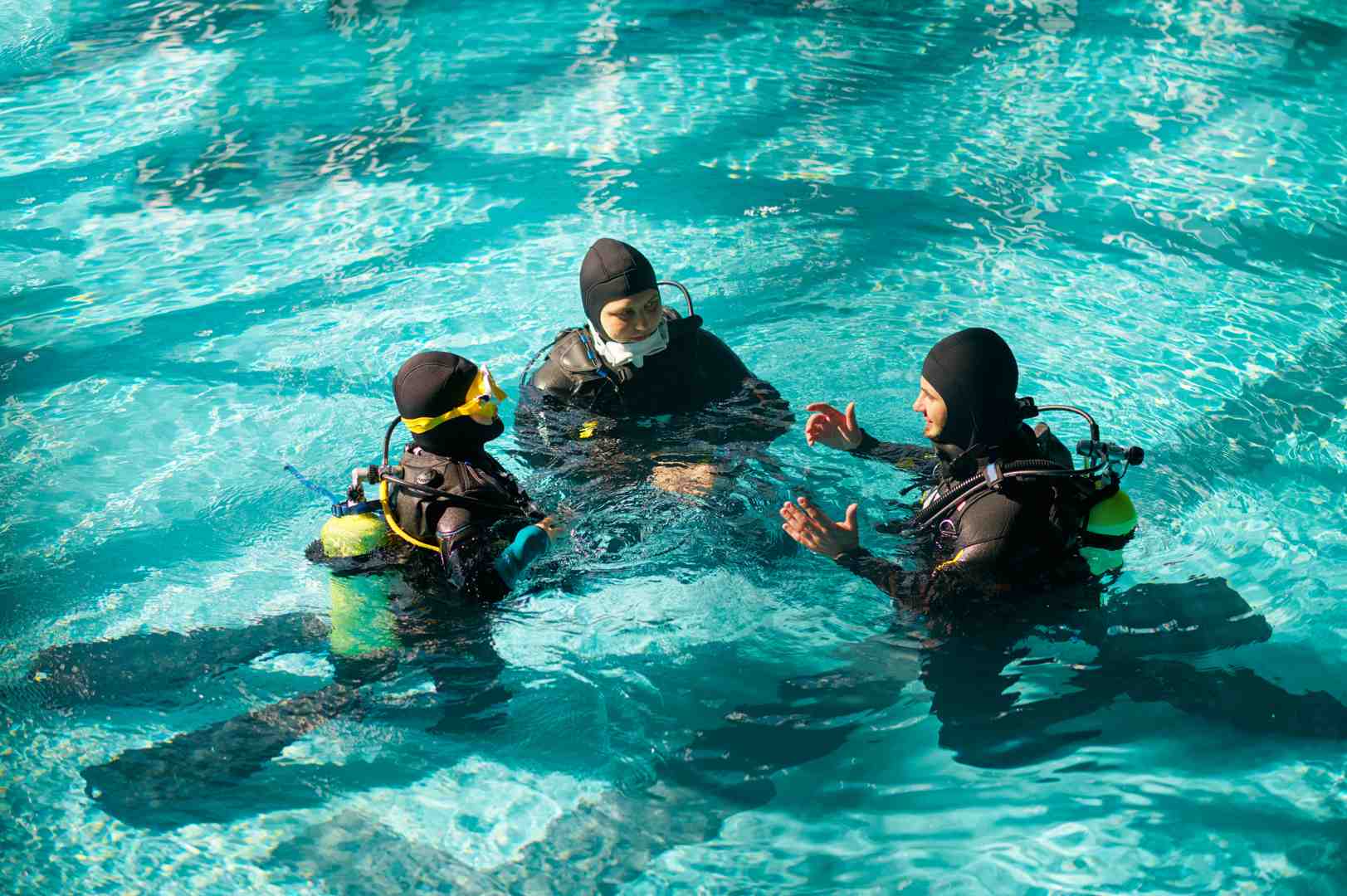
scuba diving beginners - scuba diving tips for beginners

Scuba diving tips for beginners are essential for exploring the underwater world safely and confidently. Proper preparation makes all the difference between an unforgettable adventure and a stressful experience.

Quick Answer: Essential Tips for New Divers

  1. Get certified through a recognized open water diver program.
  2. Never hold your breath underwater—breathe continuously.
  3. Always dive with a buddy for safety.
  4. Master buoyancy control to protect marine life and conserve energy.
  5. Ascend slowly (no faster than 60 feet per minute) and perform safety stops.
  6. Check your gear before every dive using the BWRAF checklist.
  7. Stay within your limits—respect your certification depth and personal comfort.
  8. Monitor your air supply regularly.
  9. Equalize your ears often during descent.
  10. Stay hydrated to reduce decompression sickness risk.

The ocean covers over 70% of our planet, and scuba diving makes it accessible. Learning to dive is easier than you might think, with most beginner courses taking just 3-4 days. However, starting with the right knowledge is crucial, as proper training can prevent panic, a cause of 20% of diving accidents.

This guide uses expert insights and safety protocols to help you start your diving journey with confidence, covering gear, preparation, and essential skills for safe and enjoyable dives.
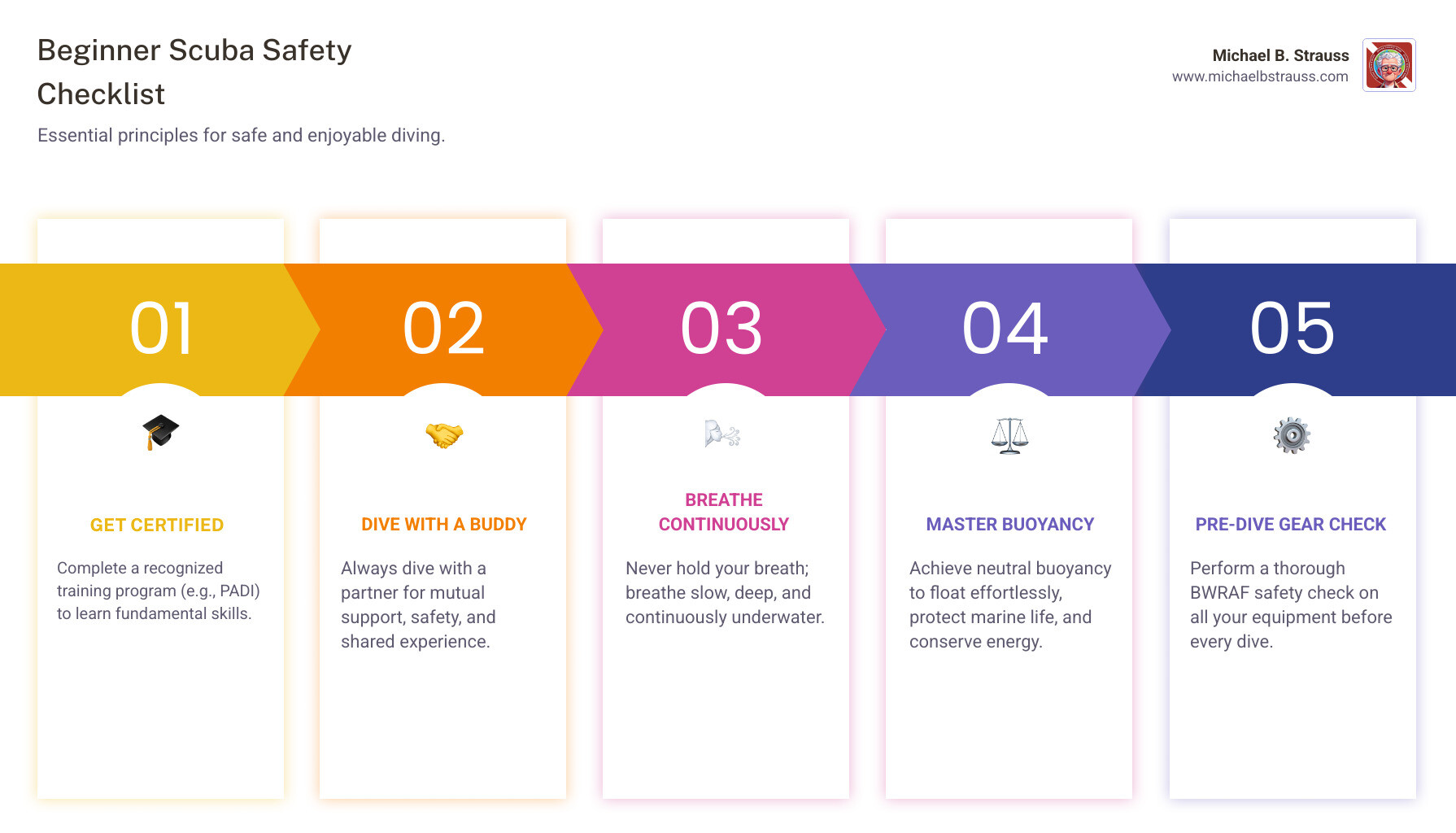
Infographic showing the beginner's scuba diving safety checklist: proper certification, buddy system essentials, breathing techniques, buoyancy control basics, and equipment check procedures - scuba diving tips for beginners infographic pillar-5-steps

Scuba diving tips for beginners vocab explained:

The Core Principles: Essential Scuba Diving Tips for Beginners

Prioritizing safety is crucial to ensure every dive is enjoyable. As diving safety expert Dr. Michael B. Strauss emphasizes in his comprehensive diving books, mastering the core principles is key for all divers. Let's explore these fundamentals.

Preparing for Success: Training, Gear, and Planning

Proper preparation is the foundation of a safe dive. This involves getting the right training, understanding your gear, and planning every dive.

Selecting a qualified scuba instructor and training program

Your first step is finding a reputable dive center and an experienced instructor. An open water diver course is the most widely recognized certification, typically taking 3-4 days. A good instructor builds confidence by ensuring you master each skill.

The importance of proper training and certification for beginners

Certification is non-negotiable. It provides the essential knowledge and skills for safe diving and is required to rent gear, get air fills, and book dives globally. It's your passport to the underwater world.

Understanding safe depth limits for new divers

Know your limits. A basic scuba diver certification allows dives to 12 meters (40 feet) with a professional. The open water diver certification qualifies you to dive with a buddy to 18 meters (60 feet). Always stay within your certified depth and personal comfort level.

Overview of essential scuba gear: mask, snorkel, fins, Buoyancy Control Device (BCD), regulator, dive computer

Each piece of scuba gear has a critical function for safety and comfort:

  • Mask: Creates an air space for clear underwater vision. A good fit is essential.
  • Snorkel: Conserves tank air at the surface before or after a dive.
  • Fins: Provide efficient propulsion and control underwater.
  • SCUBA Unit:
    • Tank: Holds your compressed breathing gas.
    • Buoyancy Control Device (BCD): A vest that adjusts your buoyancy, allowing you to float, descend, or hover.
    • Regulator: Delivers air from the tank at a breathable pressure. Includes a primary and an alternate (octopus) for emergencies.
  • Instruments:
    • Submersible Pressure Gauge (SPG): Shows how much air is left in your tank.
    • Dive Computer: Monitors depth, time, and no-decompression limits. A highly recommended first purchase.
  • Weights: Help you descend and counteract natural buoyancy.
  • Exposure Protection: A wetsuit or dry suit provides warmth and protects your skin.
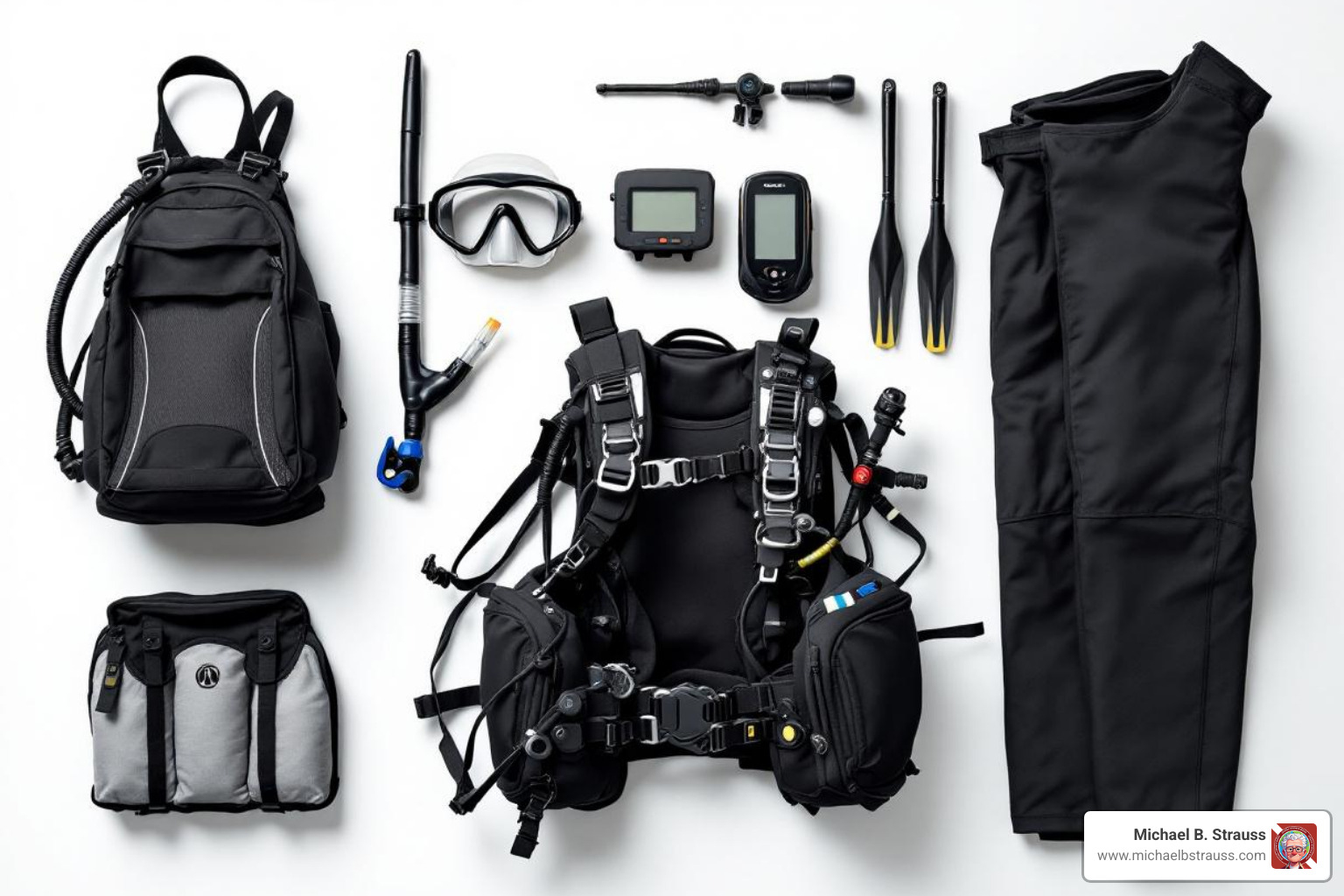
Essential beginner scuba gear neatly arranged for a pre-dive check. - scuba diving tips for beginners

Pre-dive safety check (BWRAF)

Never skip the pre-dive safety check with your buddy. The BWRAF mnemonic is a lifesaver:

  • BCD: Check inflation and deflation.
  • Weights: Confirm they are secure but releasable.
  • Releases: Check all buckles and straps.
  • Air: Verify the tank is full, the regulator works, and breathe from your buddy's alternate.
  • Final check: A final look over all gear.

Dive planning basics

Always "plan the dive, and dive the plan." With your buddy, agree on maximum depth, dive time, and emergency procedures. Use your dive computer to stay within no-decompression limits. A good air management practice is the "Rule of Thirds": one-third of your air out, one-third back, and one-third in reserve.

Maintaining physical and mental fitness for diving

Reasonable physical fitness is important for diving. Certification requires a basic swim and float test. Being fit helps with air consumption and managing currents. Mentally, it's normal to be nervous. Ensure you are well-rested, fed, and hydrated. Avoid alcohol before diving, and never dive with a cold, as it prevents proper ear equalization.

Mastering In-Water Skills: Breathing, Buoyancy, and Safety

Fundamental in-water skills are what make you a confident diver.

Rule #1: Never hold your breath; practice slow, deep breathing

This is the most important rule in scuba diving. As you ascend, the air in your lungs expands. Holding your breath can cause a serious lung-overexpansion injury. Always breathe continuously. Slow, deep breaths also conserve air and promote calmness.

Mastering buoyancy control and achieving neutral buoyancy

Neutral buoyancy—floating effortlessly without sinking or rising—is a key skill. It's achieved by using your BCD and proper weighting. Good buoyancy control conserves energy and protects fragile marine life from accidental contact.

Proper weighting for comfort and safety

Your instructor will help you find the right amount of weight. Being over-weighted causes you to use more air, while being under-weighted makes it hard to descend. Correct weighting is crucial for a comfortable, safe dive.

Mask clearing techniques

A flooded mask is inevitable, so learning to clear it is essential. During training, you'll practice tilting your head back, pressing on the top of the mask, and exhaling through your nose to push the water out.

Equalizing your ears to prevent ear barotrauma

As you descend, water pressure builds on your eardrums. To prevent pain and injury, you must equalize. Do this early and often by pinching your nose and gently blowing. If you feel pain, ascend slightly and try again. Never force it.

Safe ascent and descent rates

Descend slowly to allow time for equalization. When ascending, go no faster than 18 meters (60 feet) per minute—slower than your smallest bubbles. A slow ascent is critical for reducing the risk of decompression sickness.

The importance of safety stops

A safety stop is a pause at 5 meters (15 feet) for three minutes before surfacing. This extra precaution gives your body more time to off-gas nitrogen. Your dive computer will prompt you when a safety stop is necessary.

For more on the science behind diving, visit Diving Science.

The Buddy System and Environmental Awareness

Scuba diving is a team sport. The buddy system and environmental respect are core principles of responsible diving.

The Buddy System: Your Lifeline Underwater

Never dive alone. Your buddy is your partner for safety, assistance, and shared experience. Before each dive, review your plan, emergency procedures, and hand signals together. Stay close to each other at all times, and check in regularly.

Environmental Responsibility: Look, Don't Touch

As a diver, you are a visitor to a fragile ecosystem. Practice a strict no-touch policy. Touching coral can kill it, and harassing marine life causes stress. It can also be dangerous for you. Observe wildlife from a respectful distance.

Leave only bubbles, take only memories

This mantra is the golden rule of eco-conscious diving. Do not take anything from the ocean. Leave the environment exactly as you found it for others to enjoy. Our collective responsibility is to protect the underwater world.

Two divers practicing the buddy system and communicating with hand signals. - scuba diving tips for beginners

Beyond the Basics: Common Mistakes, Post-Dive Care, and Next Steps

As you gain experience, you'll refine your techniques. Learning from common pitfalls ensures your diving journey is continuously rewarding.

Avoiding Common Pitfalls and Managing Anxiety

Recognizing and avoiding common beginner mistakes

Common beginner mistakes include poor air consumption from rapid breathing, forgetting to monitor your air supply, and skipping pre-dive safety checks. To avoid these, practice slow, deep breathing, check your air gauge every few minutes, and never skip the BWRAF check. Buoyancy struggles are also normal at first; practice is key to improvement.

Managing nervousness and building confidence

Feeling nervous is normal, even for experienced divers. To manage anxiety underwater, signal your buddy to pause, focus on slow, deep breaths, and find a calm focal point. Since panic can be dangerous, building confidence is key. This comes from practicing your skills until they become second nature. If you feel overwhelmed, signal your buddy and end the dive safely. There is no shame in calling a dive.

Always dive within your personal limits

Your certification card has a depth limit, but your personal limits might be shallower on any given day depending on fatigue, conditions, or anxiety. Pushing yourself too far creates risk. If a dive feels uncomfortable, say so. Prioritizing safety and enjoyment means knowing when to call a dive.

Post-Dive Procedures and Continuing Your Education

Proper post-dive care is essential for safety and gear longevity.

Proper post-dive gear care and rinsing

After every dive, rinse all your equipment thoroughly with fresh water to remove salt and sand, which can damage it over time. This extends the life of your gear and is a good habit even with rental equipment.

Logging your dives for progress and safety

Log your dives to track experience, air consumption, and weighting. A dive log is a great way to remember details about your dives and is often required for advanced courses. It's also a fantastic souvenir of your underwater adventures.

Staying hydrated to reduce the risk of Decompression Sickness (DCS)

Dehydration significantly increases the risk of Decompression Sickness (DCS). Drink plenty of water before and after every dive.

Learn more about why hydration is critical for divers: Tips for Health and Safety

Observing no-fly time after diving

Flying too soon after diving can cause DCS due to pressure changes at altitude. Follow the recommended guidelines and wait 12-24 hours after your last dive before flying. Your dive computer will provide a specific no-fly time.

Continuing your diving education

Your Open Water certification is a license to learn. If you haven't dived in a while, consider taking a scuba refresher course. To expand your skills, consider an advanced diver course or specialty courses like:

  • Enriched Air (Nitrox) Diver
  • Wreck Diver
  • Peak Performance Buoyancy
  • Digital Underwater Photographer

Continuous learning makes you a safer, more confident diver and opens up new underwater adventures.

Further reading: Dr. Michael B. Strauss books and resources

For more expert insights, explore our diving resources.Learn more about Decompression Science.

Get your copy of the book, Diving Science Revisited, to explore these topics in greater detail.

DISCLAIMER: Articles are for "EDUCATIONAL PURPOSES ONLY", not to be considered advice or recommendations.

Download Full PDF
Tags:

Why Scuba Diving Tips for Beginners Matter

scuba diving beginners - scuba diving tips for beginners

Scuba diving tips for beginners are essential for exploring the underwater world safely and confidently. Proper preparation makes all the difference between an unforgettable adventure and a stressful experience.

Quick Answer: Essential Tips for New Divers

  1. Get certified through a recognized open water diver program.
  2. Never hold your breath underwater—breathe continuously.
  3. Always dive with a buddy for safety.
  4. Master buoyancy control to protect marine life and conserve energy.
  5. Ascend slowly (no faster than 60 feet per minute) and perform safety stops.
  6. Check your gear before every dive using the BWRAF checklist.
  7. Stay within your limits—respect your certification depth and personal comfort.
  8. Monitor your air supply regularly.
  9. Equalize your ears often during descent.
  10. Stay hydrated to reduce decompression sickness risk.

The ocean covers over 70% of our planet, and scuba diving makes it accessible. Learning to dive is easier than you might think, with most beginner courses taking just 3-4 days. However, starting with the right knowledge is crucial, as proper training can prevent panic, a cause of 20% of diving accidents.

This guide uses expert insights and safety protocols to help you start your diving journey with confidence, covering gear, preparation, and essential skills for safe and enjoyable dives.

Infographic showing the beginner's scuba diving safety checklist: proper certification, buddy system essentials, breathing techniques, buoyancy control basics, and equipment check procedures - scuba diving tips for beginners infographic pillar-5-steps

Scuba diving tips for beginners vocab explained:

The Core Principles: Essential Scuba Diving Tips for Beginners

Prioritizing safety is crucial to ensure every dive is enjoyable. As diving safety expert Dr. Michael B. Strauss emphasizes in his comprehensive diving books, mastering the core principles is key for all divers. Let's explore these fundamentals.

Preparing for Success: Training, Gear, and Planning

Proper preparation is the foundation of a safe dive. This involves getting the right training, understanding your gear, and planning every dive.

Selecting a qualified scuba instructor and training program

Your first step is finding a reputable dive center and an experienced instructor. An open water diver course is the most widely recognized certification, typically taking 3-4 days. A good instructor builds confidence by ensuring you master each skill.

The importance of proper training and certification for beginners

Certification is non-negotiable. It provides the essential knowledge and skills for safe diving and is required to rent gear, get air fills, and book dives globally. It's your passport to the underwater world.

Understanding safe depth limits for new divers

Know your limits. A basic scuba diver certification allows dives to 12 meters (40 feet) with a professional. The open water diver certification qualifies you to dive with a buddy to 18 meters (60 feet). Always stay within your certified depth and personal comfort level.

Overview of essential scuba gear: mask, snorkel, fins, Buoyancy Control Device (BCD), regulator, dive computer

Each piece of scuba gear has a critical function for safety and comfort:

  • Mask: Creates an air space for clear underwater vision. A good fit is essential.
  • Snorkel: Conserves tank air at the surface before or after a dive.
  • Fins: Provide efficient propulsion and control underwater.
  • SCUBA Unit:
    • Tank: Holds your compressed breathing gas.
    • Buoyancy Control Device (BCD): A vest that adjusts your buoyancy, allowing you to float, descend, or hover.
    • Regulator: Delivers air from the tank at a breathable pressure. Includes a primary and an alternate (octopus) for emergencies.
  • Instruments:
    • Submersible Pressure Gauge (SPG): Shows how much air is left in your tank.
    • Dive Computer: Monitors depth, time, and no-decompression limits. A highly recommended first purchase.
  • Weights: Help you descend and counteract natural buoyancy.
  • Exposure Protection: A wetsuit or dry suit provides warmth and protects your skin.

Essential beginner scuba gear neatly arranged for a pre-dive check. - scuba diving tips for beginners

Pre-dive safety check (BWRAF)

Never skip the pre-dive safety check with your buddy. The BWRAF mnemonic is a lifesaver:

  • BCD: Check inflation and deflation.
  • Weights: Confirm they are secure but releasable.
  • Releases: Check all buckles and straps.
  • Air: Verify the tank is full, the regulator works, and breathe from your buddy's alternate.
  • Final check: A final look over all gear.

Dive planning basics

Always "plan the dive, and dive the plan." With your buddy, agree on maximum depth, dive time, and emergency procedures. Use your dive computer to stay within no-decompression limits. A good air management practice is the "Rule of Thirds": one-third of your air out, one-third back, and one-third in reserve.

Maintaining physical and mental fitness for diving

Reasonable physical fitness is important for diving. Certification requires a basic swim and float test. Being fit helps with air consumption and managing currents. Mentally, it's normal to be nervous. Ensure you are well-rested, fed, and hydrated. Avoid alcohol before diving, and never dive with a cold, as it prevents proper ear equalization.

Mastering In-Water Skills: Breathing, Buoyancy, and Safety

Fundamental in-water skills are what make you a confident diver.

Rule #1: Never hold your breath; practice slow, deep breathing

This is the most important rule in scuba diving. As you ascend, the air in your lungs expands. Holding your breath can cause a serious lung-overexpansion injury. Always breathe continuously. Slow, deep breaths also conserve air and promote calmness.

Mastering buoyancy control and achieving neutral buoyancy

Neutral buoyancy—floating effortlessly without sinking or rising—is a key skill. It's achieved by using your BCD and proper weighting. Good buoyancy control conserves energy and protects fragile marine life from accidental contact.

Proper weighting for comfort and safety

Your instructor will help you find the right amount of weight. Being over-weighted causes you to use more air, while being under-weighted makes it hard to descend. Correct weighting is crucial for a comfortable, safe dive.

Mask clearing techniques

A flooded mask is inevitable, so learning to clear it is essential. During training, you'll practice tilting your head back, pressing on the top of the mask, and exhaling through your nose to push the water out.

Equalizing your ears to prevent ear barotrauma

As you descend, water pressure builds on your eardrums. To prevent pain and injury, you must equalize. Do this early and often by pinching your nose and gently blowing. If you feel pain, ascend slightly and try again. Never force it.

Safe ascent and descent rates

Descend slowly to allow time for equalization. When ascending, go no faster than 18 meters (60 feet) per minute—slower than your smallest bubbles. A slow ascent is critical for reducing the risk of decompression sickness.

The importance of safety stops

A safety stop is a pause at 5 meters (15 feet) for three minutes before surfacing. This extra precaution gives your body more time to off-gas nitrogen. Your dive computer will prompt you when a safety stop is necessary.

For more on the science behind diving, visit Diving Science.

The Buddy System and Environmental Awareness

Scuba diving is a team sport. The buddy system and environmental respect are core principles of responsible diving.

The Buddy System: Your Lifeline Underwater

Never dive alone. Your buddy is your partner for safety, assistance, and shared experience. Before each dive, review your plan, emergency procedures, and hand signals together. Stay close to each other at all times, and check in regularly.

Environmental Responsibility: Look, Don't Touch

As a diver, you are a visitor to a fragile ecosystem. Practice a strict no-touch policy. Touching coral can kill it, and harassing marine life causes stress. It can also be dangerous for you. Observe wildlife from a respectful distance.

Leave only bubbles, take only memories

This mantra is the golden rule of eco-conscious diving. Do not take anything from the ocean. Leave the environment exactly as you found it for others to enjoy. Our collective responsibility is to protect the underwater world.

Two divers practicing the buddy system and communicating with hand signals. - scuba diving tips for beginners

Beyond the Basics: Common Mistakes, Post-Dive Care, and Next Steps

As you gain experience, you'll refine your techniques. Learning from common pitfalls ensures your diving journey is continuously rewarding.

Avoiding Common Pitfalls and Managing Anxiety

Recognizing and avoiding common beginner mistakes

Common beginner mistakes include poor air consumption from rapid breathing, forgetting to monitor your air supply, and skipping pre-dive safety checks. To avoid these, practice slow, deep breathing, check your air gauge every few minutes, and never skip the BWRAF check. Buoyancy struggles are also normal at first; practice is key to improvement.

Managing nervousness and building confidence

Feeling nervous is normal, even for experienced divers. To manage anxiety underwater, signal your buddy to pause, focus on slow, deep breaths, and find a calm focal point. Since panic can be dangerous, building confidence is key. This comes from practicing your skills until they become second nature. If you feel overwhelmed, signal your buddy and end the dive safely. There is no shame in calling a dive.

Always dive within your personal limits

Your certification card has a depth limit, but your personal limits might be shallower on any given day depending on fatigue, conditions, or anxiety. Pushing yourself too far creates risk. If a dive feels uncomfortable, say so. Prioritizing safety and enjoyment means knowing when to call a dive.

Post-Dive Procedures and Continuing Your Education

Proper post-dive care is essential for safety and gear longevity.

Proper post-dive gear care and rinsing

After every dive, rinse all your equipment thoroughly with fresh water to remove salt and sand, which can damage it over time. This extends the life of your gear and is a good habit even with rental equipment.

Logging your dives for progress and safety

Log your dives to track experience, air consumption, and weighting. A dive log is a great way to remember details about your dives and is often required for advanced courses. It's also a fantastic souvenir of your underwater adventures.

Staying hydrated to reduce the risk of Decompression Sickness (DCS)

Dehydration significantly increases the risk of Decompression Sickness (DCS). Drink plenty of water before and after every dive.

Learn more about why hydration is critical for divers: Tips for Health and Safety

Observing no-fly time after diving

Flying too soon after diving can cause DCS due to pressure changes at altitude. Follow the recommended guidelines and wait 12-24 hours after your last dive before flying. Your dive computer will provide a specific no-fly time.

Continuing your diving education

Your Open Water certification is a license to learn. If you haven't dived in a while, consider taking a scuba refresher course. To expand your skills, consider an advanced diver course or specialty courses like:

  • Enriched Air (Nitrox) Diver
  • Wreck Diver
  • Peak Performance Buoyancy
  • Digital Underwater Photographer

Continuous learning makes you a safer, more confident diver and opens up new underwater adventures.

Further reading: Dr. Michael B. Strauss books and resources

For more expert insights, explore our diving resources.Learn more about Decompression Science.

Get your copy of the book, Diving Science Revisited, to explore these topics in greater detail.

DISCLAIMER: Articles are for "EDUCATIONAL PURPOSES ONLY", not to be considered advice or recommendations.