Why Underwater Photography Tips Matter for Every Diver

Underwater photography tips can transform your diving experience, allowing you to capture and share the ocean's extraordinary beauty. Mastering underwater photography requires specific skills that differ dramatically from land-based shooting, but the rewards are immense.
Essential Underwater Photography Tips at a Glance:
- Master buoyancy control before bringing a camera underwater
- Get close to your subject (within 12 inches when possible) to minimize water between lens and subject
- Use artificial light sources (strobes or video lights) to restore lost colors
- Shoot at an upward angle rather than downward for better contrast
- Set your camera to RAW format for maximum editing flexibility
- Adjust white balance manually or use underwater preset modes
- Focus on the subject's eyes for compelling portraits
- Practice in shallow, clear water before attempting deeper or more challenging environments
Diving with a camera is incredibly fun, but it presents unique challenges. As photographer David Doubilet notes, you first need to be a "competent, relaxed diver." Water absorbs light and color, visibility is variable, and even your own bubbles can interfere with a shot.
Fortunately, modern technology has made underwater photography more accessible than ever. From smartphone housings to professional DSLR systems, there's equipment for every skill level and budget.
This guide provides practical, actionable advice from experienced professionals. You'll learn not just what to do, but why it matters—and how to stay safe while pursuing the perfect shot.
Underwater photography tips word guide:
Core Skills and Essential Underwater Photography Tips
Safety and Buoyancy: The Photographer's Most Crucial Skill
Before considering camera settings, we must focus on our diving skills. As diving safety expert Dr. Michael B. Strauss emphasizes, safety is paramount. For underwater photography tips, this means being a diver first and a photographer second.
The single most important skill is buoyancy control. Poor buoyancy leads to unsteady shots and can damage delicate marine ecosystems by stirring up sand, which reduces visibility. Excellent buoyancy and breath management are critical for reducing backscatter, approaching subjects without disturbing them, and maneuvering with bulky camera gear.
Practice swimming with your camera setup to get used to the added weight and drag. Your body is the camera's platform, so positional control is key.
Always prioritize safety. Before dreaming of the perfect shot, ensure your diving skills are solid. For a deeper understanding of diving physics and physiology, explore Diving Science. Learning how our bodies adapt, such as through the mammalian dive reflex, improves both safety and enjoyment.
The Science of Light: Capturing Vibrant Color Underwater
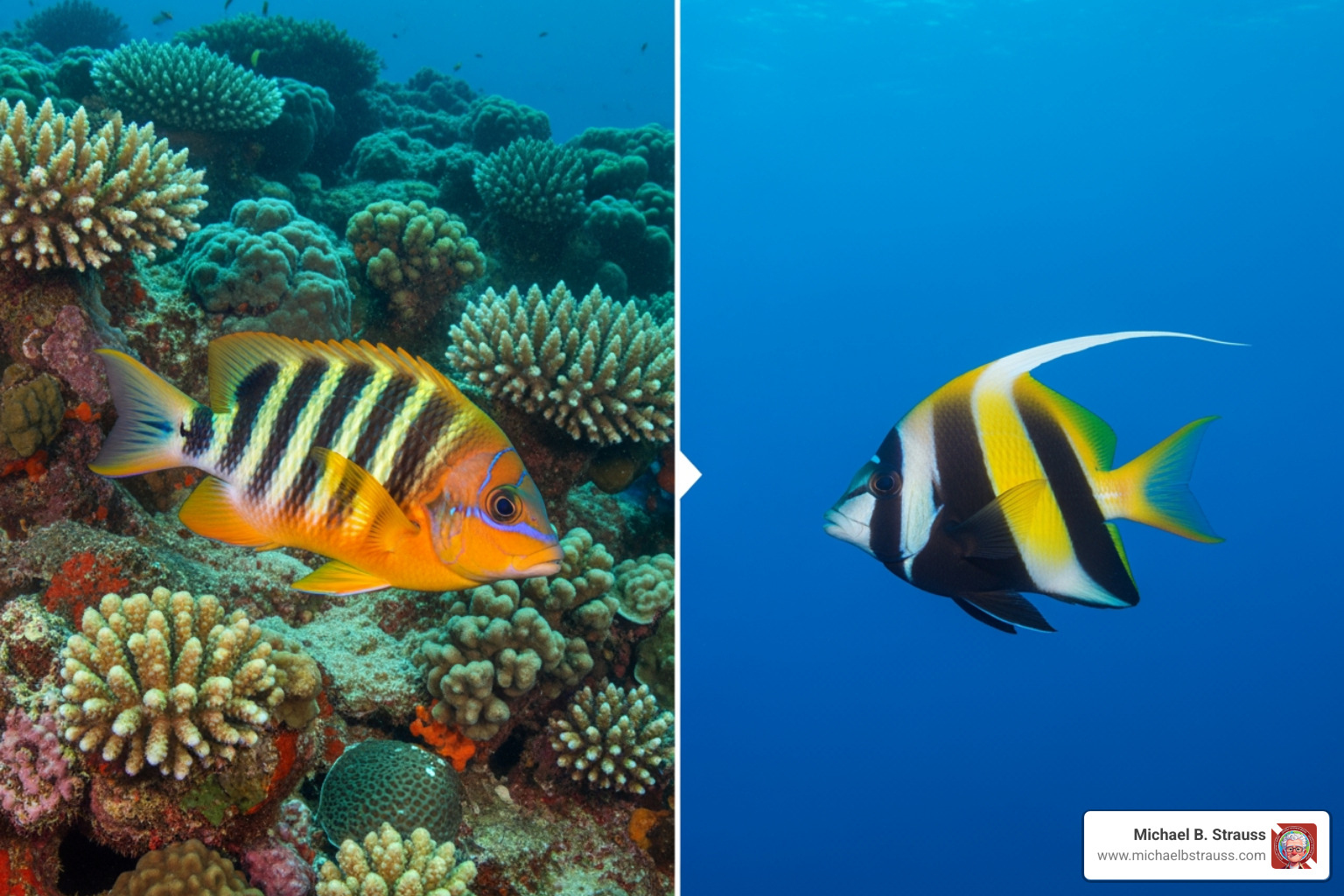
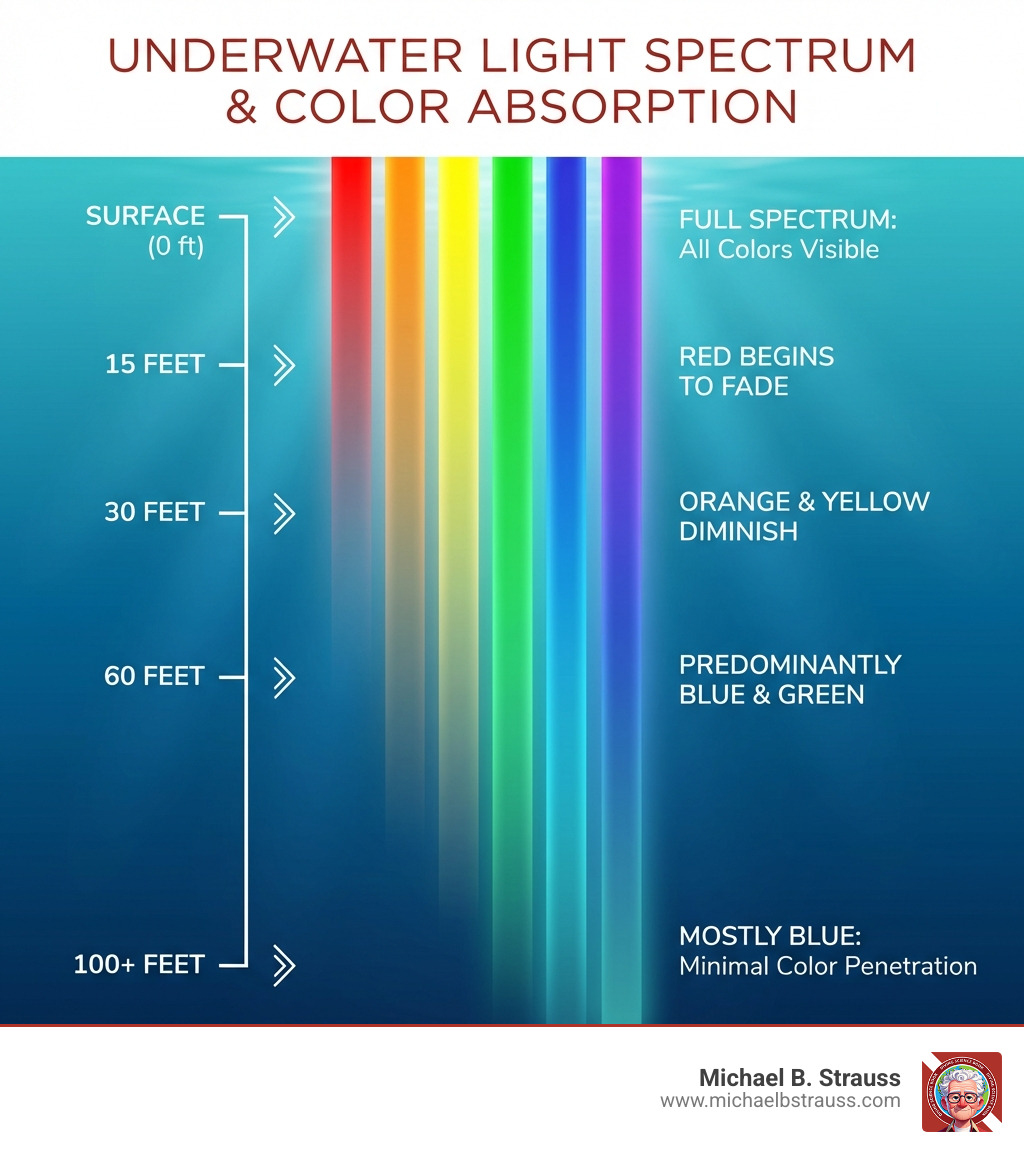
Underwater photos often look blue because water absorbs the color spectrum at different rates. Warm colors like red and orange disappear first, even in shallow water. By 40 meters (about 130 feet), everything appears blue-green. The more water between your lens and the subject, the more color is lost.
Here are key underwater photography tips to restore vibrant color:
- Get Closer: This is the most important rule. Aim to be within 12 inches (30 cm) of your subject to minimize water distortion and retain color and detail.
- Use Artificial Light: External strobes (waterproof flashes) or video lights are the best way to restore lost colors. They reintroduce the full light spectrum. With a strobe, you can use auto white balance. Without one, use manual white balance or your camera's underwater mode.
- Adjust White Balance: For natural light photos, a custom white balance is crucial. Show your camera a white or gray object (like a dive slate) to let it adjust for the ambient light. This works best in shallow water (under 6 meters/20 feet).
- Use Red Filters: In shallow, sunny water (above 9 meters/30 feet), a red filter can help restore color without a flash. However, they are depth-specific and can make images too red if used improperly.
By getting close, using artificial light, and managing white balance, you can capture the true, stunning colors of the underwater world.
Gearing Up: From Compact Cameras to DSLRs
Your choice of camera depends on your budget, experience, and goals. Options range from simple compacts to professional DSLRs.
| Feature / Camera Type | Compact Cameras (e.g., tough cameras) | Smartphones (with housing) | Mirrorless/DSLR (with housing) |
|---|---|---|---|
| Initial Cost | Low to Moderate | Low to Moderate | High |
| Image Quality | Basic to Good | Good to Very Good | Excellent |
| Control/Settings | Limited | Moderate (apps) | Extensive (Manual, RAW) |
| Expandability | Limited (some strobes/wet lenses) | Limited (some wet lenses) | High (strobes, lenses, ports) |
| Depth Rating | Varies (often 15-30m) | Varies (often 10-60m) | High (often 60m+) |
| Ease of Use | High | High | Moderate to Low |
| Portability | High | High | Low |
| Backscatter Risk | High (with internal flash) | High (with internal flash) | Low (with external strobes) |
Compact Cameras: An excellent, affordable starting point for beginners. Use the 'forced flash' mode for close subjects to add color.
Smartphones: With a good housing, smartphones are a viable option, offering RAW and 4K video. Be aware that housings can fail, so back up data promptly.
Mirrorless and DSLR Cameras: These offer the best image quality and control but require a significant investment in cameras and specialized housings. It's often best to choose the housing first, then a compatible camera.
Essential Accessories:
- Housings: A waterproof case that protects your camera from pressure.
- Strobes (External Flashes): Vital for restoring color and reducing backscatter.
- Lenses & Ports: Wide-angle lenses (with dome ports) are for large scenes, while macro lenses capture tiny details. Wet lenses can be attached underwater to switch between wide and macro.
As your skills grow, you may progress from a compact camera to a more advanced system. This journey is a natural part of developing as an underwater photographer.
In-Camera Craft: Essential Settings and Composition
Mastering camera settings and composition is key to great photos. These underwater photography tips focus on what to do before you press the shutter.
Essential Camera Settings:
- RAW vs. JPEG: Always shoot in RAW file format. It captures more data, giving you maximum flexibility for editing color and exposure later.
- Shooting Mode: Move beyond Auto. Manual (M) or Aperture Priority (A/Av) modes give you creative control over the final image.
- Aperture (f-stop): Controls depth of field. Use a higher f-number (f/8-f/16) for wide-angle shots to keep the scene sharp, and a lower f-number for macro to blur the background.
- Shutter Speed: Controls motion blur. Use 1/125s or faster for moving subjects. A good rule is to stay at 1/60s or faster to avoid camera shake.
- ISO: Your camera's light sensitivity. Keep it as low as possible (200-400 is typical) to avoid grainy images.
Composition Rules:
- The Rule of Thirds: Place your subject off-center for a more dynamic photo.
- Shoot Upwards: Get below your subject and shoot up toward the surface. This creates better contrast and avoids a flat, blue background.
- Fill the Frame: Get close to your subject to improve clarity, color, and impact.
- Focus on the Eyes: For both marine life and people, sharp focus on the eyes creates a powerful connection.
- Mind the Background: Look for clean, uncluttered backgrounds that make your subject stand out.
Subject-Specific Tips:
- Marine Life: Be patient and approach animals slowly and at their level. Don't chase them. Wait for the animal to become comfortable with your presence.
- People: Communication is key. Use hand signals to time shots and avoid capturing bubbles in front of faces.
Common Beginner Mistakes and How to Avoid Them
Knowing common pitfalls can accelerate your learning curve. Here are frequent beginner mistakes and underwater photography tips to avoid them:
Backscatter: These are bright spots caused by your flash illuminating particles in the water.
- Avoidance: Use external strobes positioned away from the camera. If using an internal flash, get very close (within 2-3 feet) or turn it off and use natural light.
Shooting Downwards: This creates flat, blue images with poor contrast.
- Avoidance: Get below your subject and shoot upwards toward the brighter surface.
Subject Too Distant: Too much water between you and the subject washes out color and detail.
- Avoidance: Get close—ideally within 12 inches (30 cm). "Zoom with your fins," not your camera's digital zoom.
Chasing Marine Life: This stresses animals and rarely results in good photos.
- Avoidance: Be patient. Approach slowly and let the animal get comfortable with your presence.
Centered Subjects: Placing the subject in the dead center is often boring.
- Avoidance: Use the rule of thirds to create a more dynamic composition.
Cluttered Backgrounds: A messy background distracts from your subject.
- Avoidance: Adjust your angle to find a clean background, or use a wider aperture to blur it.
Forgetting to Check Settings: Entering the water with the wrong settings can ruin a dive's worth of photos.
- Avoidance: Create a pre-dive checklist for your camera: RAW format, ISO, white balance, etc.
Post-Processing: Bringing Your Underwater Photos to Life
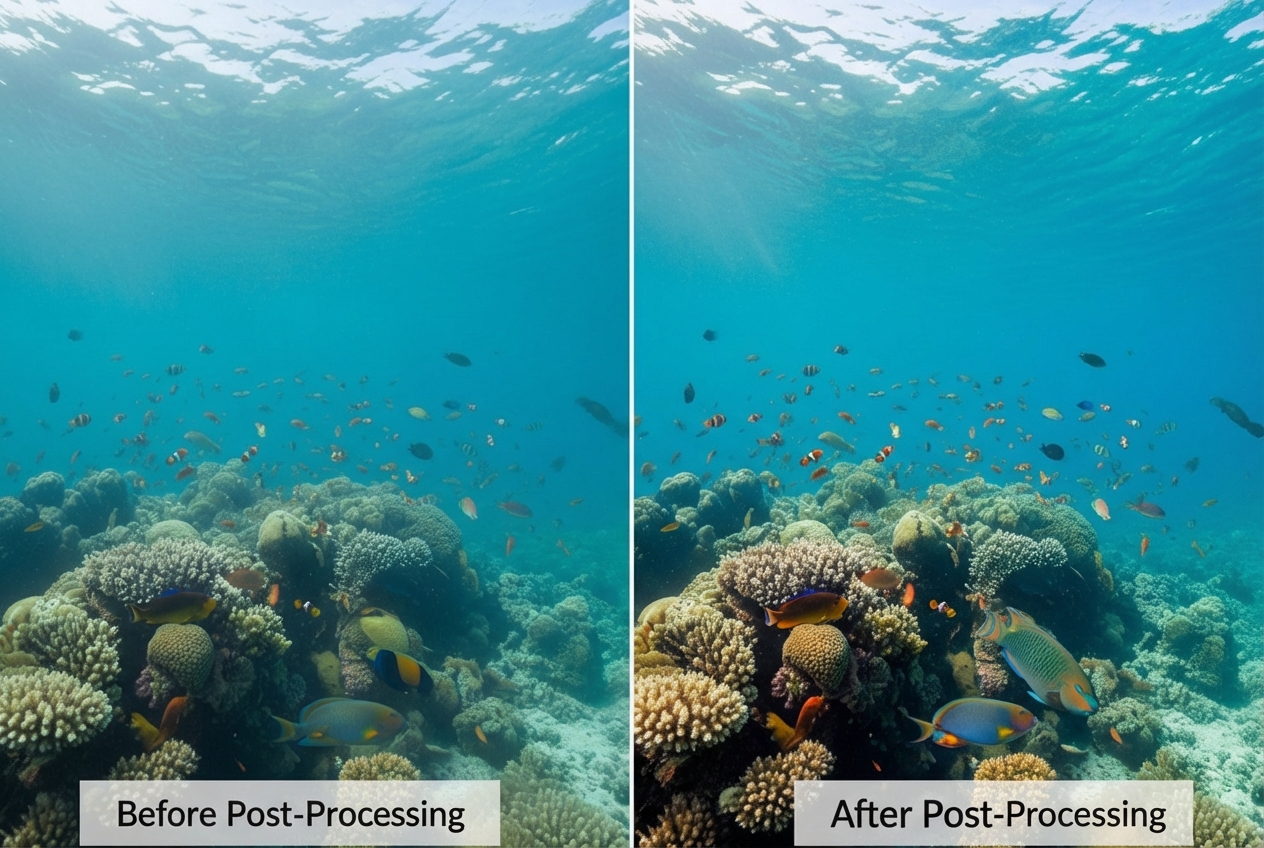
Post-processing in "the digital darkroom" is not an option for underwater photography; it's a necessity. The underwater environment robs images of color and contrast, but editing can bring them back to life.
Key post-processing adjustments include:
- White Balance Correction: The most crucial step. This removes the overwhelming blue/green cast and restores natural hues.
- Contrast and Exposure: Adjusting contrast adds depth and punch, while tweaking exposure, highlights, and shadows brings out hidden details.
- Color Improvement: A slight boost in saturation or vibrance can make colors pop, but be careful not to overdo it.
- Sharpening: Subtle sharpening helps counteract the softness caused by light scattering in water.
- Cropping: A powerful tool to improve composition, remove distractions, and get closer to your subject after the shot.
Shooting in RAW file format is essential, as it gives you far more data to work with for these adjustments. Software like Adobe Lightroom and Photoshop are the industry standards for this rewarding final step in the creative process.
Conclusion: Lift Your Skills and Dive Deeper
The journey into underwater photography is a rewarding one. We've covered essential underwater photography tips, from core diving skills and understanding light to gear, composition, and post-processing.
The most crucial takeaway is to be a safe and proficient diver first. As Dr. Michael B. Strauss consistently reminds us, safety is paramount. Excellent buoyancy and situational awareness are the foundation of great underwater photography.
Practice and patience are your greatest allies. The principles are simple: get close, use light wisely, compose thoughtfully, and refine your images in post-production. Each dive is a chance to learn and improve.
We hope these tips empower you to capture the stunning beauty of the aquatic world and dive safely. To deepen your knowledge of the science behind diving, get your copy of Diving Science Revisited today.
DISCLAIMER: Articles are for "EDUCATIONAL PURPOSES ONLY", not to be considered advice or recommendations.


